
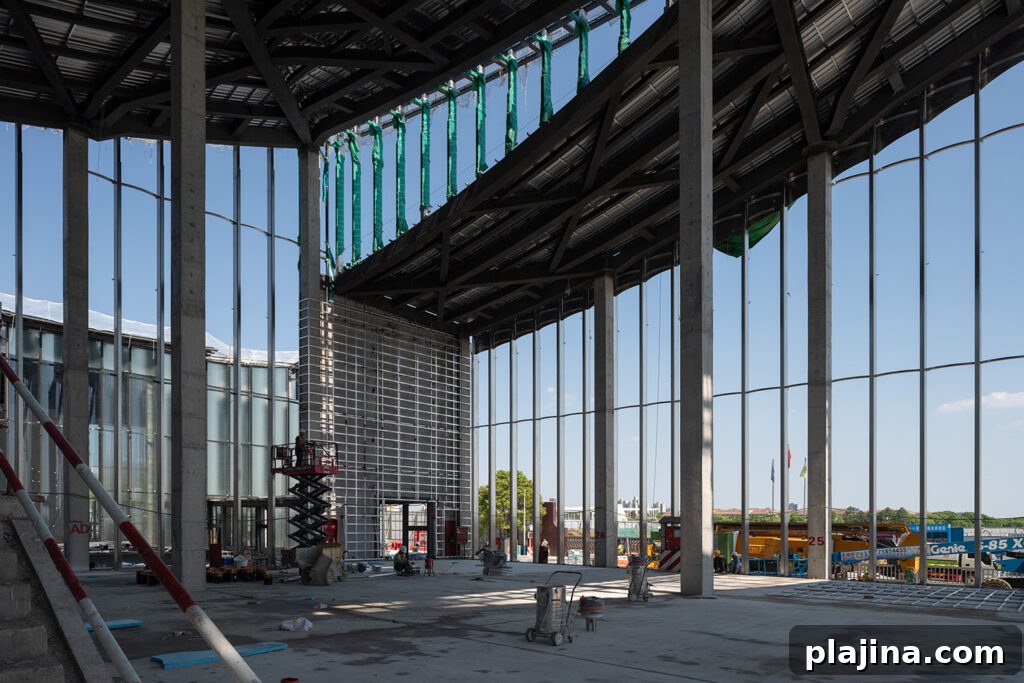
The 646,000-square-foot Suzhou Museum of Contemporary Art, scheduled to open in 2025, is arranged as a village of 12 pavilions that reinterpret the traditional elements that have shaped Suzhou’s urbanism, architecture and landscape for centuries.
© Justin Szeremeta
Designed by BIG (Bjarke Ingels Group) in collaboration with ARTS Group and Front Inc., the museum forms part of the larger regeneration of the Jinji Lake area. Its layout draws on the classic Suzhou garden element known as the lang — a linear pathway that frames successive garden views. In this project, the lang is reimagined as a sequence of linked pavilions and outdoor exhibition spaces, guiding visitors through a carefully composed journey of art, landscape and water.
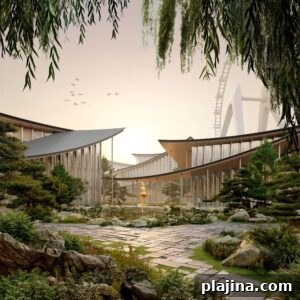
The most distinctive feature is the continuous roof, articulated into a pattern of eaves that function as sheltered walkways across the site. Where the walkways knot and widen, they reveal and frame the pavilions, allowing the architecture to thread through the grounds and connect water to land, city to nature, and visitors to history. Some of these draped paths will reach out toward Jinji Lake, creating vantage points that can even be appreciated from the nearby Suzhou Ferris wheel.
© ATCHAIN
Four of the 12 pavilions will house the primary gallery spaces, while the remaining pavilions accommodate a multifunction hall for events and lectures, a theater, a restaurant and a grand entrance with visitor amenities. This distribution creates a balanced cultural campus that supports exhibitions, performances and public programming.
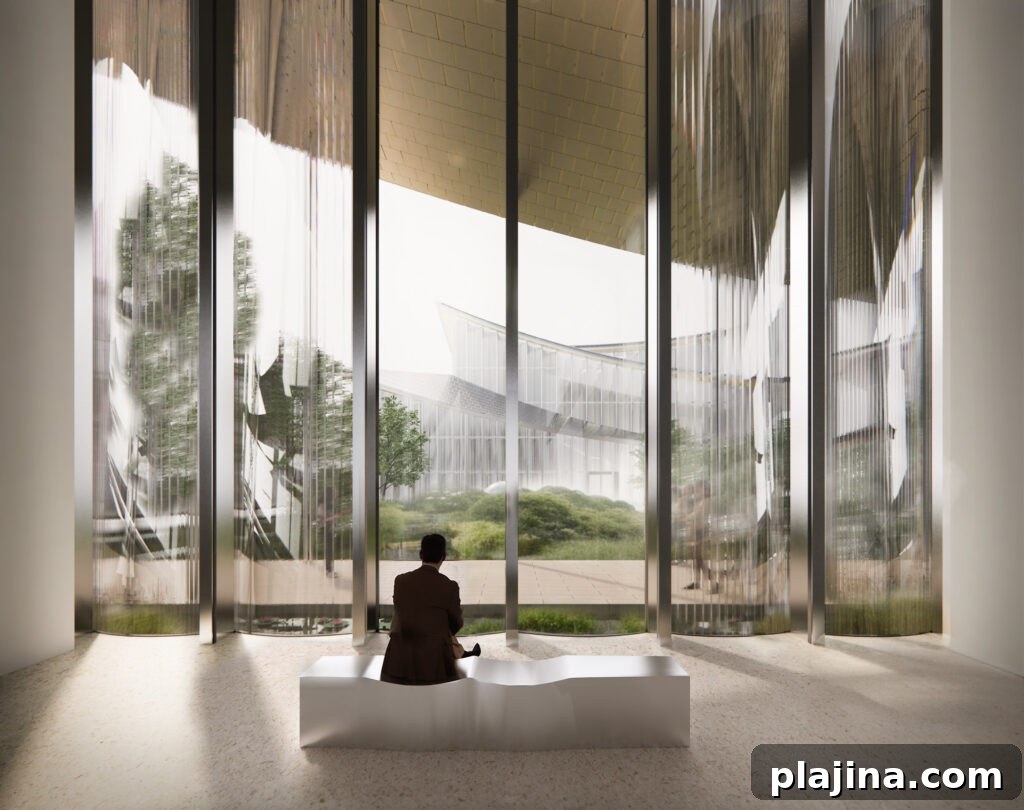
Each pavilion is characterized by sloping eaves and facades of rippled, curved glass paired with warm-toned stainless steel that reflects the garden palette. Above- and below-ground connections — bridges and tunnels — give the museum flexibility to organize circulation and exhibition routes according to seasonality and the specific demands of different artworks. Exterior paths are surfaced in natural stone to integrate the architecture with the landscape.
“The Suzhou Museum of Contemporary Art is a tribute to the rich garden heritage of Suzhou,” said Catherine Huang, partner in charge at BIG. “We designed the museum to behave like a traditional garden element, winding gracefully through the landscape and transforming into pavilions. The architecture frames contemporary gardens, making them as integral to the exhibition experience as the artworks themselves.”
© BIG
Visitors arrive at a generous, welcoming plaza in front of the Visitor Center, which serves as the primary entry point. From there, guests can choose to proceed into the interior galleries or walk the exterior routes through gardens and along the water’s edge. The museum’s continuous circulation strategy encourages flexibility: visitors can follow an uninterrupted interior path or branch off into exterior walks, adapting their route to weather, time and personal preference. With gallery spaces, event facilities and a theater, the Suzhou Museum of Contemporary Art is conceived as an adaptable cultural hub for exhibitions, performances and community engagement.