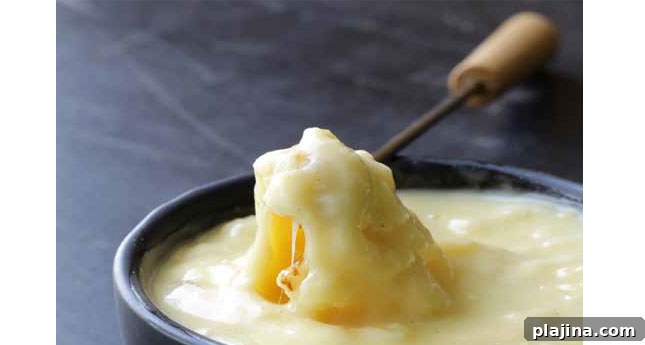
A fondue night—friends gathered around a pot of bubbling cheese, skewering bread and sharing stories—remains an undeniably inviting way to spend an evening. For many, it’s the epitome of cozy communal dining. In Switzerland, fondue holds a special place: promoted by the Swiss Cheese Union in the 1930s to encourage eating cheese at home, it eventually became a national culinary symbol and reached widespread popularity in the United States by the 1960s.
Fondue began in Switzerland as a practical way to salvage hardened cheese and stale bread. Its name comes from the French verb fondre, meaning “to melt.” The classic Swiss fondue blends Emmenthaler and Gruyère cheeses with white wine or kirsch (cherry brandy). Combined with garlic and seasoning, the melted mixture softened the dense breads of 18th-century villagers, providing a sustaining meal through cold months while minimizing waste. Today, many regional and creative cheese blends are enjoyed around the world.
Although Switzerland is famously neutral, opinions diverge strongly when it comes to fondue: each region often claims the best recipe. Still, a few traditional rules guide the experience. Fondue is most commonly paired with white wine or hot tea; heavier beverages are said to cause an uncomfortable, indigestible lump of cheese in the stomach. Purists typically avoid serving salad alongside the rich cheese, though cured meats are commonly accepted accompaniments. A playful custom persists: the diner who first drops their bread into the pot is expected to buy the next round.
Preparing a classic cheese fondue is simple but benefits from careful technique. Rub the inside of the caquelon (fondue pot) with a cut garlic clove for a subtle aromatic base. Warm the white wine gently and whisk in a little cornstarch to stabilize the mixture, then add grated cheese a handful at a time, stirring until smooth. Finish with a splash of kirsch if desired. Maintain a low, steady heat so the fondue remains silky—warm enough to stay fluid but not so hot that the cheese scorches.
Over time fondue evolved into many variations beyond the traditional cheese version. Fondue Bourguignonne, featuring hot oil for cooking meat, originated in Burgundy, where workers kept a pot of boiling oil on hand and cooked pieces of meat as they worked. A lighter counterpart, often called Chinese fondue, uses a shared simmering broth for cooking meat and vegetables; the communal pot becomes increasingly flavorful as diners add different ingredients. Mid-20th-century America popularized dessert fondues: melted chocolate for dipping fruits, pastries, marshmallows, coconut and other treats has become a beloved sweet ritual.
Whether enjoyed as a rustic cheese meal, as a social oil- or broth-based cook-at-table experience, or as a decadent chocolate dessert, fondue remains a versatile and sociable dining tradition. Its appeal lies not only in its flavors but in the shared ritual of cooking and dipping together, making it a memorable centerpiece for gatherings year-round.