
It’s a 40-minute flight east over the rainforest and the braided channels of the Amazon. As the plane begins its final approach, Parintins unfolds beneath me: a scatter of houses along the river, clusters of boats, and the bright colors that signal the town’s annual showdown.
Dozens of boats line the riverfront, often three abreast, serving as improvised hotels for visitors. Two enormous flags — one blue, one red — flap at opposite ends of the town center. Between the rival camps sits the Bumbodromo, a purpose-built stadium with space for 35,000 spectators, where the competitive carnival known as Boi Bumbá takes place.
Arrival fashion is partisan. I wear a neutral green polo, but most passengers are clearly aligned: blue or red. The rivalry permeates the town so deeply that companies alter their branding to avoid appearing to favor one side. Coca-Cola cans are printed half-red, half-blue here. Local branches of Banco Bradesco display blue as well as red logos. Airlines, carmakers and supermarkets adapt their advertising with two-tone designs during the festival.
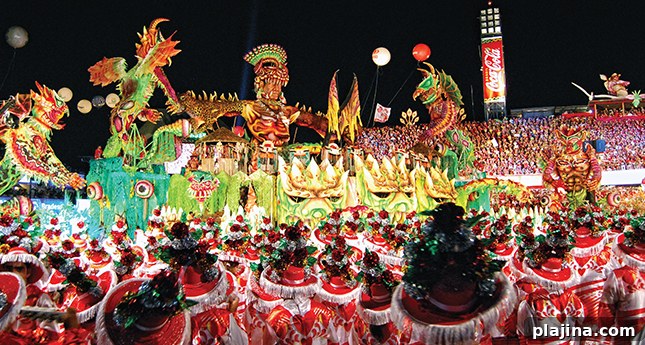
At 9 p.m., I find a seat in the packed Bumbodromo. Each troupe has two and a half hours to stage its show, combining dancers, drummers, singers, elaborate costumes and moving floats that act as giant, shifting sets. The red team, Boi Garantido — the “Guaranteed Ox” — performs first. Its supporters fill half the stadium and are part of the spectacle, waving props, chanting and singing on cue. I sit on the blue side, Boi Caprichoso — the “Capricious Ox” — where the crowd initially sits almost statuesque, a deliberate contrast to the red side’s exuberance.
Both groups must present the same folk tale: a farm worker and his pregnant wife’s craving for ox tongue. Each performance includes the required characters and narrative beats, but the interpretation, artistry and technical execution vary. Judges high in the stands evaluate the creative and technical merits of each presentation and will decide the winner.
When the blue show begins around midnight, the Bumbodromo comes alive. The lights shift and the crowd’s energy changes. I’m immersed in relentless sound and a parade of floats celebrating Amazonian life. At the show’s peak, a towering model of a blue-and-gold macaw glides toward the blue stands. A dancer climbs aboard, and the bird seems to soar across the field. The blue supporters erupt in jubilation while red faces remain stoic and watchful.
The next day I leave Parintins for Manaus, then continue into the Amazon itself. Even in remote riverside communities, people talk about Boi Bumbá, waiting anxiously for the judges’ decision. Allegiances run deep; many households are split between colors, and conversation often turns to the competition.
When the result is announced, the red side wins by a razor-thin margin. That tiny difference only sharpens the rivalry and fuels next year’s preparations and ambition.
What began as a curious local contest has become an electrifying cultural event that transforms a river town every June. I arrived indifferent but left changed by the night at the Bumbodromo — and with a newfound respect for the passion and artistry on display. Go Caprichoso!