
The late American photographer and filmmaker Paul Strand was celebrated for his ability to reveal the character of his subjects, whether through intimate portraits, stark landscapes, or carefully composed still lifes. His work drew inspiration from diverse places and periods: the American Southwest and Mexico, New England in the 1940s, and the private garden he tended in Orgeval, France all played important roles in shaping his vision.
Strand expanded his practice beyond still photography into documentary filmmaking. Early in his career he collaborated on the silent film Manhatta (1921), a pioneering city film, and later produced Renes after a 1936 commission from the Mexican government. Throughout his life he was committed to exploring the social dimensions of art; he helped found the Photo League, an organization of photographers who employed their craft to address social and political issues.
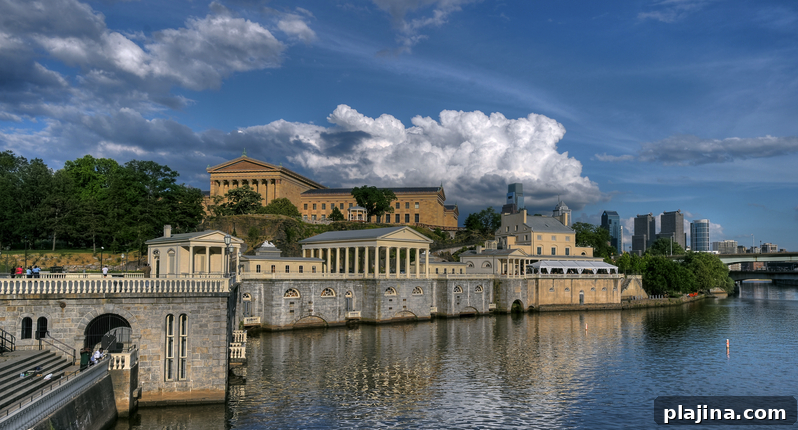
The Philadelphia Museum of Art has long held a substantial Strand collection, initially comprising more than 600 prints. Recent acquisitions have significantly enlarged that core: the museum added 566 master prints produced from Strand’s negatives and acquired 1,422 images from the Paul Strand Archive at the Aperture Foundation. These additions meaningfully enrich the museum’s holdings and provide broader access to Strand’s artistic legacy.
Strand’s work is notable for its formal clarity and emotional resonance. He balanced a modernist attention to composition with a humanist concern for his subjects, producing images that are both visually striking and deeply empathetic. His photographs document particular places and moments while also conveying timeless themes—community, labor, landscape, and domestic life—making his oeuvre relevant to both historical study and contemporary audiences.
As a teacher, collaborator, and organizer, Strand influenced generations of photographers and filmmakers. His films and photographs contributed to early documentary practices and helped establish photography as a medium capable of serious social commentary and artistic expression.
Today, Strand’s work continues to be studied and exhibited worldwide. The expanded holdings at institutions such as the Philadelphia Museum of Art enable scholars, students, and the public to examine his range more fully—from formal experiments to socially engaged projects—preserving his contributions for future generations.
You may also like:
Boston’s Museum Of Fine Arts Showcases Abstract Expressionism
Koloman Moser Design Perspective At Museum Of Fine Arts, Houston