Providing relief for aching, damaged joints is a major industry. The 2019 American Joint Replacement Registry, published in May 2020 with the American Academy of Orthopaedic Surgeons, reports that more than 1.7 million hip and knee replacement procedures were performed in the United States. As orthopedic surgery, the average cost of a hip replacement in a U.S. hospital exceeds $39,000 — a price that prompts many to consider alternatives.
Many patients calculate that combining medical care with travel can reduce costs while delivering high-quality treatment. Choosing an accredited, high-end hospital abroad often yields substantial savings. Hip replacement surgeries in countries such as India, Costa Rica and others typically range from $7,000 to $15,000. In some cases, the total package for treatment abroad can even include basic travel and rehabilitation expenses, making the option more attractive.
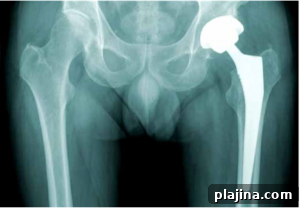
PHOTO: © SKYHAWK911 | DREAMSTIME.COM
These cost differences motivate more than a million U.S. residents to travel abroad for care each year. In addition to Costa Rica, top destinations for orthopedic surgery include Germany, South Korea, Switzerland, the United Kingdom, Spain and Italy. Notable hospitals and centers known for orthopedic care include Inselspital and Schulthess Klinik in Switzerland; Hospital Universitario La Paz in Madrid; Istituto Ortopedico Rizzoli in Bologna; Severance Hospital and Yonsei University and KyungHee University Medical Center in South Korea; Charité – Universitätsmedizin and Helios ENDO-Klinik in Germany; and the Royal National Orthopaedic Hospital in the U.K.
These institutions provide a range of joint procedures tailored to each patient’s condition. Treatment options include joint preservation techniques, minimally invasive procedures that target a specific joint such as the shoulder, hip or knee, and arthroplasty — the complete replacement of a damaged joint with an artificial implant.
Recent advances in robotic-assisted technologies have improved the safety and accuracy of joint replacement. Surgeons can now create detailed 3-D models of a patient’s bones to develop a highly customized plan, and they can perform virtual rehearsals of the procedure before operating. These innovations help optimize implant positioning and alignment, contributing to better outcomes and potentially faster recovery.
Keep in mind that although many joint surgeries are now offered as outpatient procedures, recovery and temporary mobility limitations can affect your short-term plans. When arranging travel for surgery, account for possible delays in mobility. While you may leave with a new hip or knee, strenuous sightseeing — especially over hills or uneven cobblestones — could be difficult in the early postoperative period. Consider scheduling leisure activities before the operation and reserving the immediate post-surgery timeframe for rest, rehabilitation and gentle spa or wellness treatments to support recovery.