
Without visiting, it’s easy to pigeonhole Chicago. People assume they know it: the third-largest city in the United States, a culinary capital, a jazz hub, a comedian’s playground, an architect’s showcase and a writer’s haven. But walking Chicago’s streets reveals there’s no single label that fits the Windy City—especially as it continues to change.
Chicago is comprised of 77 neighborhoods, each with its own character and energy that together form a rich cultural tapestry. “Chicago is much more than its exciting downtown area,” said Lynn Osmond, president and CEO of Choose Chicago and a resident for more than 25 years. “One of my priorities at Choose Chicago is investing in neighborhood tourism to drive visitors to these neighborhoods. Travelers today are seeking authentic experiences, and Chicago is full of genuine attractions that keep people coming back for more. We are not a one-trick pony, and that bodes well for our global perception now and into the future.”
During the pandemic, the city expanded outdoor dining to support neighborhood restaurants. The initiative proved so successful that in 2021 the city launched the Chicago Alfresco Program, awarding grants to extend outdoor amenities across the city. Communities such as Chatham, Humboldt Park and Rogers Park used these funds to create lively public spaces with craft markets, public art and parklets that welcomed visitors while strengthening neighborhood pride.
Bronzeville is another neighborhood seeing major revitalization. Long celebrated as the city’s “Black Metropolis,” Bronzeville was home to icons like Richard Wright, Louis Armstrong and Ida B. Wells. The neighborhood gave birth to gospel music, and today community leaders and residents are working together to highlight Bronzeville’s art scene and historic landmarks, preserving what remains one of Chicago’s most authentic and essential cultural experiences.
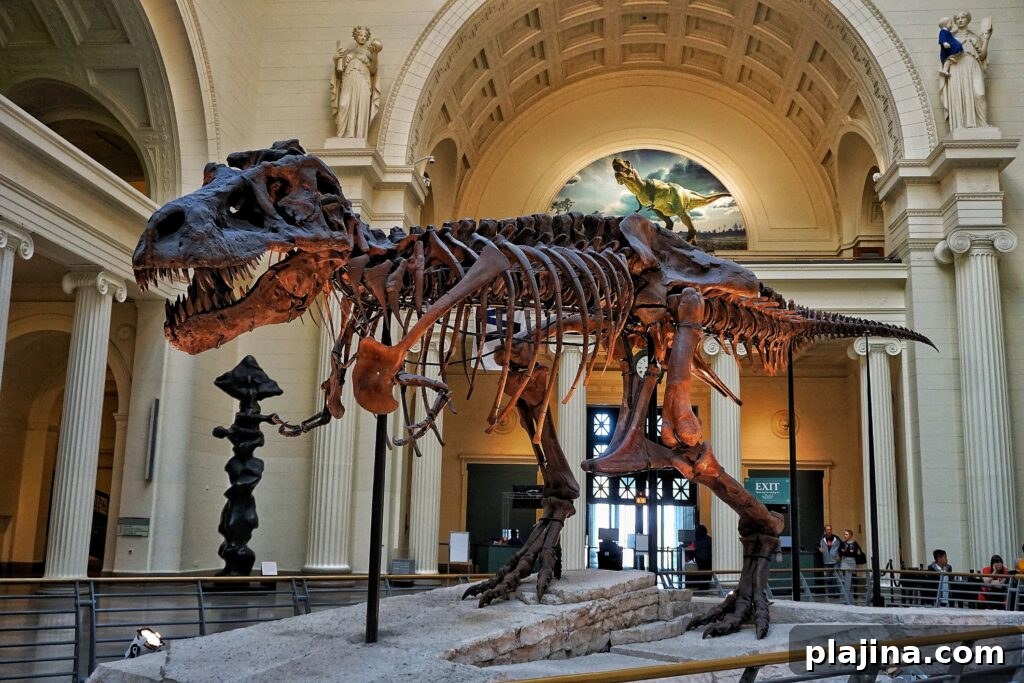
SUE the T. rex on display at the Field Museum © Kermitdo | Dreamstime.com
“The Bronzeville Lakefront project is revitalizing the site of the former Michael Reese Hospital,” said Larita Clark, chief executive officer of the Metropolitan Pier and Exposition Authority and a lifelong Chicago resident. “This incredible mega-redevelopment will lift up surrounding communities and bring new life to Chicago’s historic Bronzeville community. It is a perfect example of how Chicago can honor its rich cultural history while continuing to innovate and make progress.”
Named the most anticipated megaproject of 2022 by Urbanize Chicago, the development will stretch over 48 acres along Lake Michigan. The former Michael Reese Hospital site will be transformed into a campus focused on health and wellness, interwoven with parks, open spaces, retail, commercial and residential buildings designed to foster community and connect residents to the city’s cultural offerings.
Bronzeville sits near McCormick Place, North America’s largest convention center. “We have seen an impressive return of conventions and trade shows to Chicago this year,” Osmond noted. “In fact, the summer months were the busiest ever in terms of total events at McCormick Place.” For six decades McCormick Place has aimed to bring people together to benefit the Chicago region and the state of Illinois, and new projects are underway to enhance that mission.
“One particular infrastructure project that I am excited about is Amtrak’s proposed Chicago Hub Improvement Program (CHIP),” Clark said. “This project would add direct access to McCormick Place for Amtrak travelers, making it even more convenient to attend events on our campus.”
Clark recommends visitors to McCormick Place explore the nearby Lakefront Trail and Museum Campus, which includes Shedd Aquarium, the Field Museum and Adler Planetarium. “I genuinely believe the communities near the McCormick Place campus offer some of the best and most diverse experiences in Chicago,” she added. “Our campus is fortunate to be close to historic and vibrant neighborhoods such as Bronzeville, Motor Row, Chinatown and the Prairie District. Chicago is a special city, and I wake up every day feeling fortunate to lead an organization whose mission centers on bringing people together.”