
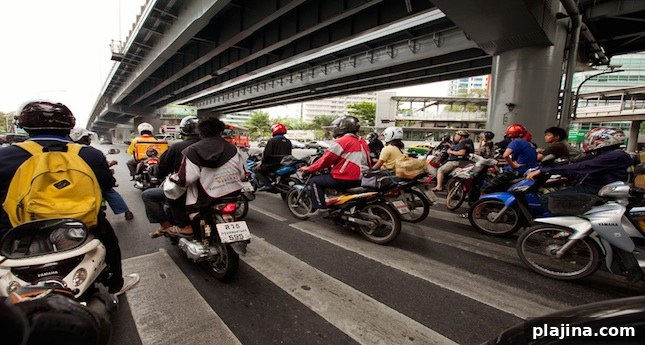
Bangkok’s famously motorbike-clogged streets are getting a boost from Uber, which has introduced a dedicated motorbike service in the Thai capital. Branded UberMOTO, the service launched last month and builds on prior experiments by the company with two-wheeled trips in other cities. Similar motorbike ride options are already offered by regional competitors, reflecting strong local demand for faster, more nimble transport that can navigate Bangkok’s dense traffic.
For riders, UberMOTO integrates into the familiar Uber app experience. In Bangkok’s central districts, users can request a motorbike trip through the same interface they use for car services, making the transition seamless. Booking, fare estimates and driver details appear in-app as with Uber’s other products, while riders choose motorbike instead of a car when speed and flexibility are priorities.
Safety is a core requirement for the launch. Drivers are required to provide helmets for passengers—complying with Bangkok’s municipal rules for motorcycle passengers—and must complete the same screening process applied to other Uber drivers. That screening includes identity verification and a police background check. The platform emphasizes that every rider should be equipped with an approved helmet before the trip begins.
Traffic conditions in Bangkok make motorbike services particularly attractive. Uber notes that the city’s streets become heavily congested, with average traffic speeds falling below 16 km/h and dropping to roughly 11 km/h during peak periods. The city also sees a large number of additional vehicles added daily, which contributes to delays and longer travel times in cars. Motorbikes offer a way to reduce transit time by weaving through tighter gaps and accessing routes that are impractical for four-wheeled vehicles.
Regarding pricing, UberMOTO fares are structured to reflect short, rapid trips. The service starts at ฿10, with incremental charges of ฿3.50 per kilometer and ฿0.85 per minute. Both the minimum fare and the cancellation fee are set at ฿10, providing transparent expectations for passengers. These rates make motorbike rides an economical option for many short-distance commutes, quick errands, and airport transfers where time savings matter most.
Operational details follow the company’s broader standards for driver onboarding and passenger experience. Drivers must meet vehicle condition and licensing requirements, and maintain appropriate safety gear. The app displays driver name, photo, vehicle information, and an estimated arrival time, helping passengers identify their driver and feel secure throughout the ride. Cashless payment and electronic receipts are supported through the app, simplifying transactions and record-keeping for users.
UberMOTO arrives at a time when Bangkok’s transport landscape is evolving. Commuters balance a mix of public transit, taxis, motorcycle taxis, and ride-hailing services when planning daily trips. Motorbike ride-hailing meets a practical need for commuters seeking predictable, shorter journey times without the overhead of owning a motorcycle or navigating public transport transfers.
While motorbike services improve individual mobility, they also raise considerations for urban planning and road safety. Helmet use, driver vetting, and vehicle maintenance remain critical elements for minimizing risks associated with two-wheeled travel. Local regulations and company policies aim to reinforce these protections, ensuring passengers receive safe, regulated transport options rather than informal, unchecked alternatives.
Overall, UberMOTO offers Bangkok residents and visitors another practical mobility option that blends the convenience of app-based ride-hailing with the speed advantages of motorbike travel. By integrating into the existing Uber platform, the service provides a familiar booking experience, clear pricing, and company-supported safety protocols designed to address the unique demands of traveling through one of the world’s most congested urban environments.