
Guatemala City has long been better known for its crime statistics than as a tourism hotspot, but the picture is slowly changing. A series of regeneration projects has injected new energy into the capital of Central America’s largest economy, fostering a cautious optimism among residents. Yet significant challenges continue to limit development and deter foreign investment, reflecting persistent problems across the region.
These contradictions are visible throughout the city. World Bank data show Guatemala has been one of the stronger economies in Latin America in recent years, while social indicators highlight severe poverty, malnutrition and poor maternal and child health outcomes. The gap between economic performance and social wellbeing is stark.
Experts attribute this tension to entrenched inequality between a small ruling elite and the majority of the population. A short drive from the affluent neighborhoods of Zones 10 and 14 to the informal settlements on the city’s outskirts makes that divide obvious. This imbalance has constrained the capital’s tourism and business potential, even though many of the ingredients for growth are present.
One catalyst for change has been the United Nations–backed International Commission Against Impunity in Guatemala (CICIG). The commission’s investigations into corruption in political and business circles helped topple the Otto Pérez Molina government in 2015 after mass protests. Since then, the political scene has remained turbulent. Former president Jimmy Morales, who campaigned on an anti-corruption platform, has faced his own graft allegations and narrowly avoided losing congressional immunity in 2017, illustrating ongoing instability.
Activists such as Natalia Pérez Arévalo of the Justicia Ya collective argue that corruption is deeply rooted and that attempts to curb the CICIG’s work protect the old system. “The corruption has deep roots in the political and economic system of Guatemala,” she says, criticizing those who argue anticorruption efforts hinder growth. For many civic voices, transparency and accountability are prerequisites for sustainable development.
Beyond corruption, investors and development analysts point to high crime rates, uneven infrastructure quality, a shortage of highly skilled workers and weak state institutions as additional obstacles. The World Bank’s Doing Business ranking and Transparency International’s Corruption Perceptions Index indicate there is considerable room for improvement if Guatemala wants to attract more reliable investment and broaden economic opportunity.
Addressing these issues could unlock substantial growth. Guatemala benefits from abundant natural resources, a strategic geographic location, and a young population—advantages that reforms could convert into tangible gains. Despite the difficulties, civic leaders like Pérez remain optimistic. “I believe in the people, I believe in this country, and I firmly believe that there is a different way of doing things,” she says. “I believe in a more equal, safer and prosperous Guatemala.”
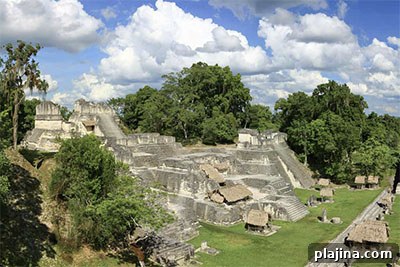
The Mayan ruins of Tikal © QUOC ANH LAI | DREAMSTIME
Tourism is one sector that continues to expand despite infrastructure and safety concerns. Visitor arrivals from January to August 2017 rose 14.2 percent compared with the same period in 2016, driven by interest in attractions such as the Mayan ruins of Tikal, volcano-ringed Lake Atitlán and the colonial city of Antigua. Authorities welcome the growth, while experts urge a stronger focus on sustainable tourism that protects cultural and natural heritage.
“You have to look at the money but also the cultural heritage,” says Claire Dalles, a lecturer at the Universidad del Valle de Guatemala. She emphasizes the shared responsibility of tourism authorities, tour operators and visitors to preserve Guatemala’s historic and natural assets.
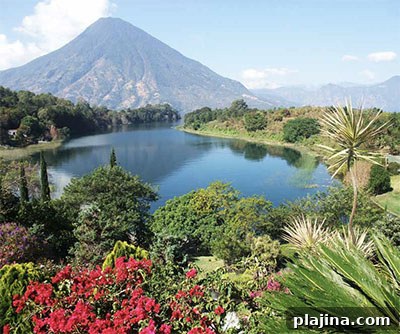
The volcano-ringed Lake Atitlan in the Highlands © SIMONDANNHAUER | DREAMSTIME
Regeneration projects are gradually reshaping the city beyond being a mere stopover. Zone 4, once notorious for crime, now hosts bars, restaurants and cultural spaces such as Karma, Shasta and La ERRE. The historic center in Zone 1 has regained popularity among younger locals after years as a predominantly administrative district. Creative industries are flourishing: galleries like The 9.99 and studios such as Decontrol have strengthened the cultural scene and drawn international attention.
These developments signal a growing civic confidence. Guatemala is still healing from a 36-year civil war that ended in 1996, and many social wounds remain. Nevertheless, many residents sense the country may be on the cusp of meaningful change that could finally realize its considerable potential.
Things to Do in Guatemala City
Guatemala City is gaining recognition as a destination in its own right, with a lively art and culinary scene that complements nearby Antigua. Business travelers commonly stay in Zone 10, the Zona Viva, home to major international hotels, restaurants and shopping centers like Oakland Mall and Plaza Fontabella. Plaza Fontabella also houses Sophos, one of the city’s best bookshops.
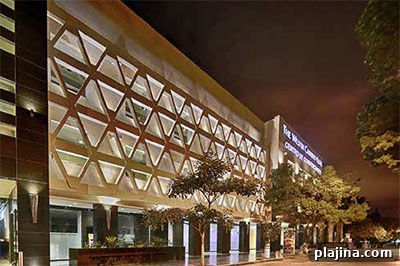
The Westin Camino Real © WESTIN CAMINO REAL
Zone 4 is a hub for innovative dining and nightlife. Mercado 24 and Shasta serve fresh, locally inspired cuisine, while Karma and Espacio Solemne offer lively evening scenes. Coffee lovers can sample specialty brews at Paradigma and Rojo Cerezo, pioneers of Guatemala’s barista movement. For contemporary art, visit La ERRE and The 9.99 in Zone 1, as well as Proyecto Poporopo in Zone 2 and Espacio Sótano 1 in Zone 1.
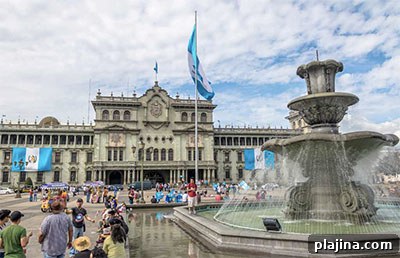
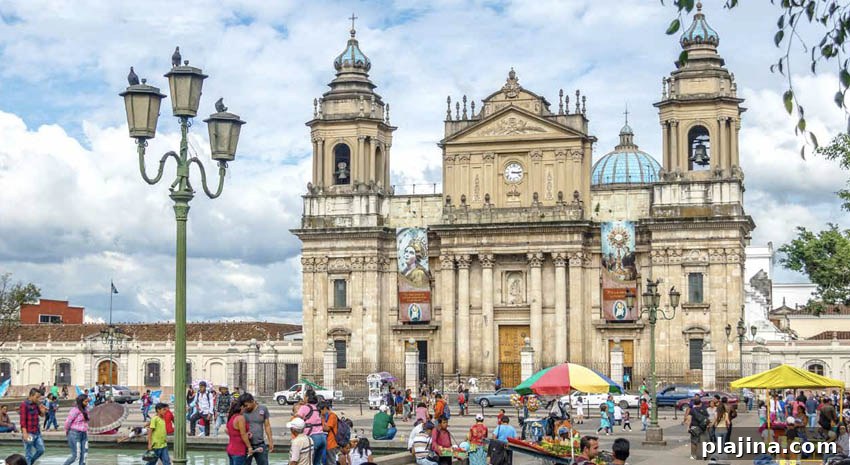
Guatemala National Palace at Plaza de la Constitución © DIEGO GRANDI | DREAMSTIME
You can also explore the presidential palace and cathedral at the central square in Zone 1 and browse the atmospheric central market for local goods and crafts.
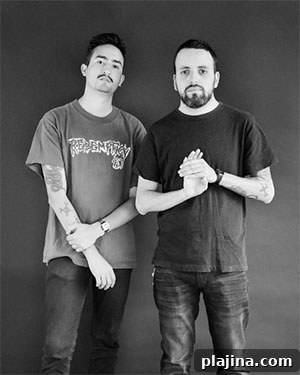
Andres Vargas (left) and Luiso Ponce (right) © DESIGN STUDIO DECONTROL
CHECKING IN WITH LUISO PONCE
Cofounder, Design Studio Decontrol
What inspired you to set up a design studio?
We recognized complementary artistic skills and believed a joined approach could offer something distinctive in the Guatemalan market.
How have creative industries in Guatemala changed in recent years?
The wider availability of creative tools and the internet enabled more experimentation, leading to a new generation of studios and projects outside traditional advertising.
How has the art and design world grown in Guatemala?
Guatemala has long been a leading cultural center in Central America. Recent years have seen higher-quality projects and greater ambition, though more work is needed to compete internationally.
How does the political and economic situation influence your work?
Political dynamics affect everyone in Guatemala. Corruption scandals have pushed people to speak up and demand better governance, which motivates us to work toward positive change in our community.
How can Guatemalan creativity reach an international audience?
Talented local artists and exhibitors are already expanding their reach through persistent effort and quality work. Consistent dedication is the key.
Which creative spaces should visitors see?
Don’t miss Proyectos Ultravioleta, The 9.99 Gallery, Gente Secreta, Sótano 1 and La ERRE, among others.
Guatemala City Info to Go
La Aurora International Airport, the fourth-busiest in Central America, is a two-terminal facility about four miles from Zone 1. The airport, renovated in 2008, serves a number of international carriers and some regional airlines. It is close to Zone 10, where most business hotels are located, but traffic can make transfers lengthy—book a taxi in advance or use the official taxis available outside the terminal. Public transport is not available directly from the airport.
COMING AND GOING
U.S. citizens need a valid passport with at least six months’ validity remaining for stays under 90 days.
OFFICIAL LANGUAGE
Spanish
Guatemala City: Just the Facts
Time Zone: GMT -6
Phone code: Country code: 502
Currency: Guatemalan quetzal
Key industries: Sugar, textiles, tourism
Where to Stay in Guatemala City
BARCELÓ GUATEMALA CITY With two restaurants, a sports bar and a spa, this 5-star hotel is popular with business travelers. 7a Ave., 15-45, Zone 9 $$$
HOTEL PAN AMERICAN Located in Zone 1, this Art Deco property offers smart guestrooms near the central square and the presidential palace. 9a Calle, 5-63, Zone 1 $$
THE WESTIN CAMINO REAL This refined hotel has an outdoor pool and easy access to the restaurants and nightlife of Zone 10. Avenida la Reforma and 14 Calle, Guatemala City $$$
Restaurants in Guatemala City
MERCADO 24 A Zone 4 favorite, Mercado 24 uses fresh ingredients from city markets to create modern dishes for a trendy crowd. Ruta 3 Vía 5, Zone 4 $$
RESTAURANTE ALTUNA This traditional Spanish restaurant in Zone 1 is known for seafood, attentive service and a refined atmosphere. 5a Ave., 12-31 $$
TAMARINDOS A Thai-Italian fusion restaurant with Guatemalan influences, Tamarindos offers inventive dishes and an extensive wine list in Zone 10. Calle 2-19A, Zone 10 $$$