
No visit to Amman is complete without sipping mint tea, sampling sweet pastries and exploring the city’s rich antiquities as locals and travelers move through the lively souks at the heart of the capital. Expect a warm greeting: “Ahlan wa sahlan,” literally “Welcome — you are part of the family.”
Amman sits where Byzantine, Christian and Islamic influences converge, offering a calm, stable destination in a region often marked by volatility. Though the modern Hashemite Kingdom of Jordan was established in 1946, its landscape and culture reflect millennia of history. The capital itself is a study in contrasts, with ancient ruins woven into a growing urban fabric.
Sited in a wadi (valley), Amman makes an excellent base for exploring the compact country. Beyond the city are world-renowned destinations: the buoyant resorts along the Dead Sea, the dramatic desert of Wadi Rum — associated with T.E. Lawrence, “Lawrence of Arabia” — and Petra, the rose-red Nabataean city admired for its sculpted facades and long heritage.
Arrival at Queen Alia International Airport — a modern, energy-efficient gateway whose architecture takes inspiration from palm fronds and Bedouin tents — is the natural first step. From there, many travelers choose to settle into one of Amman’s luxury hotels, whether family-oriented properties or adults-only options, to rest before exploring.
Begin discovery in the city with a small cup of cardamom-scented Arabic coffee and head to Rainbow Street, a bustling strip popular with locals and visitors. Narrow and busy, Rainbow Street is best experienced on foot: cafés, boutiques, bakeries and shisha lounges line the route, creating a vibrant atmosphere for conversation, people-watching and casual dining.
For relaxation, consider the Al-Pasha Turkish Bath near Rainbow Street. This traditional hammam, with marble arches and domed ceilings, offers steam sessions, scrubs and massages in separate facilities for men and women; booking ahead is recommended to confirm times.
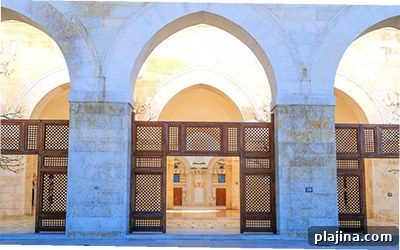
King Hussein Bin Talal Mosque © GRANTOTUFO | DREAMSTIME.COM
Al-Balad, the historic core near the Ottoman-style King Hussein Mosque, is the city’s market district where alleyways brim with vendors selling prayer beads, ceramics, tiles, teapots and textiles. Bukharia souk and Souk Al-Sukkar are ideal for spices, fresh produce and dried fruits: expect pyramids of cinnamon, sumac and sacks of olives among the stalls. For ornate jewelry and costume pieces, the Gold Souk offers glittering displays and lively bargaining opportunities.
Al-Balad also reveals Amman’s Roman legacy. The Nymphaeum, built in 191 CE and originally dedicated to river nymphs, once included a pool. Nearby, the restored Roman amphitheater — oriented north to shade its spectators — now hosts performances and shelters the Folklore Museum and the Museum of Popular Traditions, both presenting mosaics and daily-life artifacts. Close by are the remains of the smaller Odeon theatre, historically seating around 600 people.
Atop Jabal al-Qal’a, the Citadel stands as a commanding site with panoramic city views and archaeological highlights: the Umayyad palace complex, the Temple of Hercules and a Byzantine church. Nearby, the national collection of important finds is displayed at the Jordan Museum, which traces the region’s deep human history through artifacts and exhibits.
Contemporary Amman is thriving as well. The Abdali district is often called the city’s “new downtown,” and Abdali Mall is a modern, multi-level shopping destination built with green technology and local materials. The center blends international boutiques, restaurants and cafés with family-friendly attractions such as Galaxy Park, a themed entertainment zone featuring arcades and play rides.
For outdoor leisure and wildlife watching, Prince Hashem Bird Park in the Shmaisani neighborhood is Amman’s first thematic park and a pleasant place to stroll. King Hussein Park remains the city’s cherished green space: families and couples gather there at sunset to enjoy gardens, a cultural village and open lawns in a relaxed setting.
Amman Info to Go
Queen Alia International Airport (AMM) is located about 19 miles (roughly 30 minutes) south of Amman. Travelers can choose shuttle buses, car rentals or taxis to reach the city; fares to downtown typically range around $20–30, depending on traffic. Ridesharing services are also available in Amman.
Where to Stay in Amman
Four Seasons Hotel Amman Situated on a hill with expansive city views, this luxury hotel is near business and shopping districts and features spacious rooms and refined facilities. 5th Circle, Al-Kindi Street $$$$
InterContinental Amman Located in the diplomatic district, this upscale property attracts business travelers and couples with its tranquil pool, spa and attentive service. Islamic College Street $$$$
Sheraton Amman Al Nabil Hotel A family-friendly option offering children’s amenities, an outdoor pool and convenient access to central Amman. 5th Circle $$$
Restaurants in Amman
Hashem Restaurant A long-standing local favorite for Levantine vegetarian dishes, Hashem serves legendary hummus, falafel and other classics in a casual alfresco atmosphere. King Faisal Street $
Romero Restaurant An intimate restaurant blending Italian influence with local ingredients, known for seafood, pasta and well-crafted mains. 3rd Circle $$$$
Sufra Restaurant A popular spot for Jordanian cuisine presented in a contemporary, elegant setting, Sufra offers traditional flavors with Bedouin-style spice influences. Al Rainbow St. 26 $$–$$$