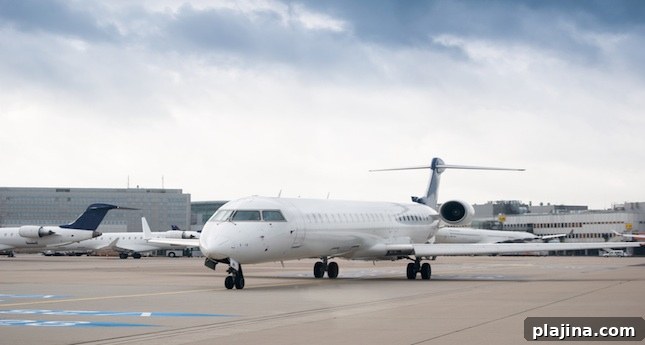
Recent headlines about airplane seating have mostly highlighted how cramped economy cabins have become. Bombardier, the Canadian aircraft manufacturer, is taking a different approach by designing a new single-aisle jet with roomier seats and passenger-focused features. Its goal is to respond to growing demand for more personal space without compromising overall efficiency.
Unveiled at the Farnborough International Airshow in England, the Bombardier CS100 introduces a wider middle seat across the cabin. At 19 inches, the middle seats are about two inches wider than the standard middle seats typically found in today’s economy sections, an increase that can make a meaningful difference in comfort on short- and medium-haul flights. That extra width improves shoulder room and reduces the feeling of being cramped, particularly on full flights or when three adults share a row.
Beyond seat width, the CS100 includes other passenger-oriented improvements. Overhead bins are larger, providing more luggage space and reducing the need to gate-check bags. The aircraft also features some of the largest windows available on single-aisle planes, which increases natural light in the cabin and creates a more open, airy atmosphere. These window sizes enhance the passenger experience by improving views and daylight exposure during flights.
Bombardier delivered the first CS100 aircraft to Swiss International Air Lines in June, and the type entered commercial service on July 15. Early operator feedback has emphasized the improved passenger experience, highlighting how small changes in seat dimensions and cabin design can translate into noticeably better comfort for travelers.
Major carriers have also placed significant orders for the new jet. Delta Air Lines, for example, announced a large order for the CS100 family, committing to 75 aircraft with options for an additional 50. That agreement represents a multibillion-dollar investment and underscores airlines’ interest in modern narrow-body aircraft that balance passenger comfort, range, and operating economics.
These developments arrive as airlines and manufacturers look for ways to differentiate service and improve satisfaction. The industry faces ongoing pressure to optimize capacity and cost, but Bombardier’s approach shows manufacturers can also focus on passenger comfort without sacrificing efficiency. Wider seats, larger bins, and more window area are tangible improvements that address common complaints from flyers while keeping cabin layouts practical for airline operations.
As the CS100 and similar designs enter service with more carriers, travelers can expect gradual improvements in the single-aisle flying experience. Incremental changes like increased seat width are especially relevant on routes where passengers spend several hours aboard aircraft with fewer premium cabins. While not a cure-all for all comfort issues, these design choices mark a clear step toward a more passenger-friendly economy cabin.
Airlines will balance these ergonomic gains against the need to maintain revenue per seat and overall fleet commonality. Nevertheless, as passenger expectations evolve and competition among manufacturers intensifies, models emphasizing comfort features may become more common. For passengers, that means the next generation of single-aisle jets could offer a noticeably less cramped environment than many of today’s older narrow-body planes.
The Bombardier CS100’s combination of slightly wider seating, larger overhead storage, and bigger windows illustrates how targeted design changes can enhance the inflight experience. Early airline orders and initial commercial operations suggest there is both carrier and consumer demand for aircraft that provide better comfort in economy without imposing dramatic changes to airline business models.