
You can feel it almost as soon as you arrive: you are in Mexico, but this is different. This is Yucatán — a Mexican state with an identity so distinct it feels like a country within a country. For centuries Yucatán was isolated from the Mexican interior; until the mid-20th century most contact with the outside world was by sea. Rail links to the rest of Mexico did not arrive until the 1950s, the first major highway from Mexico City opened in 1968, and regular commercial flights into Mérida began only in the 1960s. As a result, many cultural influences came by ship from the United States, Cuba, Europe and Caribbean islands rather than from central Mexico.
Yucatán’s history is deep and layered. Archaeological remains of ceremonial architecture stretch back some 3,000 years, and inscriptions in hieroglyphs date to at least 200 B.C. The region reached its peak during the Classic and Postclassic periods when the Maya built sprawling cities between about A.D. 300 and 1000. Spanish conquest began in the 16th century and colonial rule lasted until the early 19th century, when Yucatán became part of an independent Mexico.
Scattered across the peninsula are countless Mayan ruins, and what is visible today represents only a portion of what remains buried. Large, iconic sites such as Chichén Itzá and Uxmal draw visitors with grand pyramids, ball courts and richly carved façades. Smaller or less-excavated sites like Xcambo, Kabah and Xlapak offer quieter, equally fascinating windows into the region’s past.
The colonial era left its mark in graceful European-style architecture. Mérida, established in 1542, still centers around its Main Square and historic core. Izamal, once an important Mayan center, became a picturesque colonial town under Spanish rule. Valladolid, founded in 1543, preserves a strong Spanish character with brightly painted homes and historic churches.
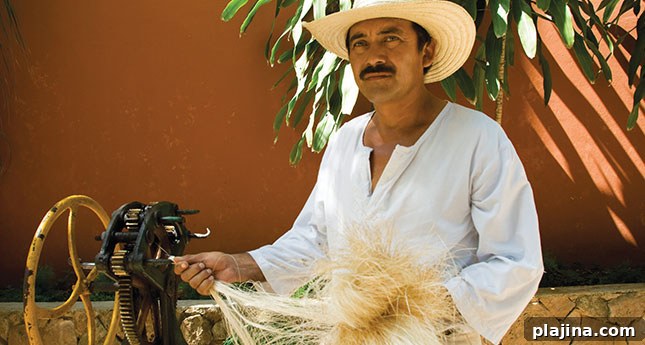
Wealthy landowners built extensive haciendas across the interior during colonial and postcolonial periods. In the 19th century, the fiber-rich henequen plant — known as sisal — became the basis of a booming industry, transforming many haciendas into large agricultural enterprises. The arrival of synthetic fibers in the early 20th century ended that golden era, and many haciendas fell into disrepair. Those that remain restored today serve as evocative reminders of the region’s agrarian history and grandeur.
Contrary to popular association of the Yucatán Peninsula with mega-resorts, the high-rise beaches of Cancún and Cozumel are actually in the neighboring state of Quintana Roo. Yucatán’s Gulf coast runs roughly 235 miles from Celestún to Río Lagartos and is marked by quiet fishing villages, sparsely developed beaches and calm waters. Protected ecological reserves preserve native flora and fauna and make the region a prime destination for birdwatchers: more than 500 bird species from over 70 families can be found here.
Although surface rivers are rare across the limestone Yucatán platform, the underground landscape is rich with water. Rainwater percolates through porous limestone to form subterranean rivers, caverns and sinkholes known locally as cenotes. Some cenotes open to the sky while others lie deep within caves; swimming in their clear, turquoise water is a memorable experience.
Yucatán cuisine is distinctive and reflects a variety of influences from Mayan traditions to European and Middle Eastern flavors. Dishes like queso relleno — a hollowed-out round of Gouda filled with seasoned meat — show a Dutch influence. Papadzules are tortillas filled with egg and topped with a pumpkin-seed sauce that harkens back to pre-Hispanic tastes. Cochinita pibil, pork marinated and roasted in banana leaves, remains a regional favorite and part of the peninsula’s culinary identity.
LODGING
HACIENDA CHICHEN RESORT & YAXKIN SPA
A restored colonial hacienda with charming cottages located very near the Chichén Itzá archaeological zone. Offers a serene, historic atmosphere with modern comforts. $$$
HACIENDA CHICHEN RESORT & YAXKIN SPA
50 Calle 35C x 60 Norte Fraccionamiento Buenavista, Mérida
tel 52 999 920 8407
HOTEL HACIENDA MÉRIDA
A historic 1840 hacienda converted into a tranquil spa hotel in Mérida’s bustling center. Classic architecture and comfortable amenities for a relaxing urban stay. $$
HOTEL HACIENDA MÉRIDA
439 64 Calle 62 x 51 y 53 Centro, Mérida
tel 52 999 924 4363
HOTEL REEF YUCATÁN
Located on an undeveloped stretch of beach close to Mayan ruins, this resort offers extensive amenities and all-inclusive packages for a relaxed seaside escape. $$
HOTEL REEF YUCATÁN
Telchac Puerto
tel 52 999 941 9494
DINING
CASA TEMOZON
Set in Hacienda Temozón, this restaurant highlights regional specialties such as Yucatán-style ribeye, snapper with mango sauce, tamarind cocktails and avocado ice cream. Fine-dining experience. $$$$
CASA TEMOZON
KM 182 Carretera Mérida-Uxmal, Temozon Sur
tel 52 999 923 8089
KINICH RESTAURANT
A relaxed spot with homemade tortillas, generous portions and well-crafted margaritas — a comfortable place to sample local flavors. $$
KINICH RESTAURANT
299 Calle 27, Izamal
tel 52 988 954 0489
LOS ALMENDROS MÉRIDA
Traditional Yucatán dishes such as queso relleno, lime soup and cochinita pibil are served in a lively setting that often features live music. $
LOS ALMENDROS MÉRIDA
Calle 57 between 52 & 50, Mérida
tel 52 999 928 5459
DIVERSIONS
Chichén Itzá tops the list of Yucatán’s archaeological treasures. Dating largely from the seventh century onward, this UNESCO World Heritage site spans several square miles and includes the Kukulkan Pyramid and the Great Ball Court, among other remarkable structures.
Uxmal’s archaeological zone is notable for its horizontal palace complexes, sculptural decoration and the imposing House of the Magician. Dzibilchaltún, one of the region’s oldest sites, extends across a large area, much of it still unexcavated; it also hosts a museum displaying Mayan and colonial artifacts. Ek’ Balam, once abandoned and reclaimed by jungle, has seen significant recent excavation, revealing an elaborate Acropolis and numerous structures.
Mérida blends historic charm and modern life. Its central square is framed by the Cathedral of San Ildefonso — one of the oldest cathedrals in North America — and neoclassical government buildings featuring murals by local artists. The Paseo de Montejo, lined with grand mansions, is home to the Museum of Anthropology and History and offers a pleasant route for strolling and cultural sightseeing.
Izamal preserves a unique colonial ambiance built over an earlier Mayan urban core. The Convent of San Antonio de Padua, with its large courtyard, dominates the town. Painted in warm tones and crossed by cobblestone streets, Izamal invites slow exploration by foot or by horse-drawn carriage.
Spending a night in a converted hacienda is one of the best ways to experience the region’s past. Several haciendas have been transformed into elegant properties offering immersive stays. For a hands-on look at sisal production history, visit Hacienda Sotuta de Peón, where guided tours explain traditional processing methods and include mule-drawn rides through former henequen fields.
Yucatán’s beaches are serene and low-key. Progreso is the state’s principal port and busiest coastal town, with an oceanfront promenade and numerous seafood restaurants. Telchac Puerto offers long stretches of white sand and calm, transparent water — an ideal place to relax and swim.
Coastal ecological reserves protect important habitats. Celestún’s estuary shelters large populations of flamingos and other waterbirds; guided boat tours through mangroves reveal abundant wildlife and include opportunities for refreshing swims in spring-fed waters. Río Lagartos, part of a designated biosphere reserve, is renowned for its birdlife, including a substantial flamingo colony and many other species.
Cenotes are a hallmark of the Yucatán experience. Many cenotes are open for swimming and exploration: Hacienda Sotuta de Peón offers a hidden cave cenote as part of its tour, Dzibilchaltún contains a swimmable aboveground cenote, and Ik Kil, near Chichén Itzá, is a dramatic open cenote accessed by a long stairway down to clear water.
INFO TO GO
Mérida’s Manuel Crescencio Rejón International Airport (MID) lies under 10 miles from the city center. The airport offers basic amenities, an information desk and car rental services. Buses to town run on limited schedules; taxis to the central area are usually affordable. For convenient sightseeing, Turibus double-decker tours provide guided routes and multiple-stop options for exploring Mérida.