
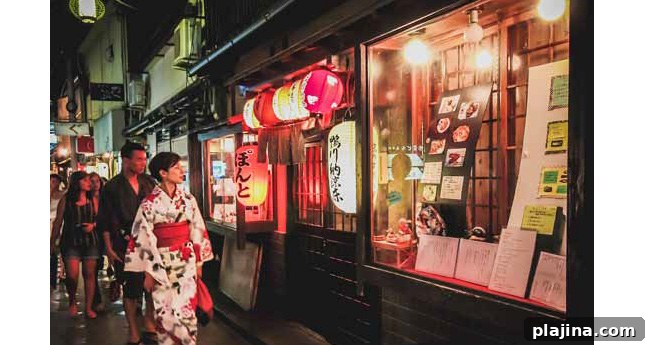
Once the sun slips behind Kyoto’s mountains, the city grows quieter and many shops close, but a lively after-dark world awaits those who seek it. Kyoto, established in 794, offers a varied nightlife that ranges from cozy noodle shops and student-filled dance clubs to elegant riverside restaurants, animated pubs, and traditional performances featuring kimono-clad singers and kabuki actors.
Business travelers often move with Japanese hosts, but if you find yourself exploring alone, consider a pre-dinner cocktail at your hotel: Kyoto’s bar scene typically comes alive after dinner. The Bar at The Ritz-Carlton, Kyoto presents a refined, candlelit setting with a mix of classic and contemporary cocktails, while the Touzan Bar in the Hyatt Regency Kyoto offers an intimate, antique-filled atmosphere and a selection of more than 30 premium sakés, including locally produced varieties.
Kyoto’s inland location makes it better known for vegetables than for raw fish, and the city has a rich tradition of Buddhist vegetarian cuisine—yudofu, for example, is homemade tofu simmered in a light broth and often served with simple accompaniments. Because the imperial court once resided here, Kyoto cuisine tends to be delicate and refined, emphasizing subtle flavors over heavy spices, oils, or strong soy sauces. Dining options span from casual okonomiyaki (Japanese savory pancake) to kaiseki, the elegant multicourse meal rooted in the tea ceremony and regarded as one of Japan’s finest culinary traditions.
Traditional elegant kaiseki meal © Lcc54613 | Dreamstime.com
For outstanding kaiseki, Kikunoi—an institution with more than a century of history—serves seasonal small dishes while overlooking a lit garden; autumn presentations often include chestnuts, fresh ginkgo nuts and garnishes of fiery maple leaves. Near the Imperial Palace, Yoshikawa is renowned for exceptionally light, crispy tempura. For historic vegetarian temple cuisine, Ikkyu, located just outside Daitokuji Temple, continues a culinary tradition that dates back to the 1400s.
Gion is the area with the greatest concentration of teahouses where geiko (Kyoto’s term for geisha) and maiko (apprentice geisha) entertain guests with song, dance and drinking games. Access to many exclusive teahouses usually requires a Japanese host, but Gion Corner offers public performances where visitors can see maiko dance and experience traditional instruments such as the koto or hear Japanese court music.
When searching for a nightcap, remember that many bars in Kyoto are tucked away behind lantern-lit alleys, unmarked doors or smoked glass. Hello Dolly, in the lively Pontocho district, is known for strong drinks and live jazz. Nearby Bar Cordon Noir boasts an extensive whiskey list—some 600 varieties, including notable Japanese brands. Although Kyoto has fewer LGBT-specific venues than Tokyo or Osaka, the gay-friendly bar Azure is welcoming to foreigners.
One practical tip: always carry a business card from your hotel. Presenting it to a taxi driver ensures they can take you directly back to your accommodation at the end of the night, making late returns straightforward and stress-free.