
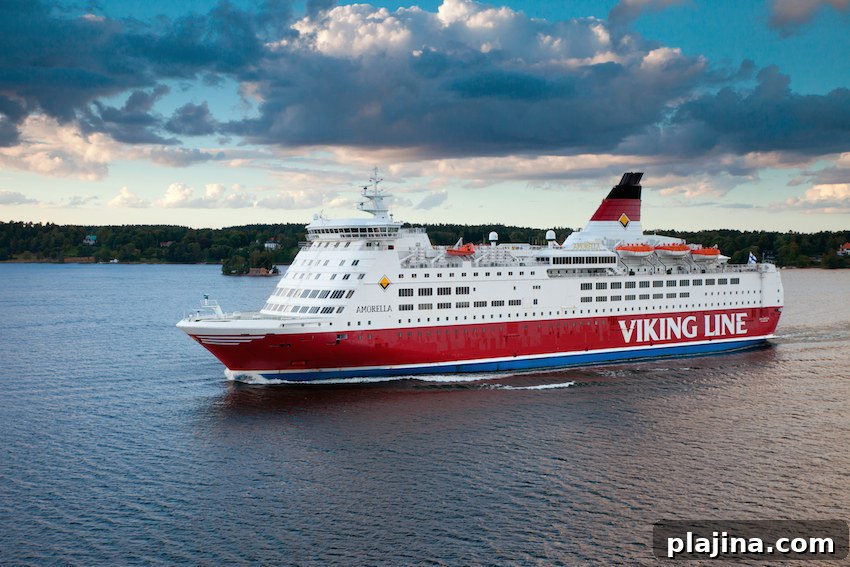
In line with the eco-friendly travel theme of our April issue of Global Traveler, environmentally conscious vacation options and “green” tourism are appearing around the globe.
Even the cruising industry is making strides in sustainable travel. A notable example is the ferry-cruiser Viking Grace. Based in the Åland Islands in the Baltic Sea, Viking Line has brought innovation to passenger shipping by introducing wind-assisted propulsion. The ship is now fitted with a high-tech rotor sail — a cylindrical device that spins to harness wind energy and contribute to propulsion.
The vessel’s ecological credentials were already strong: since 2013 Viking Grace has run on low-emission liquefied natural gas. Adding the rotor sail is expected to further reduce the ship’s carbon footprint by around 900 tons of CO2 per year. The wind-powered rotor is prominent, measuring nearly 80 feet tall and 13 feet wide, and operates smoothly even in maritime conditions. Developed by the Finnish company Norsepower Oy Ltd., the rotor sail applies a straightforward but effective technology that is gaining attention across the cruise sector.
Although this installation may be among the first on a passenger vessel, it is likely not unique for long. Viking Line plans to install two similar rotor sails on its newest ship, which will double the wind-assist power. That vessel is currently under construction in China and is scheduled to enter service by 2020, reflecting the industry’s growing interest in practical, lower-emission propulsion solutions.