
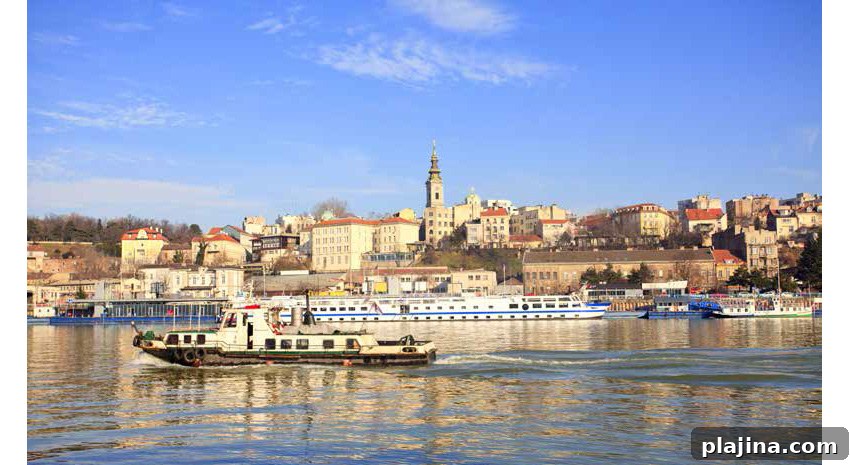
IF THE REST OF THE WORLD can learn anything from Belgrade, it is that appearances can be deceiving. Often labeled “gritty” or “raw,” and even described by one of the city’s best-known writers as “not overly beautiful,” Belgrade rewards those who look beyond the surface.
On the outside, Belgrade may not resemble a polished commercial capital. The city has been destroyed and rebuilt many times since its founding in the third century B.C., and much of its postwar and Soviet-era architecture contributes to a rugged exterior. Yet when you move past that façade, a vibrant, energetic metropolis emerges — one of southeast Europe’s largest and fastest-growing markets.
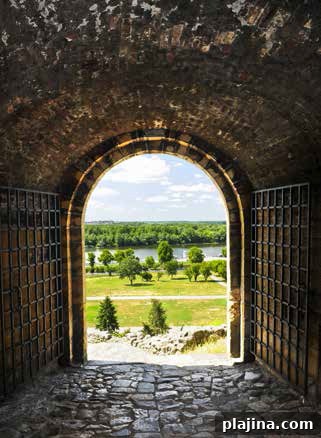
The view from Kalemegdan Fortress © ELENA ELISSEEVA | DREAMSTIME.COM
Located at the confluence of the Sava and Danube rivers in the heart of the Balkan Peninsula, Belgrade has long been a strategic crossroads connecting East and West, with historical trade routes extending toward the Middle East. A recent wave of urban renewal, combined with duty-free access to neighboring markets and comparatively low operating, utility, and labor costs, has fostered a business-friendly environment. The city now boasts world-class restaurants, stylish meeting venues, efficient public transport, and numerous trendy spots ideal for entertaining clients.
For U.S. travelers, a valid passport with at least one blank page is sufficient on arrival at Belgrade’s Nikola Tesla International Airport; visas are generally required only for stays longer than 90 days. Currency controls apply for amounts above €10,000 (roughly $10,630) on entry or exit. All visitors must register within 24 hours of arrival—hotels and registered accommodations typically handle this automatically, while guests staying in private homes should register in person at a local police station.
If you arrive by car, be aware that Serbian authorities do not accept entry from the Serbia–Kosovo border; visitors should enter Serbia through another international crossing. Driving in Belgrade is straightforward: traffic rules are similar to those in the United States, although right turns on red are prohibited unless a green arrow is illuminated. Seat belts are mandatory, and the legal blood alcohol limit is 0.05 percent. Police officers routinely carry breathalyzers and enforce these rules.
Belgrade’s public transport network includes buses, trolleys, trams, and trains that serve the entire city. Domestic trains run by Serbian Railways are covered by the Eurail Global Pass. Taxis are plentiful in central districts or available by phone, but most accept only cash (Serbian dinars). To avoid unlicensed cabs, take vehicles with registration plates that end with the letters TX.
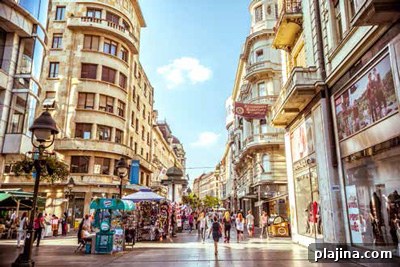
Shopping on Knez Mihailova Street © KIRILL MAKAROV | DREAMSTIME.COM
Business life in Belgrade centers largely around the downtown area, particularly Knez Mihailova Street, the main pedestrian avenue lined with shops and offices. A typical workday often runs from 8 a.m. to 4 p.m. Office dress tends toward smart business attire: men commonly wear shirts and ties, and suits are appropriate; women generally wear dress pants or skirts.
Serbians are known for their warmth and hospitality. Initial business meetings usually begin with a handshake and an exchange of business cards. Among acquaintances, a cheek kiss is common; men may exchange three kisses on the cheek. Much business discussion also takes place over coffee, lunch, or dinner. Receiving a personal dinner invitation is a sign of respect and should not be declined; guests traditionally bring a small gift such as a bottle of wine, cigars, or flowers. During meals, refusing offered food or drink is considered impolite, and maintaining eye contact during a toast is customary.
For business breakfasts or lunches, venues in the city offer a range of settings to suit different needs. The Belgrade Art Hotel provides an elegant dining room for breakfast or business lunches with buffet and à la carte options. To impress clients, Kalemegdanska Terasa inside Kalemegdan Fortress delivers stunning city views and a refined menu that blends local specialties with French influences, complemented by a curated wine list featuring Serbian and international labels. For a livelier atmosphere, Ambar Restaurant on the Sava River in Beton Hall is popular with the fashionable crowd for its craft cocktails, extensive selection of regional rakija, and contemporary Balkan dishes; group menus such as the Balkan Experience or Endless Brunch are particularly well suited for entertaining large parties.