
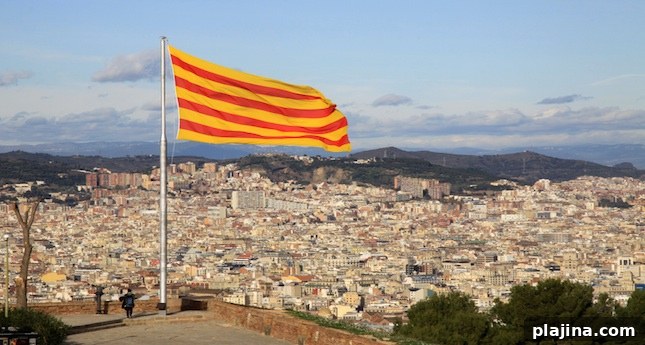
Last month, a majority of voters in Catalonia took part in an unofficial referendum on seceding from Spain. According to organizers, roughly 81 percent of participants supported independence.
Legally, Catalonia’s regional parliament has also moved toward separation. In November the assembly approved a plan to begin the process of detaching from Spain by 2017, a step that Madrid says would conflict with the Spanish constitution. The Barcelona-based government passed the motion by a vote of 72 to 63, declaring “the start of a process toward the creation of an independent Catalan state in the form of a republic” and describing it as “a process of democratic disconnection not subject to the decisions by the institutions of the Spanish state.”
The unofficial vote drew large turnout and was organized by thousands of volunteers. Organizers said about 4,000 people helped run the event, and roughly 2.25 million residents — approximately half of the region’s eligible voters — took part. Although held in violation of Spanish law, supporters treated the vote as a major demonstration of popular will. Catalonia has staged similar consultative votes more than a dozen times in recent years, but this one was the largest to date.
Madrid responded quickly, dismissing the vote’s legal force. Spanish Prime Minister Mariano Rajoy emphasized the unity of the country, saying, “Catalonia is not going anywhere. Nothing is going to break,” and vowed to take steps to halt the independence drive.