
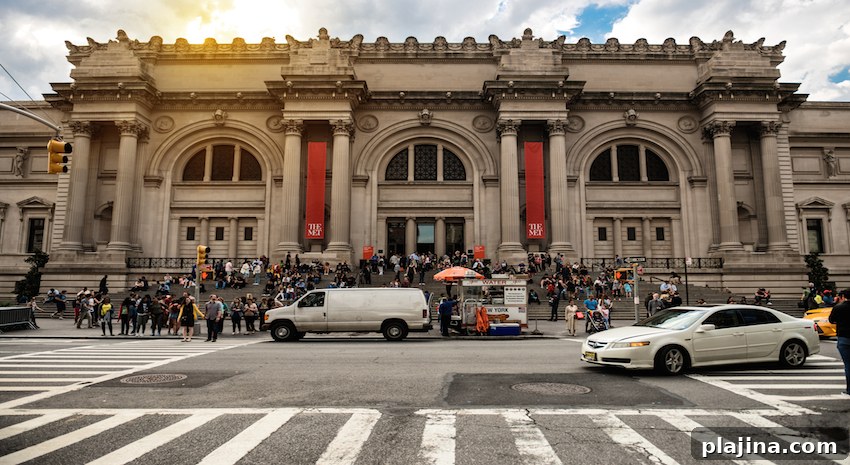
Several major exhibitions will open this autumn at the Metropolitan Museum of Art in New York, presenting a wide range of works across sculpture, painting, printmaking and mixed media. At The Met Fifth Avenue, “Rodin at the Met” (Sept. 16–Jan. 15, 2018) brings together nearly 50 examples of Auguste Rodin’s marble, bronze, plaster and terracotta sculptures in the newly renovated Iris and B. Gerald Cantor Sculpture Gallery. The presentation includes iconic works such as The Thinker and The Hand of God, alongside lesser-seen pieces like The Tempest. Nearby in Gallery 809, visitors can view a broad selection of Rodin’s prints, letters, drawings and illustrated books, paired with photographs that illuminate the sculptor’s practice and legacy.
At The Met Breuer, “Delirious: Art at the Limits of Reason” (Sept. 13–Jan. 14, 2018) examines art from 1950 to 1980, a period shaped by geopolitical turmoil and an intensified fascination with altered states and the irrational. Organized into four thematic sections—Vertigo, Excess, Nonsense and Twisted—the exhibition brings together roughly 100 works by 62 artists working across diverse media. The roster includes Dara Birnbaum, Hanne Darboven, Nancy Grossman, Philip Guston, Eva Hesse, Yayoi Kusama, Ana Mendieta, Bruce Nauman, Hélio Oiticica, Claes Oldenburg, Abraham Palatnik, Paul Thek and Stan VanDerBeek, among others, highlighting experimental and boundary-pushing practices of the mid-20th century.
Also at The Met Breuer, “Edvard Munch: Between the Clock and the Bed” (Nov. 15–Feb. 4, 2018) showcases 45 major compositions by Munch that span six decades and include 16 self-portraits. Many works in this exhibition have rarely—if ever—been displayed in the United States; more than half of the pieces come from the artist’s own collection, offering intimate insight into his artistic evolution and personal vision.
Back at The Met Fifth Avenue, a major retrospective of British artist David Hockney (Nov. 27–Feb. 25, 2018) surveys his multifaceted career through paintings, drawings, photographs and video. The exhibition traces Hockney’s ongoing investigation into perception and pictorial space, from early works to recent experiments with digital media. These Met dates mark the exhibition’s only appearance in North America, making it a significant opportunity to experience the breadth of Hockney’s work in one venue.
Together, these autumn exhibitions provide a rich and varied program for visitors: classical and modern sculpture in dialogue with archival materials, mid-century experimental practices that challenge reason and form, intimate self-examination through Munch’s paintings, and a comprehensive look at one of Britain’s most celebrated contemporary artists. Whether drawn to monumental sculptures, daring conceptual work, emotionally charged canvases or innovative multimedia pieces, audiences will find substantial and thoughtfully curated presentations across the Met’s two sites this season.