
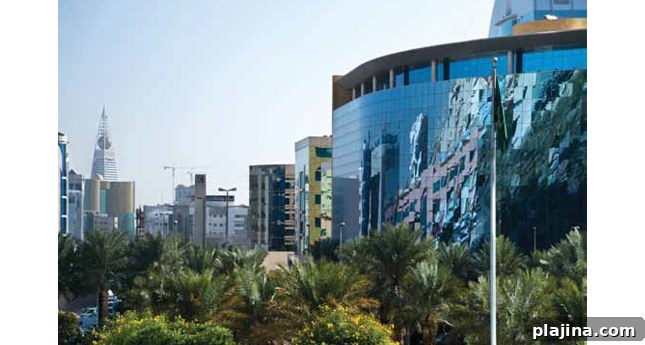
Don’t be deceived by Riyadh’s office towers and looping freeways into thinking it is just another modern metropolis. The gleaming skyscrapers and multilane highways coexist with minarets, domes and traditional neighborhoods, reflecting a society shaped by Islamic law and customs. Public life is regulated: gender separation is observed in many settings, alcohol is prohibited, and public punishments remain part of the legal system. These distinctive social norms frame daily life in Saudi Arabia’s largest city.
Riyadh, historically called Arriyadh, traces its roots to earlier settlements but became the national capital in 1932 when King Abdul Aziz unified the kingdom. From a walled oasis it transformed into a late-20th-century boom town. Major expansion began in the 1940s and accelerated during the oil-driven modernization and industrialization of the 1970s. In 1972 authorities created the High Commission for the Development of Arriyadh to guide economic, social, cultural, urban and environmental growth. Today the city is the seat of the Royal Court and most government agencies and serves as a regional hub for business and diplomacy, with a population of several million, a significant portion under age 15.
Al Faisaliah Tower © Swisshippo | Dreamstime.com
Olaya, north of the old city, is Riyadh’s commercial heart, dominated by landmarks such as the Al Faisaliah Tower and the Kingdom Centre. West of the center, the Diplomatic Quarter spreads across landscaped grounds that include parks, restaurants and nature trails amid embassy compounds designed by international architects. The city is largely car-oriented, linked by a network of highways where speed controls and cameras are common; pedestrians are relatively uncommon, though a metro system is under development to improve urban mobility.
In recent decades Riyadh privatized key utilities and expanded infrastructure. Water, electricity and telecommunications underwent reform between 2003 and 2013, and desalinated coastal water supplements local supplies. Parks and botanical gardens flourish despite the desert climate. A multi-stage sanitary waste disposal plan is being implemented, and the “Arriyadh Future Vision” program advances economic development, public services, utilities, transportation, environment and housing projects.
The city’s economy centers on oil and gas, which historically have driven national income and remain dominant. Recognizing the risks of dependence on hydrocarbons, the government has pursued diversification to create jobs and broaden the economy. Efforts include government financing and incentives to develop manufacturing, finance, information technology and other sectors.
Government agencies such as the Saudi Industrial Development Fund (SIDF), established in 1974, have provided financing to stimulate industry, agriculture and construction. The Saudi Arabian General Investment Authority (SAGIA), formed in 2000, promotes foreign direct investment. Industrial zones around Riyadh host hundreds of factories producing foods, fertilizers, garments, plastics, building materials and other goods. Major initiatives include the King Abdullah Financial District, planned to accommodate domestic and international financial firms, and Riyadh Techno Valley at King Saud University, which supports research commercialization across chemicals, agriculture, environment and IT.
The defense and aviation industries maintain maintenance and repair facilities, while the real estate and construction sectors expand to meet growing demand for housing and offices. Riyadh also serves as a distribution center for agricultural products, producing a significant share of the kingdom’s grains, dates, vegetables and livestock. Mining activity, led by firms such as Ma’aden, includes gold operations and exploration of phosphate and aluminum resources.
Health and education infrastructure is extensive. King Fahad Medical City is one of the region’s largest modern medical complexes, supported by multiple hospitals and primary care centers that offer free diagnosis and treatment and conduct medical research, including work on diabetes. Riyadh hosts several public and private universities and vocational institutions; Princess Nourah bint Abdulrahman University is one of the world’s largest women-only universities. Saudi scholarship programs also send many students abroad for higher education.
Although tourist visas are limited and many visitors come for work or pilgrimage, tourism is a growing industry. Riyadh supports numerous travel agencies, museums and hotels, and the Riyadh International Convention and Exhibition Center stages trade shows and conferences. National programs promote festivals and regional tourism, and selective openings of borders for special groups have occurred in recent years.
Membership in the World Trade Organization and favorable rankings on some business indicators reflect the country’s role in the global economy, but the government faces fiscal and social challenges, including diversifying revenue, reforming public spending and creating jobs for a young population. For foreign businesses, navigating an environment that mixes centralized authority, traditional patronage and new reform measures requires patience and local knowledge. English is widely used in business, but observance of prayer times, local customs and identification requirements is essential.
For expatriates, Riyadh offers financial advantages such as tax-free income, housing allowances and competitive salaries, which help offset social restrictions. Demand for overseas professionals remains strong in many sectors. International business organizations and chambers of commerce support foreign companies working in the city, and despite cultural differences many multinational firms continue to pursue opportunities in Riyadh.
Things to Do in Riyadh
Riyadh’s cultural attractions reflect its history and heritage. The restored Al-Thumairi gate and fragments of the old mud-brick city wall sit near the Masmak Fortress, a key historic site associated with the recapture of Riyadh in 1902. Deera Square, adjacent to the Great Mosque and other civic buildings, is a prominent public space. The King Abdul Aziz Historical Centre and Murabba Palace showcase traditional crafts, clothing and cultural artifacts, while the National Museum uses modern displays to present Arabia’s long history.
Exit gate of Masmak Fortress © Ragarwal123 | Dreamstime.com
Shopping is a notable pastime: Olaya’s large malls offer international brands and electronics, while traditional souks near the historic center sell gold, jewelry and Bedouin crafts. One floor of the Kingdom Centre is reserved for women, and smaller markets like Souq al-Thumairi offer a range of local goods and souvenirs.
The Kingdom Centre tower © Swisshippo | Dreamstime.com
Dining and entertainment are shaped by local customs. Some hotels and venues offer less strict gender separation, but many public restaurants maintain separate dining areas for unrelated men and women. Private homes and expatriate clubs provide more relaxed social settings. Spa and leisure facilities are often gender-specific, and English-language newspapers list cultural events organized by the international and diplomatic communities.
CHECKING IN WITH LYLE WHITE
Vice President, Power Generation, Black & Veatch
What is it like to do business in Saudi Arabia?
Business in Saudi Arabia requires patience and respect for local procedures. Decision-making can be hierarchical, and licenses or approvals are strictly enforced even for established foreign partners. Once formalities are observed, business relationships can be productive.
How is the protocol different, and what adjustments are required?
Engage with the appropriate officials and follow the proper channels. Meetings and negotiations will pause for prayer times, and interactions may follow a more formal pace than in some Western contexts.
How do you deal with women in business?
Women’s public roles have been more limited historically, and in many business contexts male counterparts are the primary contacts. Events that include families are typically structured to reflect local customs.
How do businesspeople relax after work?
Alcohol is not available publicly, so expatriates often socialize in private clubs or at home. Sports such as soccer and camel racing are popular, and expats follow international sports via satellite broadcasts.
What are the advantages of working in such a restricted environment?
High demand for international expertise and substantial investment in development create significant professional and financial opportunities.
Riyadh: Just the Facts
Time Zone: GMT + 3
Phone Code: Country code: 966 City code: 11
Entry/Exit Requirements: Visitors generally require a visa and a passport valid for at least six months. Entry is typically granted for official business, pilgrimage or approved tourism channels; women may need a sponsor or confirmed accommodations depending on visa rules.
Currency: Saudi riyal
Official language: Gulf Arabic
Key Industries: Oil, petrochemicals, finance, transportation, agriculture, communications
Riyadh Info to Go
King Khalid International Airport is located about 20 miles north of the city and operates multiple terminals for international and domestic flights. Travelers should expect security screening and customs inspections; certain items, such as pork, alcoholic beverages and illegal drugs, are prohibited. Taxi and hotel transfer options are available, and travel time to the city center is approximately 30–45 minutes in light traffic. Allow extra time for airport processing on arrival and departure.
Where to Stay in Riyadh
AL FAISALIAH HOTEL A luxury property located within the Al Faisaliah Tower in the business district, offering meeting facilities, a spa and multiple dining options. King Fahad Road
FOUR SEASONS HOTEL RIYADH AT KINGDOM CENTRE Located in the iconic Kingdom Tower, this hotel features panoramic city views, dining venues and business facilities. King Fahad Road
THE RITZ-CARLTON, RIYADH An expansive, opulent hotel set on large grounds near the Diplomatic Quarter, with multiple restaurants and leisure facilities. AlHada Area, Mekkah Road
Restaurants in Riyadh
AL NAKHEEL Offers Middle Eastern and North African specialties in an authentic setting with seasonal terrace dining. Al Khozama Center
THE GLOBE A distinctive dining venue set inside the glass sphere of the Al Faisaliah Tower, serving Arabic and international cuisine with panoramic views. Al Faisaliah Hotel, King Fahad Road
MONDO A fusion restaurant serving a mix of Asian and Western dishes in a hotel setting with poolside ambience. InterContinental Riyadh, Al Maather Street