
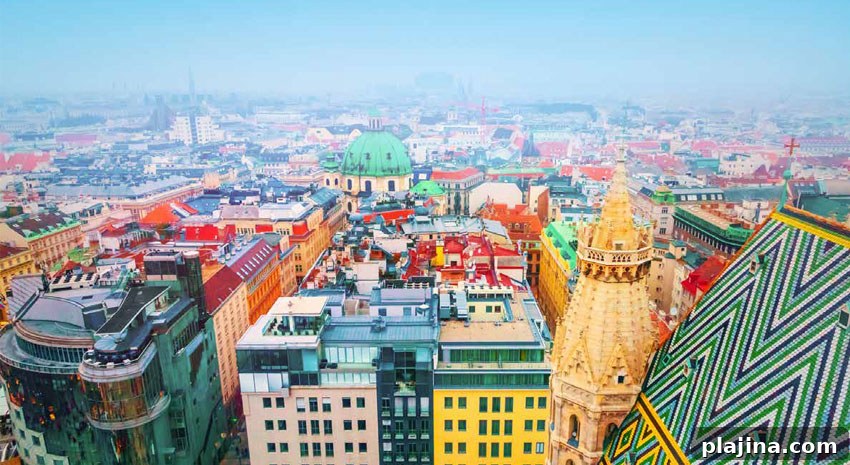
Even with its legendary coffeehouse culture, distinguished concert performances and celebrated balls, a great deal of work happens in Vienna. As both a federal state and Austria’s political, economic and cultural center, this riverside metropolis attracts leisure travelers, residents seeking a high quality of life and international business alike. Vienna’s appeal rests on a skilled, educated workforce, a high standard of living and abundant access to both cultural and natural activities. Notably, nearly half of the city’s surface is devoted to green space.
The recently released Mercer Quality of Living survey once again placed Vienna at number one, marking its tenth consecutive year as the world’s most desirable city to live in. Those same quality-of-life factors also make Vienna attractive to businesses: more than 200 multinational corporations operate headquarters here. Prominent employers include Telekom Austria, ÖBB Holding AG, Heineken C&EE, Siemens Group Austria, OMV AG, A-Tec Industries AG and PORR Group, among others. Vienna also functions as a gateway to Central and Eastern European markets.
While many visitors know Vienna for its musical legacy and the composers who called the city home, another important facet of urban life is its connection to nature and viticulture. Remarkably, Vienna is a major wine-producing region contained within an urban boundary, with about 1,512 acres of vineyards and roughly 155 wineries inside the city limits.
“The local wine industry actually predates the city’s history,” says Viennese winemaker Rainer Christ, whose family’s winemaking tradition stretches back four centuries. “When the Romans arrived around 2,000 years ago, grape cultivation was already established.”
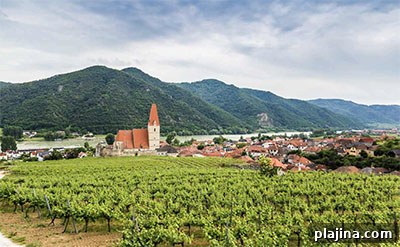
Vineyard in Weissenkirchen © THIAGOGLEITE – DREAMSTIME.COM
Today, vines are largely grown on the sloping hillsides along the Danube. Vienna protects this wine heritage through regulations that require vineyards within the city limits to be cultivated, preventing their conversion to real estate development. The principal local grape is Gemischter Satz. Christ notes that roughly 62 acres of vines yield about 120,000 bottles of wine, and that in favorable years—perhaps once a decade—the harvest is late enough to produce sweet wines.
Research has shown that wine contains polyphenols that, in moderation, may support health. Equally important is the cultural practice of enjoying a thoughtful glass with a meal among friends or family—an element of Vienna’s lifestyle that emphasizes well-being. This tradition is visible throughout the city in the form of the Viennese heuriger, the local wine tavern where community, food and wine come together.
Wine production and a flourishing gastronomy scene boost the city’s economy while enhancing quality of life. “We can talk about schnitzel because we have the best in the world, but we have a lot of exciting young chefs who are creating a culinary movement,” says Vienna-based chef Konstantin Filippou, a two-Michelin-starred chef. “Tradition is important, but we can offer far more.”
Vienna’s postwar decision to maintain its streetcar system—largely because funds weren’t available to replace it—has proved an advantage. Today, the city’s public transport network is efficient and user-friendly, and it is expanding with a new U5 metro line and an extension to the U2 line, improving connectivity across the metropolis.
The city is also home to some of Europe’s most impressive museums and galleries, including the Leopold Museum, the Albertina and the Belvedere. The Belvedere, originally built as a palace, contains the largest collection of Gustav Klimt works—24 paintings including the iconic The Kiss—out of only about 150 Klimt works worldwide.
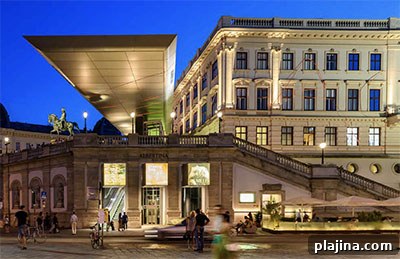
Albertina Museum exterior © RADUB85 – DREAMSTIME.COM
By the end of 2020 the city projected 5,755 new hotel beds, and the visitors who fill those rooms explore Vienna’s culinary offerings, fine wines, major museum exhibitions and world-class music. Beyond the headline attractions, travelers may discover expansive gardens, meticulously maintained green spaces, professional services and a highly efficient transport network—elements that together define Vienna’s exceptional livability. City stewards continuously seek ways to improve life for residents and guests alike.
“We can’t worship the ashes,” says Jasper Sharp, adjunct curator for modern and contemporary art at the Kunsthistorisches Museum. “Galleries are moving here because of the pace of life. Now, eight or 10 new galleries have challenged the status quo. That’s a good thing. We need to light the fires for the future instead of simply continuing to polish the legacy.”
Things to Do in Vienna
Balanced living is a priority for the Viennese, and wellness is woven into urban life. Follow the locals and plan a half-day visit to Therme Wien, the city’s vast thermal spa complex fed by natural springs. The water has a noticeable sulfur content and is prized for relaxing muscles, easing joint discomfort and aiding certain digestive complaints.
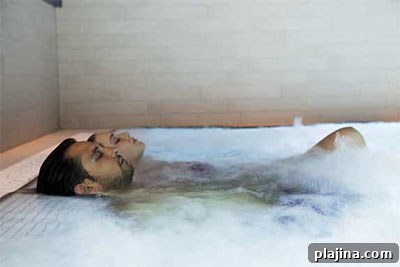
Thermae Wein spa relaxation © THERMAE WEIN
Therme Wien features a series of themed stations—Rock of Beauty, Rock of Peace, SaunaRock, AdventureRock and FitnessRock—arranged along a flowing stream. Facilities include indoor and outdoor pools, a wild water canal, aromatherapy rooms with waterbeds, a dramatic grotto pool and about 2,500 loungers. The spa is also home to Austria’s first thermal baths library. Visitors can relax in the fire lounge, enjoy an audiobook, or catch a film in the on-site cinema. For fitness-minded guests, a modern gym is available, while Brine World offers 25 saunas and steam baths and a floatation pool. After bathing, guests can stroll the gardens or visit Kurkonditorei Oberlaa pastry shop next door for coffee and pastries.
Checking in with Norbert Kettner
Director, Vienna Tourist Board
What upcoming development, program or opportunity makes you most excited about Vienna’s future?
In 2020 the city celebrated the 250th anniversary of Ludwig van Beethoven. Beethoven came to Vienna at 22 and stayed, but in this global capital of music the celebration extends beyond a single composer to music itself—in original venues, at world-class concert and opera houses, in top educational institutions and within a dynamic, creative music scene.
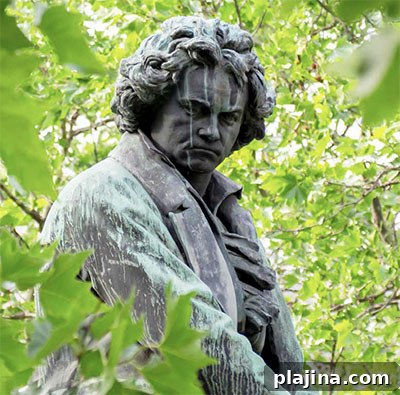
Statue of Ludwig van Beethoven © FOTOMAREKKA – DREAMSTIME.COM
Can you comment on Vienna as a brand?
The Vienna brand belongs to everyone who shapes the city—residents, temporary inhabitants and visitors. Today we speak of a “visitor economy” rather than traditional tourism, a term that reflects broader responsibilities. Instead of focusing solely on attracting more visitors, city strategy now balances the needs of stakeholders and aims for sustainable growth: decentralized points of interest, economic benefits and high local acceptance. Recent surveys indicate 94 percent of Viennese view tourism positively—an encouraging signal for balanced development.
What’s something most visitors to Vienna are unlikely to be aware of?
This year marks 100 years since the start of “Red Vienna.” From 1919 to the early 1930s the city implemented progressive policies in social welfare, health, education and housing—systems that still benefit Vienna today and are emulated by cities worldwide. Those policies are key pillars of the high quality of life residents enjoy.
Vienna Info to Go
Vienna International Airport (Flughafen Wien-Schwechat) lies about 11 miles east of the city. Public transportation is well developed: the S7 express train serves Wien Mitte and Wien Praterstern from the airport roughly every 30 minutes with a journey of about 30 minutes. Other options include twice-hourly ÖBB Railjet nonstop service to Vienna Main Station and Wien Meidling Station, the City Airport Train (CAT) direct to Wien Mitte in about 16 minutes, and direct buses to the city center. Official taxis are available with fares around $50 to central Vienna. Major rental car agencies operate from the airport, and private car services can be arranged through several companies.
Vienna: Just the Facts
Time zone: GMT +1
Phone code: Country code: 43, City code: 1
Currency: Euro
Key industries: Manufacturing, construction, trade, visitor economy (accommodation and gastronomy), communications and real estate
COMING AND GOING
U.S. citizens must hold a passport valid at least six months beyond the date of entry with at least one blank page. Stays of 90 days or less do not require a visa.
OFFICIAL LANGUAGE
Austrian German
Where to Stay in Vienna
ANDAZ VIENNA AM BELVEDERE Part of the Hyatt collection, this stylish lifestyle hotel is close to the city center with a strong focus on contemporary art and design, serene luxury and attentive service. Arsenalstrasse 10 $$$$
DAS TRIEST, A DESIGN HOTEL A luxury option in the city center offering bespoke furnishings and an acclaimed dining menu by chef Josef Neuherz at the Collio Restaurant. Wiedner Hauptstrasse 12 $$$$
SO/VIENNA A centrally located modern hotel with an art-house ambience, sleek rooms and an 18th-floor bar offering wide city views. Praterstrasse 1 $$$
Restaurants in Vienna
MAYER AM PFARRPLATZ Once Beethoven’s private residence, this wine tavern is known for classic Austrian dishes like sauerkraut and roast pork served with young heuriger wines under a special license. Pfarrplatz 2 $$
RESTAURANT OFENLOCH Dine beneath vaulted ceilings in one of the city’s oldest establishments (dating to 1704). Seasonal dishes highlight local produce, such as wild garlic in spring. Kurrentgasse 8 $$$
SKOPIK & LOHN Enjoy traditional Austrian fare and local wines beneath a ceiling fresco by Otto Zitko; standouts include chestnut gnocchi with nut butter and Brussels sprouts. Leopoldsgasse 17 $$$