
Puglia is often called the heel of Italy’s boot, and the southern peninsula of Salento completes that image. This narrow, flat stretch of land is bordered by the Adriatic Sea to the east and the Ionian Sea to the south. Warm, sun-drenched days tempered by steady maritime breezes create excellent conditions for viticulture. Long hang times allow grapes to ripen slowly and develop complexity; mineral-rich clay and limestone soils add structure, and large diurnal temperature swings help preserve freshness and acidity.
For decades Salento was known primarily for reliable bulk production of generous, tannic reds. Today, however, a new generation of winemakers is refining a distinct regional identity focused on quality. Leading that shift is Varvaglione, a family-run, fourth-generation winery founded in Pulsano in 1921 by Cosimo Varvaglione. He first planted vines to supply his family and later provided wine to the local navy base.
Varvaglione remains one of the region’s oldest and most respected producers. It is the largest private operation in the area, producing roughly five million bottles annually, with about 85 percent exported to some 70 countries.
Now overseen by Cosimo’s grandson Angelo, the estate combines traditional practices with modern technology and an organic approach. Precision tools such as drones equipped with spectrophotometric cameras help detect nutrient deficiencies in the vines. An experimental vineyard featuring 580 varieties, managed with dry farming and minimal intervention, allows the team to test which grapes are most resilient to climate change.
© Varvaglione 1921 Winery
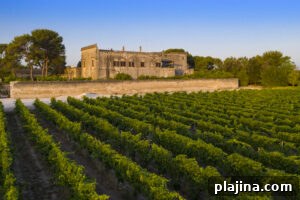
Visitors to the estate can take tours and tastings at Masseria Pizzariello, a historic farmhouse from the 1600s set among olive groves. Here the family showcases native varieties and its commitment to terroir-driven wines. The estate’s flagship, Papale Oro, honors the Apulian Pope Benedict XII, who once owned land in the area. Made from 100 percent hand-harvested Primitivo from the Manduria DOC — the top appellation for Puglia’s signature red — Papale Oro exemplifies the plush, polished side of Primitivo. Younger vintages display plum and sour cherry notes that evolve with age into licorice, tobacco leaf and Marsala-like aromas, proving that Primitivo can develop gracefully over time.
Other local varieties express distinct characters. Negroamaro offers red and black fruit aromas such as strawberry and black cherry, with smooth tannins and a more approachable profile. Susumaniello, a nearly extinct variety experiencing a revival, yields deep, intense wines with spice and a balsamic edge. Many producers in Puglia, including Varvaglione, often serve reds slightly chilled — a tradition that can surprise newcomers but adds a refreshing lift, especially in warm weather.
White wines from the region are equally notable. Falanghina (often spelled Falaghina) brings zesty lemon, bright acidity and a savory minerality; its sparkling version adds a pleasant bitter-almond note. Fiano leans toward stone fruit, pear and elderflower while retaining a coastal freshness. Primitivo also produces an easy-drinking, fruit-forward rosé that suits the local climate and cuisine.
Looking ahead, Varvaglione plans to develop a wine resort and spa of roughly 30 villas housed within a restored 16th-century building on its property. Until then, guests can enjoy meals at the Masseria, where tastings include estate wines and fragrant olive oils paired with regional dishes such as orecchiette and meatballs prepared with Primitivo. These simple, flavorful combinations underline how central wine is to everyday life in Apulia.