
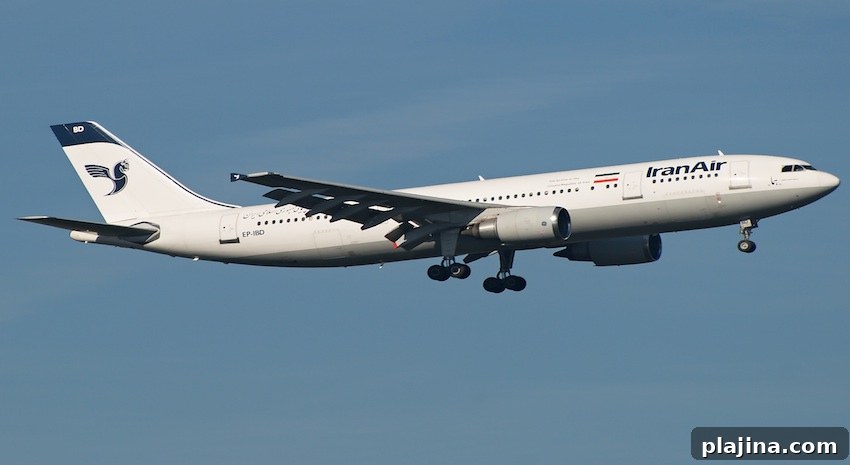
Last month the U.S. Treasury Department approved airplane sales to Iran by both Boeing and Airbus, issuing licenses that allow the manufacturers to do business with Iran Air.
The decision follows the partial lifting of U.S. sanctions on Iran under the 2015 nuclear agreement among Iran, the United States and five other nations. That diplomatic breakthrough reopened commercial opportunities for Iran’s civil aviation sector after years of restrictions.
Earlier this year Boeing signed a memorandum of agreement with Iran Air for the purchase of 80 aircraft. With the newly issued Treasury license, Boeing can move forward to finalize and deliver those planes. Airbus, which reached an agreement in January, plans to deliver 118 aircraft — a mix of A320s and A330s — to Iran Air; approvals for those deliveries are expected to be finalized soon.
The Treasury approvals were debated in Washington. In July, House Republicans passed two measures aimed at blocking Boeing’s sales to Iran Air, citing concerns that commercial aircraft could be diverted for military use or used to transport military cargo. Lawmakers argued for stricter safeguards before allowing such large transactions.
A Treasury Department spokesperson said the licenses include firm safeguards. “These licenses contain strict conditions to ensure that the planes will be used exclusively for commercial passenger use and cannot be resold or transferred to a designated entity,” the spokesperson told Travel Weekly. The conditions aim to limit resale, re-registration, and transfer to parties on restricted lists, and they typically involve post-delivery monitoring and verification.
For Iran Air, the planned deliveries represent a significant modernization of a fleet that has long relied on older aircraft due to sanctioned-era purchasing limits. Newer planes would improve fuel efficiency, passenger comfort and operational reliability, and could help Iran Air expand international routes that were previously difficult to serve.
Industry analysts note that the transactions also have broader implications. For Boeing and Airbus, the deals open access to a previously closed market and could generate long-term service and parts contracts. For Iran, reintroducing modern aircraft supports economic recovery in aviation and related sectors, including tourism and trade.
Nevertheless, the approvals come with ongoing scrutiny. U.S. officials, lawmakers and aviation regulators will likely continue oversight to ensure compliance with the license conditions. Implementation will depend on thorough inspections, documentation, and post-delivery checks designed to prevent misuse.
As the companies and Iran Air proceed, the outcome will be watched closely by industry observers and policymakers. If deliveries and monitoring proceed as intended, the deals could mark a notable shift in Iran’s commercial aviation capabilities while highlighting the balance between reopening economic ties and maintaining national security safeguards.