
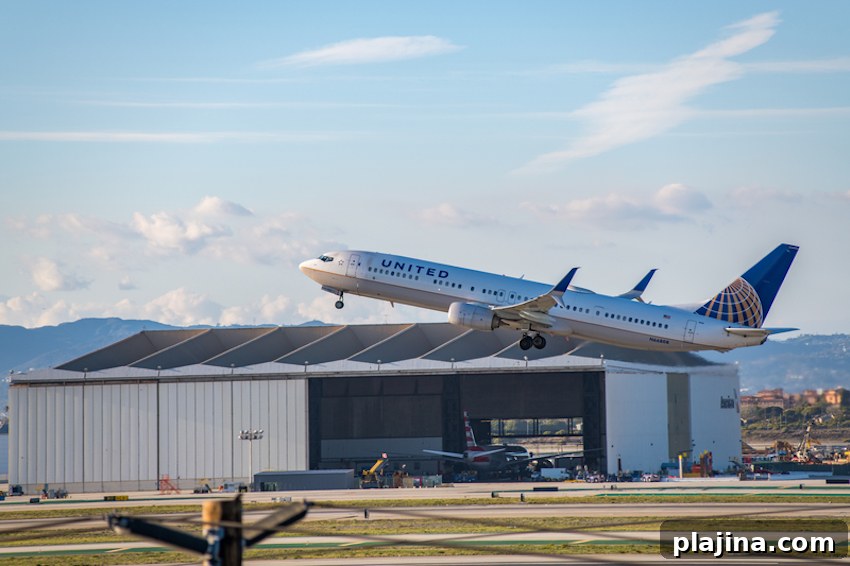
United Airlines has announced a plan to reduce its greenhouse gas emissions by 50 percent by 2050. The carrier intends to achieve this through a combination of purchasing more fuel-efficient aircraft, increasing use of sustainable aviation fuels, and implementing operational measures that conserve fuel.
United is the first U.S. airline to announce a target of this scale. The company frames the reduction as equivalent to removing roughly 2.5 million cars from U.S. roads for one year.
“We believe there is no point in setting challenging and ambitious goals without also taking tangible steps towards achieving them, especially when it comes to securing the health of our communities and our planet,” said Oscar Munoz, CEO of United Airlines.
“While we’re proud to be the first U.S. carrier to take such an ambitious step, it is a distinction we look forward to sharing as the rest of the industry catches up and makes similar commitments to sustainability,” he added.
To highlight the announcement, United operated a Boeing 787 on a flight from San Francisco to Zurich using a 30/70 blend of biofuel and conventional jet fuel. The Boeing 787 is one of the most fuel-efficient widebody aircraft in service, and the San Francisco–Zurich flight was the longest commercial trip flown with such a high proportion of biofuel to date.
United’s strategy combines fleet renewal, alternative fuels, and operational changes. Replacing older jets with newer, more efficient models reduces fuel burn per passenger. Sustainable aviation fuels, blended with conventional jet fuel, can lower lifecycle carbon emissions compared with fossil jet fuel. Operational improvements—such as optimized routing, single-engine taxiing where appropriate, weight reductions, and improved maintenance—also contribute to lower fuel consumption.
The carrier’s announcement underscores a broader industry focus on reducing aviation’s environmental footprint. Airlines, manufacturers, and fuel producers are increasingly investing in technology, aircraft efficiency, and fuel alternatives as part of long-term climate strategies. United’s commitment sets a clear target and signals expectations for continued progress across the sector.