
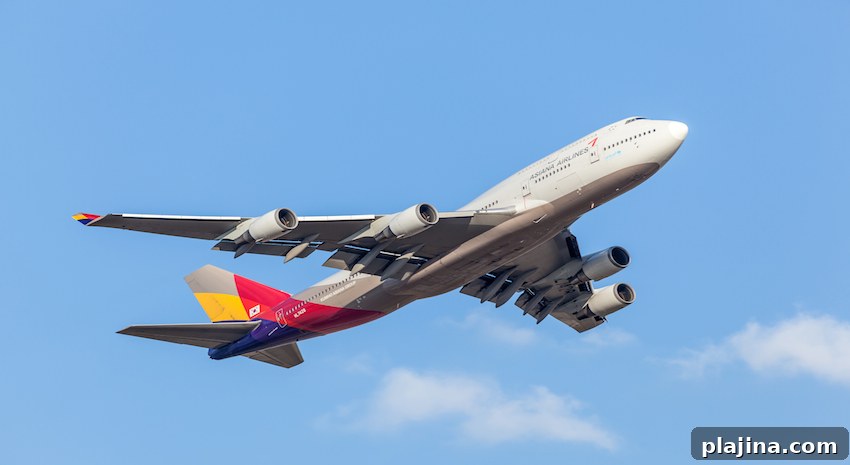
Asiana Airlines and United Airlines have expanded their codeshare partnership to cover Asiana’s flights between Seoul’s Incheon Airport and Chicago O’Hare International Airport, along with United’s domestic connections from Chicago. The expanded arrangement allows travelers to book a single ticket that combines Asiana’s transpacific service with United’s domestic network, simplifying connections and streamlining baggage and check‑in procedures for passengers traveling between South Korea and destinations across the United States.
The expanded codeshare came into effect on March 17, with reservations made available a few weeks prior. Under the agreement, United will place its UA designator on Asiana’s OZ236 and OZ235 services between Seoul and Chicago. In addition to Chicago, the codeshare covers Asiana flights to other continental U.S. gateways operated by the carrier, including Los Angeles (LAX), New York (JFK) and Seattle (SEA). This broader coverage gives travelers more seamless itinerary options when combining international and domestic segments.
For customers, the codeshare brings several practical benefits. Passengers can often purchase one ticket that includes both the long‑haul transpacific flight and the onward United connection, reducing the risk and complexity associated with separate bookings. Interline baggage handling is generally smoother on codeshare itineraries, meaning checked luggage can be routed through to the final destination without repeated recheck. Coordinated schedules and joint reservation systems also make it easier to manage flight changes, rebookings and coordinated customer service when disruptions occur.
Asiana emphasized that the expansion is part of its broader strategy to strengthen its U.S. network. “The expansion of the codeshare with United Airlines is a part of Asiana Airlines’ strategy for strengthening its network to and from the US,” the airline said in a statement. The carrier added that it intends to deepen its cooperation with United to enhance customer satisfaction for travelers to and from America, focusing on connectivity and a more integrated travel experience.
The move also reflects broader trends in global aviation, where airlines form deeper commercial ties to offer passengers improved connectivity without necessarily adding new nonstop flights. Codeshares and joint ventures allow carriers to broaden their marketed route networks, sell through each other’s inventory, and provide more convenient single‑ticket itineraries. For travelers between South Korea and the U.S. Midwest and beyond, the Asiana‑United expansion means more options when planning travel to cities served by United’s domestic network out of Chicago.
Passengers planning travel on the affected routes should verify their booking details at the time of purchase to confirm which carrier operates each segment, since codeshare listings may show the marketing airline’s flight number while the operating carrier is different. Travelers can also check baggage allowances, check‑in locations and any visa or entry requirements well in advance, as those policies are governed by the operating carrier and destination regulations.
Overall, the expanded codeshare promises a more integrated travel experience for flyers connecting between Seoul and the United States, particularly for those continuing onward from Chicago to domestic destinations served by United. By aligning schedules and sharing inventory on key transpacific and domestic corridors, Asiana and United aim to offer smoother connections and greater convenience for international passengers.