
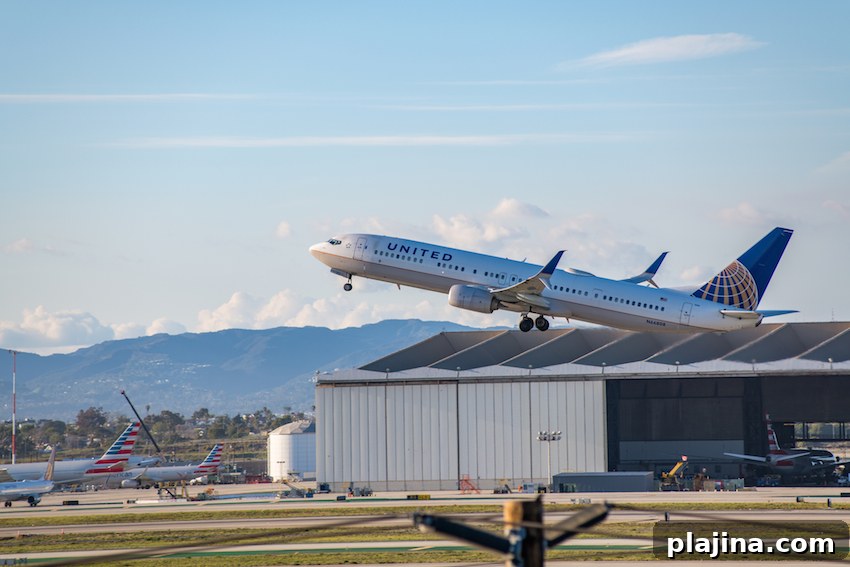
Airlines have long tried to create orderly, efficient boarding procedures, but many of those efforts have fallen short. Traditional boarding groups still produce clusters of people around departure gates, and back-to-front boarding often breaks down when late arrivals are involved. United Airlines tested an alternative boarding approach at Los Angeles International Airport to see if the process could be improved.
Under the trial system, passengers no longer line up in United’s five previous boarding lanes. Instead, they choose one of two lanes to board from. The first two boarding waves remain reserved for premier and first-class travelers. After those passengers board, priority customers move into one of the vacated lanes, while the remaining lane is used for passengers in groups three through five.
United launched the experiment in response to customer feedback about the hectic and crowded nature of the existing boarding routine. The goal is to minimize congestion and confusion at the gate and create more space for passengers as they prepare to board.
By simplifying lane choices and staggering who fills each lane, the airline aims to reduce bottlenecks in the jet bridge and aisles. While no boarding plan is likely to be perfect for every situation, the revised procedure is designed to make the process smoother for both crew and travelers and to accommodate latecomers with less disruption.
Airlines continue to test different boarding strategies in search of a balance between speed, fairness and passenger comfort. United’s trial at LAX represents one of several industry efforts to rethink how boarding can be both orderly and flexible, responding to common pain points such as crowding, carry-on storage competition and last-minute arrivals.