
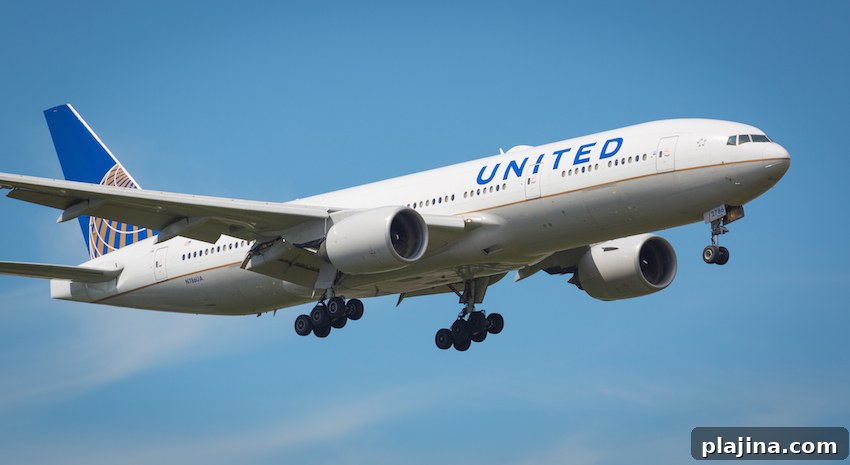
United Airlines has submitted an application to the U.S. Department of Transportation seeking authority to operate six new daily nonstop flights to Tokyo Haneda (HND). The proposed routes would originate from Newark Liberty International (EWR), Chicago O’Hare (ORD), Washington Dulles (IAD), Los Angeles International (LAX), George Bush Intercontinental in Houston (IAH), and Antonio B. Won Pat International Airport in Guam (GUM). If approved, the airline plans to begin service by next summer.
United says the proposed schedule is designed to address growing consumer demand and to enhance connectivity between Tokyo and the United States. The new Haneda services would allow United to link Tokyo with 112 U.S. airports via its five major hub cities, improving access and offering more direct travel options. United currently operates daily flights to Tokyo Narita (NRT) from Newark, Los Angeles, and Guam.
Los Angeles remains the leading U.S. market for mainland-to-Tokyo travel, while New York and Washington, D.C., represent the largest East Coast markets to the Japanese capital. Guam, meanwhile, continues to be a meaningful destination for Japanese tourists. By adding flights into Haneda, United aims to capture demand across these key markets and provide customers with airport choices that better match their itineraries and schedules.
Scott Kirby, president of United Airlines, commented that if the Department of Transportation grants the requested frequencies, the new nonstop services would expand United’s Japan route network and better serve both leisure and business travelers. He emphasized Tokyo’s role as a global hub for commerce, technology, and tourism, and said the application reflects United’s commitment to increasing travel options between the U.S. and Japan.
Haneda Airport offers advantages for many travelers because of its proximity to central Tokyo and strong ground transportation links. Airlines and passengers often prefer Haneda for its convenience and shorter commutes to business and tourist districts. United’s proposed service to Haneda aims to leverage these benefits, providing customers with more convenient arrival and departure times as well as improved connections to the carrier’s domestic and international network.
United’s filing highlights the carrier’s broader strategy to strengthen transpacific connectivity. Adding Haneda frequencies would complement existing Narita operations and expand overall capacity to Tokyo. For business travelers, increased frequencies and varied departure times can translate into greater flexibility for meetings and short trips. For leisure travelers, more nonstop options simplify planning and reduce total travel time.
The new services, if approved, would also enhance competition on routes between the U.S. and Tokyo, offering consumers additional choices for schedules, aircraft types, and onboard amenities. United has positioned the proposed flights as part of an effort to provide a “best-in-class” experience, aiming to combine convenient schedules with the carrier’s product offerings and connectivity through its hub system.
United’s application to the Department of Transportation is part of the regulatory process required before new transpacific frequencies can be launched. The DOT will review the request, consider public and industry comments, and evaluate how the proposed services fit within international bilateral arrangements and slot constraints at Haneda. If the application is approved, United expects to introduce the new nonstop flights in time for the upcoming summer travel season.
Passengers and businesses that travel frequently between the United States and Japan stand to benefit from greater route options, improved schedules, and the potential for more competitive fares. United’s proposal underscores the continuing importance of transpacific travel demand and the airline’s intent to expand capacity where passenger and cargo flows justify additional service.