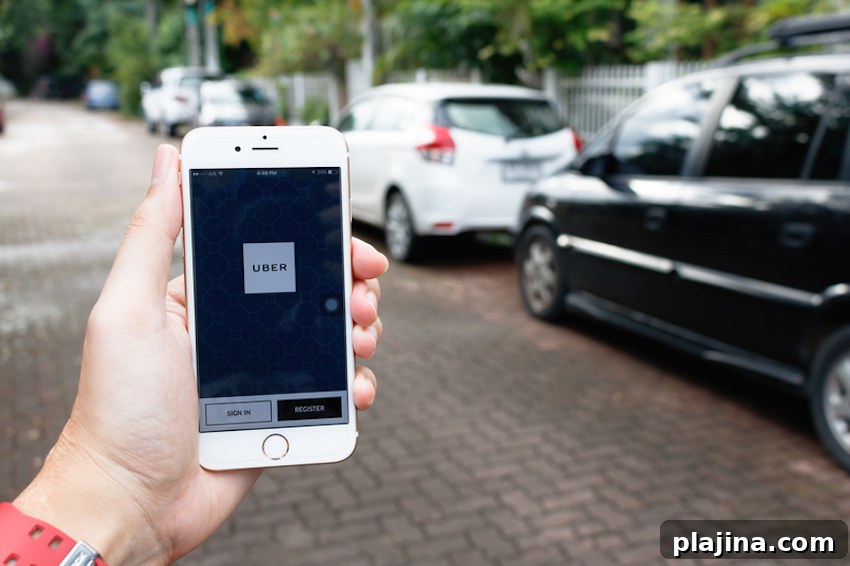
Ride-sharing company Uber announced last month several new mobility options, including a car-sharing service and an in-app way to purchase train tickets.
Uber launched Uber Rent in San Francisco as part of a partnership with peer-to-peer car-sharing platform Getaround. The service allows users to rent privately owned vehicles through the Uber app, expanding the company’s offerings beyond traditional ride-hail trips.
Uber CEO Dara Khosrowshahi described the move as part of a broader effort to address the challenges of car ownership. He explained that the company aims to make transportation more flexible and accessible so people can rely less on owning a vehicle.
“We’re going beyond cars,” Khosrowshahi said. “We are about mobility — making mobility available to everyone, everywhere.”
Alongside car sharing, Uber announced a partnership with Masabi that enables customers to buy and use tickets for trains, buses and ferries directly in the Uber app. This integration is designed to simplify planning and payment for multi-modal trips.
Uber is also expanding its bike program, Uber Bike by JUMP, into Washington, D.C., following a successful rollout earlier in San Francisco. The program adds another option for short, point-to-point travel within cities.
Khosrowshahi noted that urban transportation requires a range of solutions to reduce reliance on privately owned cars. “That’s going to include bikes, and that’s going to include buses and subways, etc., and we want to be a part of the solution,” he said. “As an asset class, cars are very inefficient. We have to work together to make sure that living in a city… doesn’t require you to own a car.”
By broadening its services to include rentals, public transit ticketing and micromobility, Uber aims to position itself as a comprehensive mobility platform. These additions reflect a shift toward integrated transportation options that combine different modes—ride-hail, car-share, bike-share and public transit—to make city travel more convenient and sustainable.