
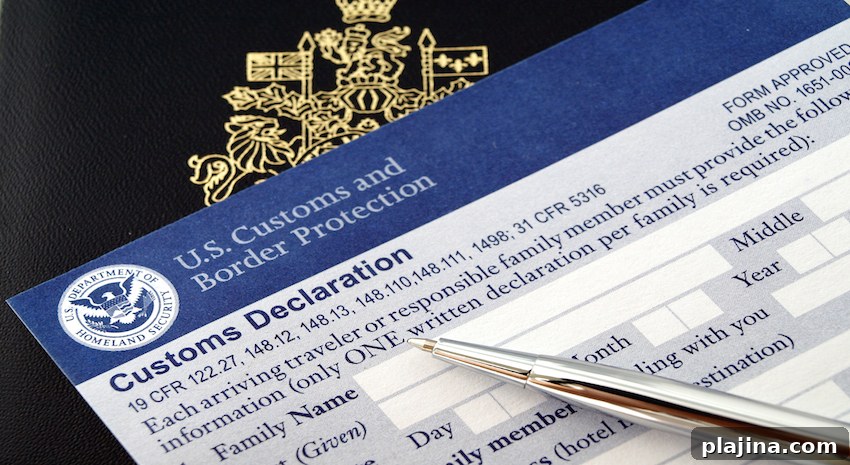
A new U.S. law paves the way for additional customs pre-clearance facilities at Canadian airports and rail stations, simplifying cross-border travel by air and rail.
Signed into law by President Barack Obama on Dec. 16, the Promoting Travel, Commerce and National Security Act expands the ability to offer U.S. Customs and Border Protection (CBP) pre-clearance for travelers bound for the United States at priority Canadian locations, including Billy Bishop Toronto City Airport and Montreal’s Central Station.
Joe McHugh, senior vice president of government affairs at Amtrak, described the legislation as central to the long-term strategy between the United States and Canada to streamline cross-border transit. “This act is key to the long term strategy of the United States and Canada to make cross-border transit more efficient, fostering economic development and improving safety and security of our shared border,” he said. “When implemented, Amtrak passengers can look forward to a more reliable, safer and more efficient cross-border experience.”
Currently, the United States operates CBP pre-clearance at several Canadian airports: Calgary International Airport, Edmonton International Airport, Halifax Robert Stanfield International Airport, Montreal Trudeau International Airport, Ottawa MacDonald-Cartier International Airport, Toronto’s Lester B. Pearson International Airport, Vancouver International Airport and Winnipeg International Airport. Additional U.S. pre-clearance locations exist in the Caribbean, Ireland and the United Arab Emirates.
Expanding pre-clearance to downtown and regional terminals could create operational advantages for carriers and improved convenience for travelers. Robert Deluce, president and chief executive officer of Porter Airlines, highlighted the potential benefits for his airline. “Pre-clearance at Billy Bishop Airport will allow Porter Airlines to operate more effectively on our many existing U.S. routes, while also opening the door to serving new U.S. destinations,” he said.
By shifting customs and immigration processing to departure points in Canada, pre-clearance facilities reduce delays at arrival and provide travelers with the confidence that they can disembark in the United States as domestic passengers. For rail passengers, dedicated pre-clearance areas at hubs like Montreal’s Central Station would streamline border formalities, shorten transit times, and support smoother connections across the border.
Beyond passenger convenience, these measures aim to strengthen security and foster bilateral commerce. Pre-clearance enables U.S. authorities to conduct inspections and screening before travelers board, which can help identify risks earlier while facilitating legitimate travel and trade. For Canadian gateways, hosting pre-clearance operations can boost their competitiveness, attract more service, and create economic opportunities through increased passenger volumes.
Implementation will require coordination between Canadian and U.S. governments, CBP, local authorities, and transportation operators. Key considerations include facility design, staffing, operational hours, and legal arrangements governing jurisdiction and enforcement. When these logistical and legal details are resolved, travelers and carriers can expect a more seamless cross-border experience that supports tourism, business travel, and regional economic ties.
Overall, the Promoting Travel, Commerce and National Security Act represents a step toward closer operational integration of border processes, with potential benefits for safety, efficiency, and commerce for travelers and transport providers on both sides of the Canada–U.S. border.