
Let’s talk geology. Caribbean islands fall into three main types: volcanic (most of the Lesser Antilles, from Saba down to Grenada), continental fragments (including Cuba, Jamaica and Trinidad) and limestone remnants of coral reefs (notably the Bahamas and — relevant here — Turks and Caicos).
Now economics. Limestone islands generally lack the mineral resources found elsewhere. With limited freshwater and thin soils, they are unsuitable for large-scale agriculture. Their primary marketable asset is the archetypal tropical landscape: abundant sun, palm trees, powdery white sand and turquoise sea.
© REDFINCH | DREAMSTIME
Before the COVID-19 pandemic, tourism accounted for nearly 70 percent of Turks and Caicos’s gross domestic product, making it one of the most tourism-dependent economies in the world. In 2020 annual tourist arrivals plunged from about 2 million to 370,000, and GDP contracted by more than a third.
Tourism has bounced back strongly, but the pandemic — along with recurring hurricane damage — exposed the need for greater economic diversification. The 10-year National Physical Development Plan published in 2020 highlights several sectors for growth. Hydroponic farming will expand agricultural production on North Caicos to reduce reliance on imports. IT infrastructure upgrades aim to attract tech businesses and digital nomads. A sustainable “blue economy” will develop marine resources responsibly. Financial services are targeted for expansion. And tourism, long centered on cruise arrivals and beach resorts, is evolving into higher-value niches such as medical tourism, cultural events and conferences.
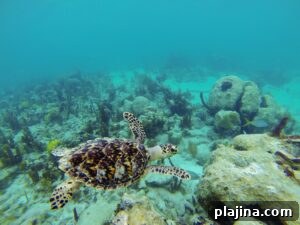
PHOTO: © SKYFLIGHTN | DREAMSTIME
These plans must contend with a geographic challenge: the country stretches across about 40 islands and cays, only eight of which are inhabited. They cluster into two groups: the Turks in the east and the larger Caicos islands to the west. The capital, Cockburn Town, sits on Grand Turk — a frequent cruise destination — while most residents and resort developments are on Providenciales in the Caicos group.
Travel between islands requires short flights, ferries or private boats. The proposed Spine Road Project is at the feasibility stage and would link Caicos islands with causeways and bridges to enable more coordinated development, though it faces environmental concerns and the seasonal risk of hurricanes.
The future of Turks and Caicos will depend on reconciling its geology with development ambitions. Limestone foundations and a dispersed geography are fixed realities: limited fresh water, shallow soils and exposure to Atlantic storms impose structural limits. Still, thoughtful policy, improved infrastructure and local ingenuity can create workable solutions.
The pandemic was not just an economic shock; it also proved a reminder that monetizing paradise too narrowly leaves the economy vulnerable. Diversifying into hydroponic agriculture, digital services, sustainable marine industries and higher-value tourism is therefore essential rather than optional.
Resilience will be the measure of success: economic resilience through diversification, environmental resilience against climate threats and social resilience across scattered communities. If strategy aligns with the islands’ constraints and strengths, Turks and Caicos can turn natural limits into disciplined advantage and build an economy that is both beautiful and durable.
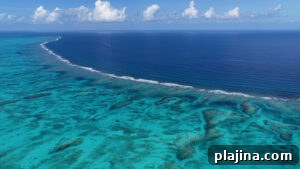
PHOTO: © CRISTIANLOURENCO | DREAMSTIME.
CHECKING IN WITH ALIZÉE ZIMMERMANN
Executive Director, Turks and Caicos Reef Fund
Describe the mission of the Turks and Caicos Reef Fund and how it has evolved.
The Turks and Caicos Reef Fund was founded in 2010 to protect, preserve and restore the islands’ coral reefs through education, research, advocacy and inclusive projects. Early work focused on installing moorings at dive and snorkel sites to prevent anchor damage. In 2022 the organization launched a genetic biobank to safeguard the diversity of endangered species for future restoration. A regional marine research and education facility is set to open in January 2027, which will expand the biobank and broaden ecological restoration efforts.
How does tourism support reef health?
Tourism and reef health are deeply connected. Clear turquoise water, healthy coral and abundant marine life underpin the tourism economy and provide food, coastal protection and cultural value. The Reef Keepers program encourages hotels to adopt better environmental practices — for example, offering mineral-based sunscreen only — and invites guests to contribute small nightly donations to support reef conservation.
What are the operational advantages and challenges of an archipelago nation?
An archipelago brings ecological richness: one of the largest barrier reef systems in the region, extensive seagrass beds, mangroves and largely undeveloped offshore banks. The downside is logistics: transporting equipment, staff and research supplies between islands requires reliable boats, ferries and careful planning.
What should visitors see and do in Turks and Caicos?
Born and raised here, I recommend experiences that celebrate the islands’ natural assets. Snorkel the barrier reef off Providenciales, kayak or paddle through the mangroves, and visit the TC Reef Coral Lab at South Bank Marina. Explore remote beaches around Provo, take the short flight to Grand Turk or Salt Cay to experience local history, and slow down to appreciate the living marine system. Every visitor can help ensure these places remain extraordinary for generations.
DIVERSIONS
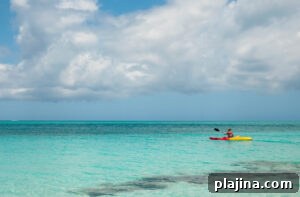
Most visitors begin on Providenciales, known as Provo, home to the archipelago’s showpiece: Grace Bay Beach. The beach consistently ranks among the world’s best, with powder-fine sand and calm water stretching along the north shore. The offshore barrier reef makes the area ideal for paddleboarding, kayaking and swimming.
Turks and Caicos sits atop one of the world’s largest coral reef systems, offering spectacular snorkeling and diving. Sites in Princess Alexandra National Park off Providenciales feature dramatic wall dives, vibrant coral gardens and frequent sightings of sea turtles, reef sharks and eagle rays. In winter, humpback whales migrate through the Columbus Passage near Salt Cay and Grand Turk — a memorable experience for divers and whale-watchers.
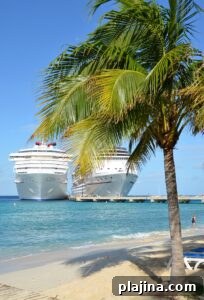
PHOTO: © SFAGNAN | DREAMSTIME
Explore the quieter sister islands for a different pace. Grand Turk, the historic capital, recalls the territory’s salt-raking past with Bermudian-style architecture and the Turks and Caicos National Museum. Gibbs Cay, a short boat ride away, is known for friendly stingrays and a castaway feel. Middle Caicos offers the Crossing Place Trail along limestone cliffs and secluded beaches, while Conch Bar Caves reveal one of the Caribbean’s largest dry cave systems.
Water activities define the islands: boat to Little Water Cay (Iguana Island) to see endangered Turks and Caicos rock iguanas, visit the sandbar at Half Moon Bay for a Robinson Crusoe moment, or chase bonefish in the shallow flats that attract fly-fishing enthusiasts.
The $50 million cruise complex on Grand Turk includes the world’s largest Jimmy Buffett’s Margaritaville, a 16,000-square-foot pool, a surf simulator, shops and a pink Starbucks. A memorial to John Glenn marks where his 1962 space mission ended with a splashdown off Grand Turk.
LODGING
AMANYARA
Set on Providenciales within an 18,000-acre nature reserve, Amanyara offers high-end seafront luxury with 36 pavilions and 20 villas.
Northwest Point, Providenciales
$$$$
SALTERRA, A LUXURY COLLECTION RESORT & SPA
Opened in March 2025, this relaxed 100-room resort on South Caicos provides a secluded alternative away from the main tourist centers.
1 Fourth St., South Caicos
$$$$
TURKS HEAD INNE
A boutique hotel in a historic wooden building (built 1830) in Cockburn Town on Grand Turk, located a short walk from a quiet beach.
Duke Street, Grand Turk
$$
DINING
COCO BISTRO
A unique, candlelit bistro set in a palm grove. Chef-owner Stuart Gray crafts Caribbean dishes using locally sourced herbs and seafood.
Grace Bay Road, Providenciales
$$$
GREAT HOUSE RESTAURANT
This flagship restaurant at Sailrock Resort features a wrap-around terrace with sea views and a menu focused on seasonal Caribbean ingredients.
Front Street, Cockburn Harbour, South Caicos
$$$
JACK’S SHACK BEACH BAR & GRILL
A beloved beachside tiki hut on Grand Turk known for burgers, hot dogs and jerk chicken; a popular stop for cruise visitors and locals alike.
Cockburn Town, Grand Turk
$$
COMING AND GOING
U.S. citizens arriving by air need a valid passport and proof of onward or return travel. No visa is required for stays under 90 days. Cruise passengers on round-trip U.S. itineraries typically do not need a passport to disembark in Turks and Caicos but should carry at least one government-issued photo ID (for example, a driver’s license) and any cruise-issued ID.
JUST THE FACTS
Time zone: GMT -5
Phone code: Country code 1, area code 649
Currency: U.S. dollar
Key industries: Tourism, luxury real estate, international financial services, fisheries
OFFICIAL LANGUAGE
English
INFO TO GO
Two main international airports handle scheduled flights: Providenciales International Airport and South Caicos Airport. Two additional airports accept private or charter flights: JAGS McCartney International Airport on Grand Turk and Ambergris Cay Airport. Most international visitors arrive at Providenciales, where most resorts are located. The sole cruise terminal on Grand Turk welcomes more than a million passengers annually.