
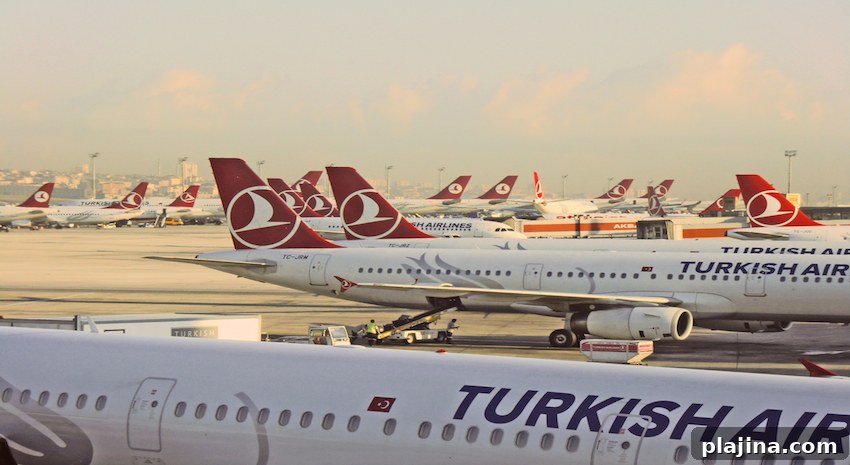
Last month Turkish Airlines announced it would postpone deliveries for a number of narrow-body jets ordered from Airbus and Boeing. The carrier is facing a challenging market in its region and has adjusted its fleet plan accordingly. According to news reports, Turkish Airlines delayed delivery of 39 upgraded single-aisle aircraft that had been scheduled between 2018 and 2020, while at the same time increasing deliveries on another tranche from six to 30.
Company officials said the carrier is reducing frequencies on some routes and deploying smaller aircraft where demand has softened. Those adjustments are intended to better match capacity with current passenger trends and to preserve operational flexibility.
Ilker Ayci, chairman of Turkish Airlines, described the current slowdown as a temporary setback for a carrier that has been among the world’s most profitable airlines over the past decade. He emphasized that management views the situation as a short-term “hiccup” rather than a long-term change in trajectory.
Looking ahead, Ayci pointed to the new İstanbul airport by the Black Sea as a key element for future expansion. The airport’s first phase is expected to handle 90 million passengers annually, with potential capacity to grow to as many as 150 million passengers over time. Ayci called the new hub “very important” for the airline’s long-term growth plans and expressed excitement about the opportunities it will create.
By adjusting its delivery schedule and right-sizing capacity on weaker routes, Turkish Airlines aims to navigate the current market headwinds while positioning itself to take advantage of major infrastructure developments that should drive passenger demand in the years ahead.