
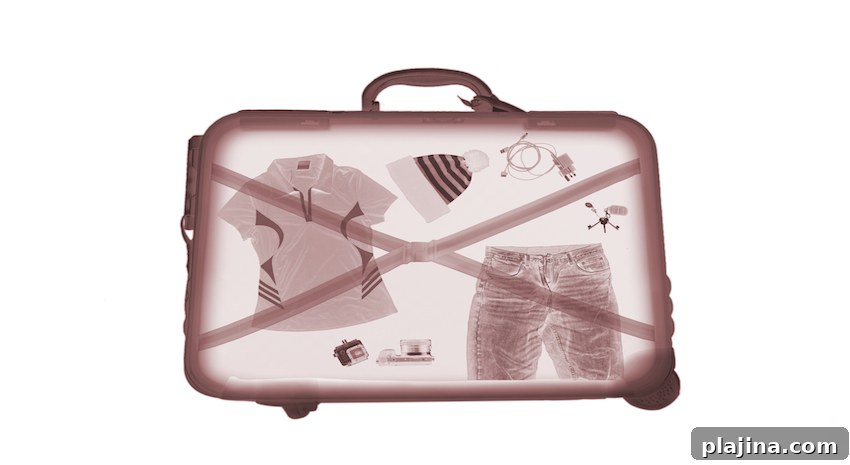
The Transportation Security Administration is testing advanced CT scanner technology designed to simplify carry-on screening. Under the new approach, passengers would no longer need to remove laptops, tablets, liquids and other items from their bags during the checkpoint process.
According to the Chicago Tribune, the TSA and American Airlines are piloting smaller, more advanced CT scanners at a lane in Terminal 4 of Phoenix Sky Harbor International Airport. These machines are scaled-down versions of the CT systems already used for checked baggage and are intended to fit into airport security checkpoints.
The TSA has also deployed a similar checkpoint scanner at a Boston airport as part of its ongoing evaluations.
“We already use this type of technology for checked baggage, and we expect these smaller checkpoint-sized machines will provide the same high level of security,” said Huban Gowadia, acting administrator of the TSA. While full-size CT systems are already effective for screened luggage, their size and cost have limited broader deployment in terminals until now.
The CT screening systems capture hundreds of images as an X-ray camera rotates around a conveyor belt, creating a three-dimensional view of the contents of a carry-on bag. That 3-D image helps screening officers identify potential threats more accurately. The scanners use sophisticated algorithms to detect explosives and other dangerous items, reducing the need for manual bag checks. If the system indicates a potential threat, TSA officers will still open and inspect the bag to confirm whether a prohibited item is present.
By producing clearer, layered images and leveraging automated detection tools, checkpoint CT scanners aim to speed up passenger flow and reduce the hassle of removing and repacking electronic devices and liquids. The technology could improve efficiency while maintaining security standards already in place for checked luggage.
These trials will inform decisions about wider deployment of checkpoint CT scanners at airports nationwide. If successful, travelers can expect a smoother security experience with fewer interruptions to prepare carry-on bags for screening, while TSA continues to ensure that prohibited items are detected and handled appropriately.