Kerala offers an ideal escape from the rush of Mumbai. This lush, coconut-fringed state on India’s southwest coast — its name literally meaning “land of coconuts” — is famous for tranquil backwaters, misty hills, tea and spice plantations, sun-kissed beaches, wildlife reserves and verdant rice paddies. Kerala also preserves distinctive cultural traditions such as Kathakali dance, Theyyam ritual performances, centuries-old Ayurvedic practices and numerous colorful festivals that reflect its diverse cultural tapestry.
Kerala’s religious mix sets it apart from many other Indian states. Christians account for a significant minority (about 19 percent), including Roman Catholics and ancient Syrian Christian communities who trace their origins to the apostle St. Thomas. Hindus form roughly 56 percent of the population, while Muslims make up about 25 percent. Kerala is also among India’s most progressive states, with literacy rates above 95 percent and life expectancy higher than the national average. The modern state of Kerala was formed in 1956 by merging the regions of Kochi, Malabar and Travancore.
Kochi (historically Cochin) exemplifies Kerala’s cosmopolitan past and present. Long a vital port in the spice trade — pepper, cardamom, turmeric, ginger and cloves earned the region an international reputation — Kochi blends influences from traders and colonizers across centuries. The iconic Chinese fishing nets, large cantilevered nets silhouetted along Fort Kochi’s shoreline, reflect contacts with Chinese merchants dating back to the 15th century and remain a striking sight.
Historical landmarks abound. St. Francis Church, built in 1503 and considered India’s oldest European church, was the original burial place of Vasco da Gama. The Dutch Palace in Mattancherry, originally constructed by the Portuguese and later renovated by the Dutch, displays well-preserved murals illustrating Hindu epics such as the Ramayana. Nearby, Jew Town preserves India’s oldest active synagogue, the 16th-century Paradesi Synagogue, with a distinctive floor of hand-painted blue-and-white Canton tiles and paintings that document the long history of Jewish communities in Kerala.
Kerala’s cuisine is one of the state’s most memorable highlights. Coconut — in milk, grated, roasted and oil form — features in many dishes, along with tangy tamarind and a rich variety of seafood, from shrimp and fish to soft-shell crab. Street and homestyle specialties include dosa, thin rice-and-lentil crepes often filled with spiced potatoes; palappam, lacy rice-and-coconut pancakes; and uttapam, thicker rice pancakes topped with chilies, onions and grated coconut. Cooking classes are widely available; learning to prepare dishes such as meen molee (fish in fragrant coconut milk spiced with cinnamon, cloves and ginger) and pachakari thoran (vegetables stir-fried with grated coconut, shallots and curry leaves) gives insight into local techniques and ingredients.
Mattancherry’s Ginger House combines dining and antiques shopping in a distinctive waterfront setting: a restaurant tucked behind a vast warehouse filled with carved wooden furniture, inlaid marble tables, decorative objects and even a traditional snakeboat used in Kerala’s legendary boat races. Much of the museum-like collection is available for purchase, making the visit both sensory and commercial.
Fort Kochi also hosts several notable heritage hotels that preserve colonial architecture while offering modern comforts. Brunton Boatyard features Neo-Dutch and Portuguese design, sea-view rooms and a waterfront restaurant; Malabar House occupies an 18th-century Dutch villa with a curated mix of contemporary design and antiques; and the Old Harbour Hotel, once used by English tea brokers, provides rooms overlooking the Chinese fishing nets and garden cottages with outdoor showers. These properties are good bases for exploring the historic quarter and the waterfront.
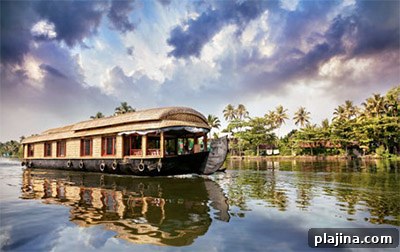
Houseboat in the backwaters © MARINA PISSAROVA | DREAMSTIME.COM
A quintessential Kerala experience is a relaxed houseboat cruise through the backwaters — an interconnected network of rivers, lakes and lagoons fringed with coconut palms and village scenes. Alappuzha (Alleppey), about an hour’s drive south of Kochi, is the main hub for houseboats. Options range from rustic to luxurious vessels, motorized or eco-friendly, air-conditioned or open-air, and from half-day trips to overnight or multi-day cruises. Many houseboats are modeled on traditional kettuvalams, wooden barges once used for transporting rice and coconuts, and include onboard meals prepared with fresh local seafood.
The lush hill country east of Kochi around Munnar features some of the world’s highest tea and spice plantations, with dramatic, rolling scenery and many properties offering plantation walks, treks and expansive mountain views. Boutique hotels and estates often highlight local flavors and hospitality, with amenities such as private pools and guided tea tastings available to guests. Wildlife enthusiasts can find rare species in nearby parks — for example, Eravikulam National Park is known for the Nilgiri tahr, while Thattekad Bird Sanctuary offers prolific birdwatching with well over a hundred species recorded.
For more wildlife viewing, Wayanad Wildlife Sanctuary in the north draws fewer visitors and offers jeep safaris to spot elephants, while Periyar Wildlife Sanctuary in south Kerala provides jungle treks, guided night walks and lake cruises where visitors can often see elephants, bison and deer. For the best chances of spotting tigers, nearby Nagarhole National Park, on the Kerala–Karnataka border, is frequently recommended for its tiger and leopard populations.
By contrast, Mumbai presents a different side of India: an energetic, densely populated metropolis that combines extreme wealth and poverty, historic sites and modern attractions. Mumbai’s landmarks range from the cave temples on Elephanta Island to the ornate Victorian Gothic architecture of the Chhatrapati Shivaji Terminus and the graceful Art Deco buildings along Marine Drive. The city’s bazaars are vibrant sensory experiences — Chor Bazaar for antiques, Zaveri Bazaar for gold, Mangaldas for textiles and Crawford Market for fresh produce and household goods. Mumbai’s famously efficient dabbawalla lunch delivery service, which moves hundreds of thousands of home-cooked meals daily with remarkable accuracy, is often cited as a model of human-powered logistics.
India in general, and Kerala in particular, continues to surprise and reward travelers with its mix of natural beauty, cultural depth and culinary delights.
INFO TO GO
Kochi (COK) is a two-hour flight from Mumbai’s Chhatrapati Shivaji International Airport (BOM). Munnar’s hill country lies approximately a 4.5- to 5-hour drive east of Kochi. Auto-rickshaws and pre-paid taxis from airports are convenient options for getting around locally.