
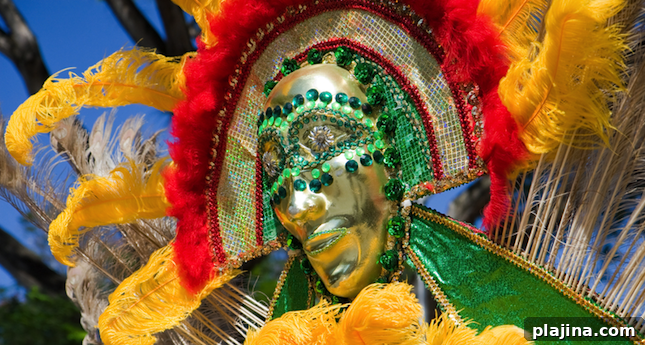
With only a few weeks to go, revelers are preparing for Trinidad and Tobago’s Carnival, the vibrant explosion of color, music, dance and creativity that sweeps the twin-island nation every year. Known for its massive masquerade bands, elaborate costumes, infectious rhythms and exuberant street celebrations, Trinidad’s Carnival—the largest in the Caribbean—is often called “the greatest show on earth,” drawing visitors from around the globe.
Although the main Carnival days fall on the Monday and Tuesday before Ash Wednesday, the festival season effectively begins the day after Christmas and builds momentum through Carnival Tuesday. Throughout this period, steel bands intensify their rehearsals for Panorama, the premier steel pan band competition and a national cultural highlight, which takes place on Saturday, March 1. During the six weeks leading up to Carnival, preliminary Panorama contests are staged at venues across the country; the top bands are then invited to perform before judges and thousands of spectators on the big Saturday night before Carnival officially begins.
Other key dates this year include Dimanche Gras (March 2), the dramatic showcase and competition that crowns the king and queen of the masquerade bands, and J’Ouvert (March 3), the energetic street party that marks the official start of Carnival, when the streets fill with costumed revellers, paint, mud and the rhythmic pulse of soca music.
Throughout the Carnival season, a lively mix of fetes, concerts, competitions and community events keeps the atmosphere charged. From intimate neighborhood celebrations to large-scale concerts and fetes featuring top soca artists, there are countless opportunities to experience the music, food and spirit of the islands. Visitors and locals alike plan months in advance to secure costumes, book events and join masquerade bands, ensuring their place in one of the world’s most exuberant cultural celebrations.
Beyond the main events, Carnival is also a showcase for the creativity and craftsmanship of costume designers, masquerade bands and steelpan musicians. Costume production ramps up long before the festivities, with designers and makers pouring time and skill into elaborate headdresses, sequined outfits and thematic ensembles. Steelpan orchestras and panyards remain central to the tradition, offering rehearsals, mini-pan shows and community gatherings that keep musical heritage alive year-round.
For visitors, Carnival offers a range of experiences—from front-row seats at Panorama and the grand parades to joining the spontaneous street energy of J’Ouvert. Safety, hydration and awareness of local customs help ensure a memorable and positive experience. Whether you’re drawn to the music, the spectacle of costume and pageantry, or the communal spirit that animates every parade route, Trinidad and Tobago’s Carnival remains a must-see cultural event.
You may also like:
St. Vincent: Caribbean Calm
U.S. Virgin Islands: Almost Heaven