
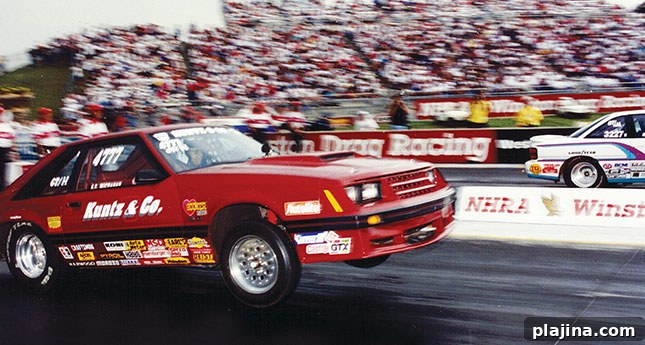
Warning: you are about to enter a testosterone-fueled world of fumes, flames, burning rubber, extreme noise, g-forces, beer and rowdy camaraderie.
The spectacle of the drag racing speedway — ludicrous vehicles accelerating down a straight track at insane speeds — isn’t exclusively male. Women drivers such as Shirley “Cha Cha” Muldowney, Ashley Force and Shelley Anderson have proven they can compete at the highest levels. Yet drag racing remains a place where many of the instincts people associate with boyhood and fast cars are realized on a grand, ear-splitting scale.
From the earliest days, car enthusiasts modified everyday vehicles to go faster and make more noise. What began as hobbyist tinkering eventually grew into an organized sport. By the 1950s, purpose-built venues were needed, and disused airfields were often converted into drag strips, using wide runways to allow two vehicles to race side by side safely.
Over time, five primary classes of drag racing vehicles emerged. Pro stock bike refers to highly tuned motorcycles built for straight-line speed. Pro stock cars are modified road cars pushed well beyond factory specifications. Pro modified cars are road-based machines extensively altered from the chassis up. Funny cars use dedicated racing chassis covered by a lightweight carbon-fiber body that resembles a production model. At the extreme end are top-fuel dragsters — long-nosed machines designed purely for one purpose: maximum acceleration in a straight line.
The physical stresses on drivers are immense. During a run, competitors endure forces in excess of 5G — higher than the roughly 3G many astronauts feel during shuttle launch. At full throttle, a top-fuel dragster consumes fuel at rates comparable to a fully loaded Boeing 747. These machines can accelerate from a standstill to 100 mph in under a second and routinely exceed 300 mph over a quarter-mile distance. Stopping requires parachutes in addition to conventional braking systems.
Dangers are inherent. A dragster that drifts off line, experiences a tire failure or suffers an engine explosion exposes the driver to extreme risk. Even flawless runs take a toll: repeated high-G exposures can lead to fractures, vision problems and other lasting injuries. That underlying risk heightens the adrenaline for both competitors and spectators, reinforcing the sport’s visceral appeal.
On race day, the atmosphere is saturated with the sharp scent of nitromethane — the volatile fuel that gives these machines their explosive power. Engines scream at ear-splitting volumes, flames occasionally burst from exhausts, and the track is punctuated by the thud of accelerating and braking metal. The sensory assault — sight, sound, smell and the palpable vibration in the air — is unlike most other sporting experiences.
For those drawn to it, the speedway delivers a raw, unfiltered thrill. It’s a place where engineering and bravery meet, where spectacle and danger combine to create some of the most intense moments in motorsport.