
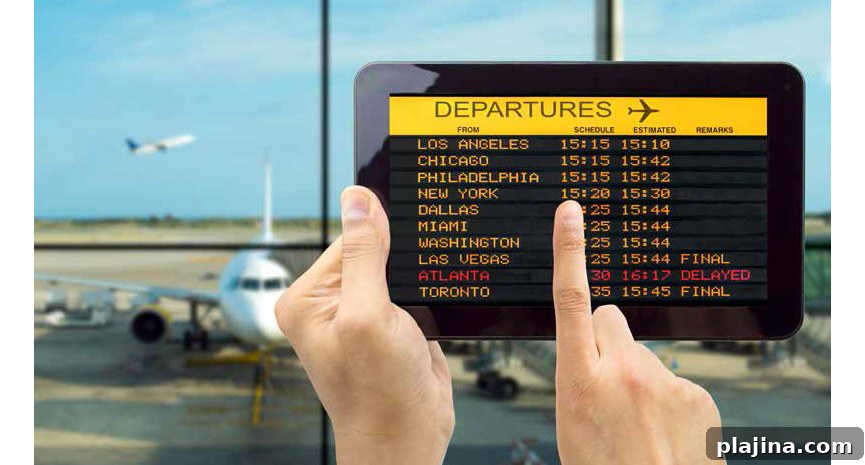
The marriage of technology and travel is accelerating, bringing new services and conveniences to passengers at an unprecedented pace. Airports have embraced this trend, following airlines, hotels and loyalty programs in developing mobile apps. According to the 2016 Airport IT Trends Survey from SITA, 90 percent of airports worldwide are running major programs or pilot projects focused on mobile app usage.
About half of airports now prefer mobile apps to distribute important updates such as flight disruptions. Email and phone notifications remain common (about 61 percent), while 34 percent use social media. Beyond basic alerts, emerging technologies are enabling context- and location-aware features that help passengers in real time. Seventy-four percent of airports expect to trial such capabilities within five years, and 78 percent foresee trials within ten years.
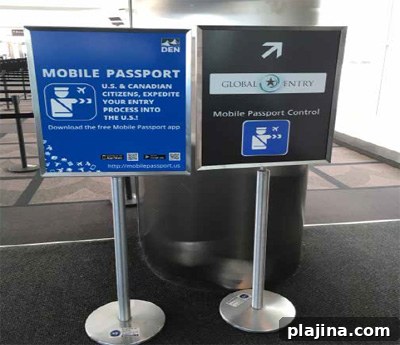
Denver International Airport is the first to partner with the Mobile Passport Control app to help travelers breeze through customs. © DENVER INTERNATIONAL AIRPORT
Monetization is also a driving factor. By 2019, 84 percent of airports planned to add purchasing capabilities to their apps. Around 29 percent aimed to extend purchases to smartwatch users, and roughly 34 percent supported alternative payment methods like Apple Pay. “Mobile investments continue to attract a good portion of IT spending, and there are strong indications that airports are actively looking to recoup this investment by evolving their apps beyond check-in and basic flight information toward revenue-generating services,” stated Barbara Dalibard, CEO of SITA, and Angela Gittens, director general of Airports Council International.
Dallas/Fort Worth International Airport (DFW) is an example of this approach. The DFW app, launched in late 2015 and regularly updated, lets travelers search more than 200 shops, dining options and services, and view options within a five-minute walk of any gate. Initial features included flight information, weather, maps, dining, shopping and parking. Later updates added enhanced search and wayfinding, multiple languages and an Apple Watch app.
“More than 90 percent of DFW passengers carry smartphones and want instant travel information. The DFW Mobile App and our Apple Watch app provide customers real-time information tailored to their journey and are another example of how we leverage technology to deliver a warm, welcoming and efficient customer experience,” said Sean Donohue, CEO of DFW Airport.
Hartsfield-Jackson Atlanta International Airport followed with its iFlyATL app in spring 2016. The app offers real-time updates on parking availability, wait times, gate assignments and flight information, plus details on more than 300 dining and shopping options, airport art and gallery locations. A standout feature is a photo-based tool that helps travelers locate their car in airport parking upon return.
Outside the United States, app adoption is strong in Asia. Bangalore International Airport launched an app that uses Google Indoor Maps—the first airport in India to do so. The BLR Airport app includes flight tracking, gate updates, one-touch WiFi connection and location-based notifications, and it also provides exclusive retail and dining offers. “Our aim is to transform our customers’ airport experience. Every new digital introduction combines innovation and emotion because digital is more than just technology,” said Sanjay Reddy, managing director of BIAL.
As air travel grows across Asia, many airports are exploring mobile solutions to ease passenger congestion. In China, in-app flight notifications, airport purchases and cashless payments are already common at many airports, with expectations that major airports will support these features by 2019. Many airports are also promoting in-app offers via social media.
Still, some question whether travelers will download a separate app for each airport they pass through. Frequent business and leisure travelers can accumulate many apps, which can be inconvenient. A study by Cormac Corrigan and Mark Lenahan questioned the profitability of airport apps. Flight status notifications are the most common app feature—offered by 46 percent of airports—but airline apps provide the same functions and are downloaded far more often. Airline apps are downloaded roughly 14 times more frequently than airport apps. Large airlines handle about 1.5 billion passengers annually and see around 117 million app downloads, while major airports serving about 1.3 billion passengers see only about 7.2 million downloads.
The study also questions whether spending on airport app development is justified given low long-term user retention: across e-commerce, travel and utility apps, only about 3.3 percent of users remain active 30 days after installation. “The big challenge for airports is that, as a passenger, you are essentially anonymous to the airport. The airlines and agencies know your itinerary, but airports do not,” the authors note. They add that airports have limited contact time with passengers compared with airlines, which already maintain strong relationships before, during and after travel.
Despite retention concerns, the study acknowledges airport apps’ revenue potential. As aeronautical revenue from airline fees has plateaued or declined, retail and commercial revenue from passengers has grown. Airports increasingly view mobile apps as a channel to drive retail sales and ancillary income.
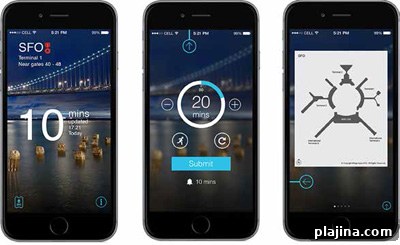
MiFlight app gives passengers estimated security line wait times. © MIFLIGHT
Airports also face competition from third-party apps that offer airport-wide functionality without requiring a separate download for each location. Services like GateGuru and FlightTrack5 provide gate updates, delay alerts and amenity information across many airports. MiFlight aggregates real-time security wait times reported by travelers, which some users find more accurate than official estimates.
Rather than compete head-on, many airports are partnering with outside apps and vendors to enhance the passenger experience and share in revenue opportunities. Concession-focused services such as Airport Sherpa deliver meals from airport restaurants to gates, while Grab enables pre-ordering at participating food outlets. Grab is already available at more than a dozen North American airports, with additional rollouts planned.
Denver International Airport partnered with the Mobile Passport Control app, the first authorized mobile option to expedite entry for U.S. and Canadian citizens. Travelers submit passport information and a customs declaration on their smartphone, reducing wait times in international arrivals. The airport installed scanners to read app-generated QR codes so customs officers can access required data. Denver estimates that roughly 50–70 percent of arriving international passengers are eligible to use the app.
Regardless of outside competition or varied expert opinions, airports in the U.S. and abroad continue to develop and expand mobile apps. As travel technology evolves to make journeys easier, more convenient and more responsive to individual needs, airports will keep exploring new app features and revenue models that enhance the passenger experience.