
WITH THE 2020 SUMMER OLYMPICS, Tokyo joined an elite group of cities that have hosted the Games multiple times. The IOC’s choice of Japan’s capital underlines Tokyo’s status as one of the world’s most vibrant and forward-looking metropolises.
Tokyo first made a major international impression at the 1964 Summer Olympics, when it began to be seen widely as a city of the future. For 2020, planners faced the challenge of presenting a familiar city in new ways. Technology from global sponsors enhances the spectator experience: Panasonic developed translation devices handling multiple spoken languages and smartphone tools that let visitors scan and translate signage instantly, while automakers showcased driverless taxi prototypes.
Tokyo’s 2020 preparations fell between South Korea’s 2018 PyeongChang Winter Olympics and Beijing’s 2022 Games, which encouraged a dual approach: ambitious infrastructure upgrades alongside careful historic preservation. The Japan National Tourism Organization framed the Olympic effort as part of Prime Minister Shinzo Abe’s goal to boost inbound tourism to 40 million visitors by 2020 and 60 million by 2030.
One notable example is the redesign of the National Stadium, which hosted the 1964 opening and closing ceremonies. The new stadium, designed by Kengo Kuma, embraces natural materials such as Japanese timber and integrates green design principles. It anchors a Heritage Zone near the Imperial Palace, where renovated venues from earlier Games sit alongside new facilities. Meanwhile, the Tokyo Bay Zone on reclaimed Odaiba land became home to ten new venues, including the aquatic center.
Transportation upgrades were a major focus. The new Shinagawa Station, slated for 2020, represented the most significant change to the Yamanote loop since 1971. The expansion aimed to smooth crowd flows, improve connections across Tokyo and provide faster links to Narita and Haneda airports in the years ahead.
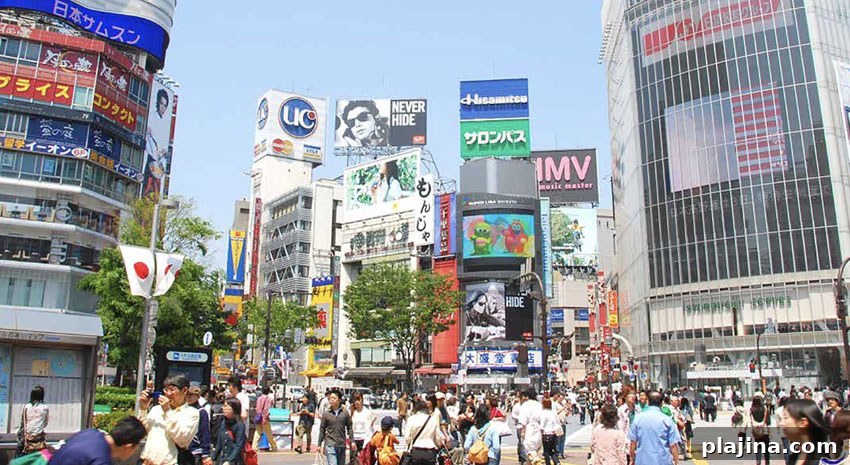
Shibuya saw some of the most visible transformations. Adjacent to Yoyogi Park and the new Olympic Stadium, the district gained nearly 2.8 million square feet of new space overall, including 786,000 square feet of office developments around Shibuya Station. Improvements inside the station—additional elevators, escalators and clearer passageways—were designed to simplify transfers and reduce congestion.
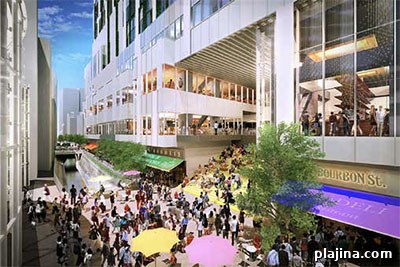
Artist’s renderings of Shibuya Stream, a new tower block in the Shibuya Station South area © JNTO
Major mixed-use projects reshaped Shibuya’s skyline. Shibuya Scramble Square, a 750-foot tower that opened in 2019, features one of Japan’s largest observation decks with sweeping views of the famous intersection, Meiji Shrine, the Shinjuku skyline and even Mount Fuji on clear days. Shibuya Stream, completed in 2018, blends greenery and commercial space: it offers open-plan offices, an airy fourth-floor atrium, a distinctive fifth-floor lobby and a tree-lined walkway along a restored, free-flowing stretch of the Shibuya River.
Ginza’s redevelopment focused on honoring the district’s retail history while introducing modern uses. Ginza Place, inspired by the 1932 Neo-Renaissance Wako building, and Ginza Six, built on the former Matsuzakaya department store site, combine contemporary architecture with cultural preservation. Ginza Six incorporated the Kanze School of Noh’s heritage stage into a modern performance space with improved accessibility and multilingual interpretation.
The former Sony building in Ginza was redeveloped into Ginza Sony Park, a public space offering immersive brand experiences and creative installations. MUJI expanded beyond retail with the MUJI Hotel in Ginza, which features minimalist design on upper floors and an extensive home retail concept below.
New and boutique hotels added local character to Tokyo’s accommodation scene. Options ranged from intimate properties in historic Asakusa to eco-conscious hotels in Shibuya that emphasize recycled materials, terraces and herbal gardens. Architect Kengo Kuma’s influence appeared not only in sports venues but also in projects like the Tokyo Skytree’s design touches, which integrate natural materials with industrial elements.
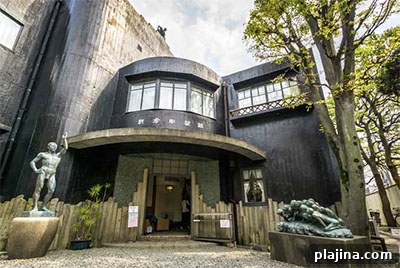
Asakura Choso Museum © PHILLIP MAGUIRE | DREAMSTIME.COM
While it is difficult to predict every outcome of the Olympic Games, many of the enhancements and innovations introduced for 2020 were designed to deliver lasting benefits for both business and leisure travelers.
CHECKING IN WITH ANNE KYLE
Founder, Arigato Tours
Why is a Tokyo food tour an outstanding way for both business groups and family groups to get a better orientation of the city beyond the familiar places?
A food tour helps visitors overcome language barriers and discover seasonal or regional specialties they might otherwise miss. Traveling with a local guide opens narrow back alleys, reveals neighborhood eateries, fosters encounters with other travelers and provides a richer understanding of Tokyo’s food culture.
How will the upcoming Olympics alter the local food scene? Do you have concerns about games-related developments negatively affecting local dining?
Tokyo has an exceptional culinary reputation, with a large number of Michelin-starred restaurants relative to its population. The Games were expected to boost business without lowering standards of food or service. However, infrastructure projects and redevelopment carried the risk that some beloved small restaurants might be displaced or forced to close if they stood in the path of new construction.
What new developments going up around town do you find particularly exciting?
Japan’s leadership in innovation is visible in hospitality tech: robots and translation devices are becoming common, and companies are exploring projection-based displays and novel cooling systems for crowded outdoor spaces. Automotive firms were also experimenting with advanced concepts, reflecting a broader spirit of technological experimentation.
What are the best areas to visit to bring the various facets of Tokyo’s character together?
Yurakucho’s Gado Shita district, located under the brick arches of elevated tracks, evokes the retro Showa-era atmosphere with lively izakaya alleys. Ginza juxtaposes long-standing traditions and contemporary trends—from historic galleries and classic tempura restaurants to cutting-edge fashion and architecture—making it a good place to experience Tokyo’s range.
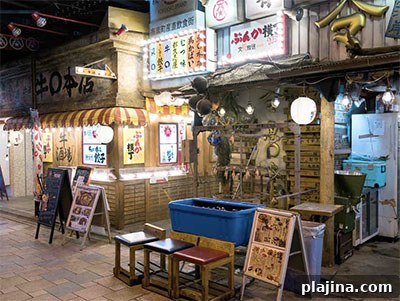
Restaurants in Yakitori Alley, Yurakucho, under the JR Yamanote Line © ROLAND NAGY | DREAMSTIME.COM
Things to Do in Tokyo
Taito, near Ueno Park, retains a village-like feel with small temples and the Asakura Choso Museum in the former family home. Walking toward Yanaka reveals streets that preserve pre-war character alongside boutiques and galleries. Daikanyama in Shibuya is ideal for a relaxed morning: cafés and bakeries pair well with the multi-building Tsutaya Bookstore complex.
Kagurazaka, often called Tokyo’s French Quarter, centers around the Bishamonten Zenkokuji temple and offers a food-focused neighborhood experience. Tokyo’s cocktail and craft bar scene continues to evolve, with intimate bars and cocktail ateliers blending classic whiskey-bar traditions with modern techniques and indigenous ingredients. Reservations are often required at small, high-demand bars that offer tasting sequences.
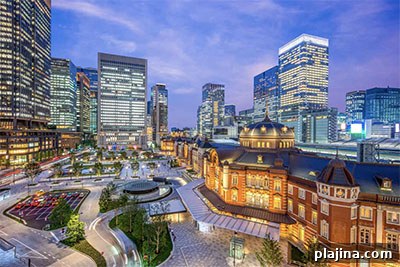
Tokyo Central Railway Station in Chiyoda © RICHIE CHAN | DREAMSTIME.COM
Tokyo Info to Go
Narita International Airport and Haneda Airport both serve Tokyo. Haneda is widely regarded as the city’s downtown gateway, with convenient connections by monorail, commuter rail and airport limousine buses to the central business district. The Narita Express (NEX) provides a direct, comfortable service to Tokyo Station in about an hour. Ahead of the Olympics, airport facilities received upgrades focused on traveler comfort and accessibility.
Tokyo: Just the Facts
Time zone: GMT +9
Phone code: Country code: 81 City code: 3
Currency: Yen
Key industries: Electronics manufacturing; transport and communications; wholesale and retail; food and beverage; finance and insurance; publishing and printing
COMING AND GOING
U.S. citizens may enter Japan visa-free for tourism or business stays of up to 90 days with a valid passport and an onward or return ticket. Passports must be valid for the duration of stay.
OFFICIAL LANGUAGE
Japanese
Where to Stay in Tokyo
CONRAD TOKYO A sophisticated choice combining business conveniences with views of Tokyo Bay and Hamarikyu Garden, complete with refined dining and attentive service. 1 Chome-9-1 Higashi-shinbashi, Minato $$$$–$$$$$
HOSHINOYA HOTEL TOKYO A luxury urban ryokan offering yukata, artisanal tea and rooftop onsen baths for a serene city retreat. 1 Chome-9-1 Otemachi, Chiyoda $$$$$
SHANGRI-LA HOTEL, TOKYO Adjacent to Tokyo Station, this property blends convenience and indulgence with well-appointed suites and exceptional service. Marunouchi Trust Tower Main, 1-8-3 Marunouchi, Chiyoda $$$$–$$$$$
Restaurants in Tokyo
ASAKUSA IMAHAN A century-old sukiyaki restaurant known for attentive service and high-quality Wagyu beef served in an intimate setting. 3 Chome-1-12 Nishi-asakusa, Taito $$$$
TAPAS MOLECULAR BAR A futuristic dining experience that transforms small-course tapas into theatrical, modern cuisine. Mandarin Oriental, Tokyo, 2-1-1 Nihonbashi Muromachi, 38F, Chuo $$$$
TOKYO SHIBA TOFUYA-UKAI A kaiseki restaurant blending traditional atmosphere with contemporary dining, set in a building with a unique history. 4 Chome-4-13 Shiba-koen, Minato $$$$