
Currently a protected wildlife sanctuary, Tiritiri Matangi Island, commonly called Tiri, lies about 18 miles north of Auckland. After more than a century of farming, the island was restored through a major conservation effort led by the Department of Conservation and thousands of volunteers. Between 1984 and 1994 volunteers — including many school groups — planted roughly 300,000 native trees and helped eradicate introduced pests, transforming the island back into native forest and habitat.
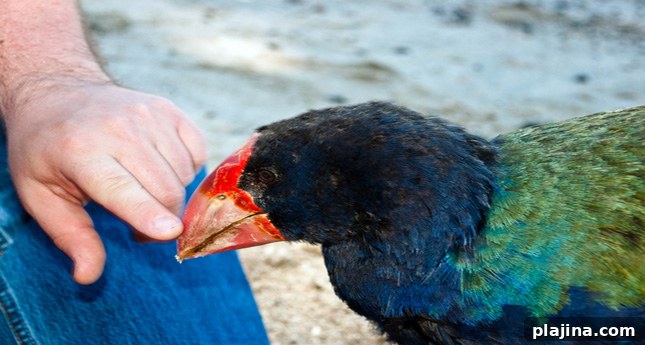
Today Tiritiri Matangi is a model of ecological restoration and a safe haven for threatened New Zealand species. Eleven species of threatened native birds have been reintroduced to the island. Visitors can often see bellbirds (korimako), a species once thought lost from the area, and the large, flightless takahe, which shows little fear of people. Other notable species on the island include the stitchbird, kokako, brown teal and the little spotted kiwi.
Access to Tiritiri Matangi is by ferry. Community-minded operators provide regular services from central Auckland, typically calling at Gulf Harbour on the Whangaparaoa Peninsula. Gulf Harbour is roughly an hour’s drive north of central Auckland, making day trips convenient. For visitors who want to stay overnight, the island offers a basic bunkhouse with four bunk rooms; guests should bring their own sleeping bags and gear, as facilities are simple and focused on low-impact stays.
Visiting Tiritiri Matangi supports ongoing conservation work and provides a unique opportunity to experience New Zealand’s native wildlife in a carefully restored natural setting. Guided walks and volunteer-led activities often help visitors learn about the island’s restoration history, its species recovery programs, and how ongoing pest-free management makes long-term protection possible.