
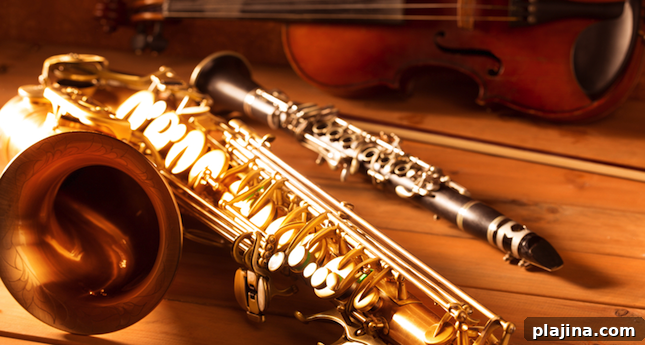
You don’t need to be a professional musician to admire the craftsmanship of a finely made instrument. At the Musikinstrumenten-Museum Berlin, located in Berlin’s Kulturforum near the gleaming, gold-accented Philharmonie concert hall, visitors can explore instruments spanning the 16th to the 21st centuries. Highlights include flutes from Frederick the Great’s private collection, Benjamin Franklin’s glass harmonica and an orchestral ensemble of more than 800 historical instruments. The museum also houses a 1929 organ with 1,228 pipes, 175 stops and 43 pistons, once used to accompany silent films.
The museum is home to the Institute for Musical Research library and a working workshop where new instruments are made and historic pieces are restored by skilled conservators. On select Sundays, an Early Music concert series begins at 11 a.m., featuring performances on instruments from the collection. Guided tours are available by appointment, and the museum regularly presents lectures and themed events that deepen understanding of musical history and instrument making.
The collection’s range and preservation make the museum a valuable resource for musicians, historians and curious visitors alike. Exhibits present instruments not only as functional tools for making music but also as works of art, reflecting changing tastes, technologies and cultural influences across centuries. Visitors can see delicate woodwinds, elaborately decorated keyboard instruments, bowed strings and an array of percussion and brass—each piece illustrating a chapter in the evolution of musical design and sound.
The museum’s workshop contributes to ongoing scholarship by enabling hands-on study and careful restoration. Craftspeople reproduce historical construction techniques to conserve original instruments and to create playable replicas for researchers and performers. This practical work supports the live concert program: musicians can perform on historically informed instruments, offering audiences a clearer sense of how music sounded in its original contexts.
In addition to concerts and conservation, the museum organizes educational programs and special exhibitions that focus on specific instrument families, historic periods or notable makers. These themed events often feature demonstrations, talks and opportunities for visitors to engage directly with musical artifacts and the stories behind them. For students and enthusiasts, the Institute for Musical Research library provides a scholarly backdrop with documents, scores and reference materials that complement the displays.
Whether you’re drawn by craftsmanship, music history or the chance to hear rare instruments played, the Musikinstrumenten-Museum Berlin offers a rich, immersive experience. Its combination of exhibition, research and live performance makes it an essential stop for anyone interested in the cultural and technical history of musical instruments.
You may also like:
Berlin: Freewheeling Spirit
GT City Guide: Berlin