
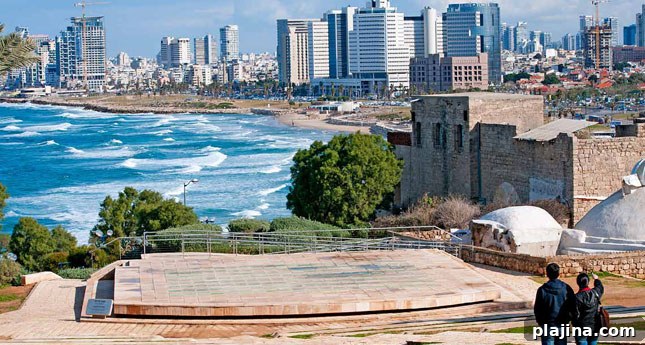
It’s a bustling city of high-rises, diverse neighborhoods and ocean views — yet by global metro standards, Tel Aviv is young. Just over a century ago, 66 families gathered on the beach outside the ancient port of Jaffa to parcel out land for a new neighborhood. Those plots quickly evolved into a modern, vibrant city known for its energetic atmosphere and strong commercial presence.
Tel Aviv plays a central role in Israel’s economy: most major banks and insurance companies are based here, and the country’s only stock exchange operates in the city. According to the Tel Aviv Stock Exchange, roughly 140 of the exchange’s 600 listed companies are high-tech firms, underlining the city’s prominent role in the tech sector.
Beyond its cultural and financial importance, Tel Aviv has pursued a higher international profile. In 2011 the city launched the Global City initiative, a decade-long effort to strengthen Tel Aviv’s position as a global business and cultural center. Already a hub for technology, creativity and entrepreneurship, the campaign aims to attract international corporations and financial institutions as well.
The broader Tel Aviv metropolitan area houses more than 3.2 million people, yet the city remains surprisingly easy to navigate. English is widely spoken, public buses reach most destinations, and taxis are plentiful. For an eco-friendly option, the city encourages bicycling to reduce traffic congestion. Tel Aviv-Yafo’s bike-share system features around 150 green docking stations where visitors can rent bicycles by the day or week with a credit card swipe.
Hotels in Tel Aviv cater well to business travelers. The Hilton Tel Aviv, for example, provides child-free executive floors, meeting facilities, Hebrew business-card printing and personalized outgoing voicemail services. The Sheraton Tel Aviv Hotel & Towers offers a 24-hour communications center, audio-visual equipment with technicians on hand, and executive boardrooms. The recently renovated Dan Panorama includes an executive service lounge that connects directly to the Dan Panorama Convention Center.
The historic district known as the White City gets its name from the white Bauhaus-style buildings erected by Jewish architects who fled Nazi Germany in the 1930s. Today Tel Aviv has the world’s largest collection of Bauhaus architecture, and the White City was designated a UNESCO World Heritage site in 2003.
Business travelers seeking an unusual stay can choose hotels housed in original Bauhaus buildings. The Cinema Hotel, once a movie theater, has 82 rooms and business-friendly amenities such as multichannel cable TV and free Wi-Fi; the lobby screens classic films and serves popcorn, blending historic charm with modern conveniences.
One of many espresso kiosks in downtown Tel Aviv © Ellen Clark
Rothschild Boulevard, at the heart of the White City, is one of Tel Aviv’s most attractive streets. Its tree-lined central strip is popular with pedestrians and cyclists, and the boulevard has become a center for venture capital firms and start-ups. Along its pedestrian section, coffee kiosks are a common gathering spot for the city’s business community to meet for espresso and a quick bite.
For early meetings, Benedict on Rothschild serves breakfast around the clock, making it convenient for travelers dealing with jet lag. The restaurant is known for well-prepared eggs and freshly baked rolls; it does not take reservations and can be busy during peak hours. If you’re craving a classic burger, Mose’s Burger on Rothschild is a local favorite.
HaTachana, a restored 1892 railway station, is now a lively public area with shops, cafés and restaurants — ideal for client meetings. Café Greg in the complex offers a relaxed atmosphere for business conversations and sits beside Tzomet Sfarim (House of Books), a bookstore with a fine selection of contemporary Israeli fiction in English.
For upscale dining, Mul-Yam at the Tel Aviv seaport is widely regarded as one of the city’s best seafood restaurants and has earned international recognition. Its business lunch menu provides an elegant yet relatively affordable option. For a polished power-lunch setting, Raphael is a top choice: an esteemed restaurant that offers reasonably priced lunch options, including starters like raw red tuna salad and main dishes such as purple calamari with sweet peppers and spicy tomato cream.
On the other end of the culinary spectrum, falafel remains a beloved street-food staple across Israel. Made from ground chickpeas, parsley and spices formed into balls and deep-fried, falafel is served in pita with salads and tahini. Tel Aviv offers countless falafel stands — convenient for a quick meal between meetings. One of the city’s best-known spots is Dr. Saadiah on King George Street, often identified by its queue of customers.