
Throughout Georgia, streets and squares honor Shota Rustaveli, the medieval poet who remains central to the nation’s cultural identity. Georgians take pride in a long history that includes founding Tbilisi in the sixth century and, more recently, reclaiming sovereignty from Soviet control. Renamed the Republic of Georgia in 1990, the country declared independence before the Soviet Union formally dissolved in 1991.
Since independence, Tbilisi—Georgia’s capital—has attracted international business, seen extensive restoration of Soviet-era buildings, launched new mixed-use developments and grown a vibrant tourism and hospitality sector.
Rustaveli Avenue begins at Freedom Square and runs nearly a mile through the heart of the city. This major thoroughfare hosts government offices, cultural institutions, shops and businesses. A walk along Rustaveli reveals Tbilisi’s lively atmosphere, with cafes, galleries, hotels and restaurants welcoming both locals and visitors.
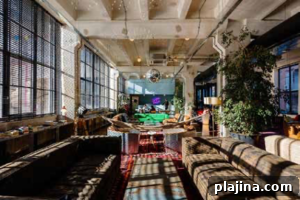
PHOTO: © NAKANIMAMASAKHLISI
Fabrika, a standout urban project, repurposed a Soviet-era sewing factory into a multifunctional creative hub. Part hostel, part marketplace, Fabrika’s courtyard is a lively public space filled with cafes, bars and boutiques run by local entrepreneurs. The complex blends raw industrial materials—wooden planks, metal stairways—and vintage furnishings to create a youthful, creative ambiance. Located on the bank of the Mtkvari River in old Tbilisi, Fabrika has played a key role in revitalizing a once-neglected neighborhood.
The Adjara Group, the developer behind Fabrika, is also redeveloping Radio City in the Gldani-Mukhiani district. The former radio factory is being transformed into a center for creative industries and startups, featuring shared workspaces, shops, restaurants, entertainment venues and event spaces. The project aims to integrate more than 10 industries and 35 sectors, supporting a wide range of economic activities.
In 2019, Tbilisi’s mayor, Kakha Kaladze, initiated discussions about the future of the city’s Soviet-era mid-century apartment blocks, known locally as khrushchyovkas. While some residents associate these buildings with difficult times under Soviet rule, others appreciate their family-oriented layouts and spacious courtyards. As new construction moves forward, some of these buildings are being replaced while others undergo rehabilitation by private contractors.
Georgia ranked seventh in the World Bank’s Ease of Doing Business 2020 among 190 countries and second for ease of starting a business. Valeria Perotti, program manager at the World Bank’s Doing Business unit, noted that reforms beginning in 2004 helped Georgia advance ahead of many peers. Entrepreneurs can, for example, transfer property titles quickly and with minimal cost.
Over the past 17 annual reports, Georgia implemented 51 reforms, including widespread adoption of electronic platforms for business registration and services. Strategically located at a crossroads between Europe and Asia, Georgia exports to Turkey, the European Union and former Soviet republics and continues to pursue broader trade agreements.
In 2021, Tbilisi’s startup scene scored an international success when U.S.-based SpinCar acquired Pulsar AI, a Georgian startup that developed advanced conversational AI for the automotive industry. The deal, reportedly worth tens of millions of U.S. dollars, kept Pulsar AI’s research and development team in Tbilisi while some business functions moved to California. This acquisition marked a milestone for Georgian high-tech startups and signaled growing international interest in local innovation.
Agriculture also contributes strongly to Georgia’s economy. In 2021, exports of walnuts, mandarins, peaches, nectarines, apples, persimmons and blueberries generated a record $213 million in revenue, underscoring the importance of wine and fruit exports to national growth.
CHECKING IN WITH IA PARULAVA
Owner, Kisi Boutique Hotel, actor and TV host
Where would you take visitors to introduce them to interesting people and off-beat places in Tbilisi?
Tbilisi offers countless memorable people and hidden corners. One special stop is the narrow stairway before the Botanical Gardens that leads to Mr. Tamaz’s apartment. He is a master of Georgian silver and gold craftsmanship and one of the last of his trade. Mr. Tamaz, who speaks six languages, and his wife often welcome guests with tea, preserves and homemade wine, and they share stories about Tbilisi while showing their work. His small studio is a charming, authentic experience and visitors rarely leave empty-handed.
In the decades since independence, has Tbilisi become a better city for artists, filmmakers, designers and architects?
Art and culture are deeply rooted in Georgian life, passed down through generations. Despite challenges, Georgia remains a regional cultural hub. A flourishing new generation of artists, musicians, painters, dancers, writers and designers is shaping the city’s cultural identity and fueling its creative reputation.
Tell us about your roles as an actor and TV personality, and recently in the hotel business.
I began acting at age 11, working both in Georgia and later in Los Angeles from 1990 to 1998. After returning to Tbilisi I hosted several television programs and continue to do so. In 2017 I opened Kisi Boutique Hotel, a 15-room property in the heart of the old city near the Botanical Gardens. We built a warm, family-oriented atmosphere, and the hotel is known for its friendly resident cat who greets guests like a member of the staff.
DIVERSIONS
The Tbilisi Funicular climbs to Mtatsminda, a park and amusement area with panoramic city views. The summit restaurant is a popular spot for sunsets and scenic dining.
The Art Museum of Georgia, near Freedom Square, houses roughly 140,000 works spanning many cultures and eras. The Georgian State Museum of Theatre, Music, Cinema and Choreography—often called the Art Palace—displays important cultural artifacts in a distinctive building that blends Gothic and Islamic architectural elements.
Gabriadze Theatre, home to the Georgian Marionette Theatre since 1981, features a whimsical clock tower where figures perform twice daily at noon and 7 p.m.
Rike Park Concert Hall and Exhibition Center showcases striking glass-and-steel architecture amid a park setting, complemented by an aerial tramway. Nearby, the National Botanical Garden offers Leghvtakhebi waterfalls and peaceful walking paths, and the modern Peace Bridge is an iconic riverside landmark.
For a day trip, visit Mtskheta—just 12 miles from Tbilisi—a UNESCO World Heritage site inhabited since at least 1000 B.C. Situated where the Mtkvari and Aragvi rivers meet, Mtskheta sits along an ancient trade route and hosts archaeological finds including glassware, pottery and metalwork, many of which are displayed in the local museum.
LODGING
The Biltmore Hotel Tbilisi
Located in Tbilisi’s tallest skyscraper with a cascading glass facade, this 214-room luxury hotel offers Wi-Fi, upscale bath amenities, a spa and city views. Dining options include a sushi restaurant and a cocktail bar.
29 Shota Rustaveli Ave.
$$$
Stamba Hotel
A 62-room property in a former printing house, Stamba blends industrial features with 1930s retro design. Highlights include a rooftop pool, a vertical garden in the lobby and the Tbilisi Photo and Multimedia Museum.
14 Merab Kostava St.
$$$
Tbilisi Marriott Hotel
Originally opened in 1911 as a mansion-style hotel, the 5-star Tbilisi Marriott offers 116 rooms and 11 suites. The facades preserve historic details; some rooms have balconies overlooking a courtyard. Amenities include marble bathrooms, Wi-Fi, a 24-hour fitness center and an Executive Lounge.
13 Shota Rustaveli Ave.
$$$
DINING
Barbarestan
This family restaurant draws recipes from Chef Barbare Jorjadze’s cookbook of Georgian classics. The formal atmosphere features lace tablecloths and dishes such as rabbit wrapped in ham, pumpkin patties and cherry soup with mint, prepared from local ingredients.
132 Davit Aghmashenebeli Ave.
$$$$
Racha
A popular local tavern serving affordable Georgian favorites. Diners can watch the kitchen prepare khinkalis (steamed dumplings) and try mtsvadi (pork skewers) with tkemali plum sauce.
4 Mikheil Lermontovi St.
$$
Zala Restaurant
Housed in a former women’s school, Zala features brick interiors, a historic arched wine cellar and windows overlooking the Vera neighborhood. Standout dishes include beef steak with Saperavi wine sauce and tashmijab (potato purée with Sulguni cheese).
2 Belinski St.
$$
JUST THE FACTS
Time zone: GMT +4
Phone code: Country code: 995 City code: 32
Currency: Georgian lari
Key industries: Steel, machine tools, electrical appliances, mining (manganese, copper, gold), chemicals, tourism, wood products, wine
INFO TO GO
Shota Rustaveli Tbilisi International Airport lies about 11 miles southeast of the city. A new arrivals terminal opened in 2017 and provides car rentals and taxi service (roughly 20–30 minutes to the city). The Airport Rail Station, close to the terminal, offers direct trains to Tbilisi Central Railway Station (about 35 minutes).
OFFICIAL LANGUAGE
Georgian (English is widely used as a second language)
COMING AND GOING
U.S. citizens need a valid passport to enter Georgia and may reside, work or study without a visa for up to 365 days. Those who overstay the permitted period may face fines.