
Cage-diving boats still operate out of Gansbaai (pronounced KHANS-buy), about two hours along the coast from Cape Town, and encounters with sharks remain common. However, the area has changed in recent years: it is no longer regarded as the unquestioned great white shark capital of the world. What happened?
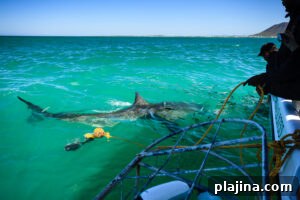
PHOTO: © PNIESEN | DREAMSTIME
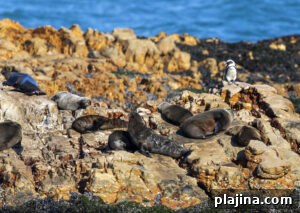
We head out to the well-known Shark Alley, the narrow channel between Dyer Island and Geyser Island, to see for ourselves. The large colonies of penguins and Cape fur seals that once provided rich feeding grounds for great whites remain in place, yet the big sharks are largely gone. Other species have moved in, notably bronze whaler sharks (once rarely seen) and broadnose sevengill sharks. On many trips you can also spot whales and dolphins.
This shift has had a big impact on shark-diving operators. Great whites were long the marquee attraction; with their absence some companies have closed while others have broadened their offering to highlight the Marine Big Five: seabirds, penguins, seals, dolphins and whales.
One operator still offering cage dives with sharks is Marine Dynamics, based at the Great White House in Kleinbaai, a suburb of Gansbaai. Their custom vessel, Slashfin, carries up to 40 passengers and has a side-mounted diving cage. Unlike early cages that fully enclosed divers for the entire dive, this design lets participants enter and exit the cage between encounters, even while sharks are circling nearby.
As with any marine activity, tours depend on weather and seasonal conditions. Trips won’t run in rough seas or when water visibility is poor, so it’s wise to allow a window of three or four days to increase your chances of a suitable outing. The best period for sightings is typically June through September, when shark numbers are highest.
© LIFESSUNDAY | DREAMSTIME.COM
We set out for Shark Alley, a short run offshore. The sound and smell of the seal and penguin colonies become pronounced as the boat moves through the currents between the islands. Once in position, the crew introduces bait into the water to attract sharks. Clad in wetsuits, we wait for the first sign: a shadow beneath the waves or, more thrilling, a fin slicing the surface.
No snorkel or scuba gear is required—just goggles. We climb into the cage and bob with our heads above water until a shark approaches. When it’s close, we submerge for as long as we can hold our breath, taking in the raw, close-up view.
They may not be great whites, but bronze whaler sharks still elicit a powerful, instinctive reaction. These are large, muscular predators, and when one glides toward the cage the adrenaline response is immediate. They lack the iconic bulk of a great white, but their size and power make them formidable.
So where did the great whites go? Their decline was rapid. Sightings that had been common fell to zero over just a few seasons, prompting questions: had disease or overfishing taken a toll? Was climate change responsible?
Researchers discovered a surprising cause: killer whales. Orcas occasionally prey on great white sharks, targeting the nutrient-rich liver. When sharks began washing ashore missing their livers, the pattern was clear. The presence of killer whales drove great whites away from Gansbaai and eastward along the coast. As numbers fell locally, sightings increased off KwaZulu-Natal.
Will great whites return? It’s possible, and the pattern may be cyclical. If the threat from killer whales diminishes, great whites could be drawn back by abundant food resources, potentially reigniting a tourism boom centered on the species. Even without great whites, however, shark-diving in Gansbaai remains a compelling and worthwhile experience for wildlife enthusiasts.
INFO TO GO
The nearest international gateway is Cape Town International Airport, roughly two hours from Gansbaai. A taxi between the two typically costs around $50. There are many hotels and guesthouses in and around Gansbaai; alternatively, consider basing yourself in Hermanus, about 30 minutes along the coast, where whales are famously viewable close to shore.