
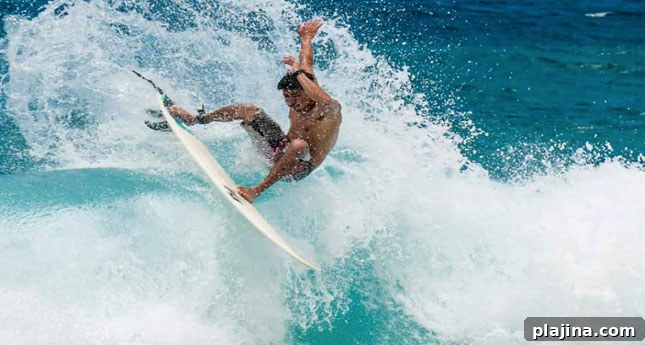
Mention Peru to most travelers and the conversation quickly turns to Machu Picchu. While the iconic citadel draws many visitors, Peru offers much more—especially for surfers prepared to explore its powerful Pacific coastline. Beyond the well-known ruins, Peru’s west coast delivers consistent swells, a wide variety of breaks and many uncrowded lineups.
Although Peru hasn’t always been thought of as a premier surfing destination, the steady Pacific swells that strike the country’s western shores have gained attention in the global surfing community. Stretching from Lima north to the Ecuadorian border, Peru’s coastline includes waves for every skill level, from beginners learning to stand up to experienced longboarders seeking long, glassy rides. With hundreds of surf spots along roughly 800 miles of shoreline—from mellow breaks near Lima to powerful point breaks around Máncora—finding uncrowded waves is often possible.
Most surfers arrive through Lima, a sprawling colonial capital rich with Baroque cathedrals and elegant Spanish mansions. The city’s historic center around the Plaza de Armas earned UNESCO World Heritage status in 1991. Beyond its architecture, Lima is home to several popular surf beaches. Waikiki Beach, named in honor of Peruvian surfing pioneer Carlos Dogny, is in the Miraflores district. Dogny introduced surfing to Peru after returning from Hawaii in 1942 and later helped organize the country’s first national surfing championship in 1956. When Felipe Pomar won the 1965 World Surfing Championships hosted by Peru, surfing’s popularity in the country surged.
Today surfing ranks among Peru’s top outdoor sports and continues to grow. Waikiki and Makaha in Miraflores offer friendly waves for beginners and intermediates. Local surf schools, including Pukana Surf and Olas Peru, provide board rentals, wetsuits and private lessons—typically around 90 minutes for about $30—making it easy for visitors to get started.
More experienced surfers often drive an hour south of Lima to Punta Hermosa, where powerful 12-foot breaks challenge advanced riders. Punta Hermosa is the hometown of 2004 world surfing champion Sofía Mulánovich and now hosts a lively surf scene with shops, seafood restaurants and a range of waves—from soft right-handers to sharp lefts and the dramatic bomboras (storm-driven waves) that appear during Peru’s winter months.
Peruvian grilled salmon © Michael DeFreitas
After a long session, there are memorable dining options along the coast. La Rosa Náutica, perched on a pier in Miraflores, serves seafood specialties like De Bandera—sautéed sea bass with crayfish and grilled mushrooms—while offering close-up views of surfers riding the nearby waves.
History and culture are never far away. In Lima, the National Museum of Archaeology houses around 100,000 artifacts spanning Peru’s human history, including ceramics that show pre-Inca Mochica figures riding waves on reed boats called caballitos de totora—evidence of an ancient relationship between local communities and the sea.
Surfing quality improves north of Lima. Two stretches of coastline—Trujillo to Chiclayo and Piura to Máncora—offer exceptional surf, including some of the world’s longest and largest left-hand breaks. These regions also feature archaeological sites and museums that enrich a surf trip with cultural exploration.
Ruins of Chan Chan Pre-Colombian archaeological site near Trujillo © Michael DeFreitas
Trujillo is often called Peru’s cultural capital because of its pre-Columbian sites such as Chan Chan, a UNESCO World Heritage site dating to about 850 CE, and the El Brujo complex, which houses the Lady of Cao Museum. Trujillo is also the birthplace of la marinera, Peru’s traditional dance, and the Peruvian paso, a distinctive style of dressage.
A few miles north, the fishing villages of Huanchaco and Puerto Chicama are established surf destinations. Huanchaco’s fishing tradition includes the use of caballitos de totora—small reed boats that local fishermen still use—and some claim these ancient wave riders were among the world’s first surfers. Huanchaco’s typical sets—five to seven left-breaking waves and a couple of rights—suit beginners and intermediates, while nearby Puerto Chicama is famous for an exceptionally long left-hand break, often giving rides of up to two miles when conditions align.
Chicama’s remoteness keeps crowds small and spreads surfers along long, rolling lefts that favor goofy-footers. Huanchaco’s malecón follows the curve of the beach and bustles with surfers heading to the waves. Advanced surfers prefer the more exposed southern breaks, while learners stick to the sheltered Playa La Curva. The beachfront is lined with seafood restaurants and parrilleras (barbecue vendors) as well as surf shops offering lessons and rentals—often around $25 for lessons and $15 per day for equipment. Local schools like Muchik and Indigan provide professional instruction and rentals that include board, wetsuit and guidance so you can keep surfing after your lesson.
Peru’s coast is influenced by the cold Humboldt Current, which brings powerful south swells. North of Huanchaco, between Piura and the Ecuadorian border, the coastline juts into the Pacific where the cooler Humboldt waters meet the warm Equatorial Countercurrent. That convergence creates warmer water, consistent surf and excellent deep-sea fishing—conditions that helped inspire Ernest Hemingway when he fished for black marlin in the 1950s.
This northern stretch is Peru’s surf hub. Máncora, a laid-back fishing village turned surf town, offers year-round warm water, a lively surf culture and a range of breaks. When Máncora gets crowded, surfers can explore nearby spots such as Los Organos, Cabo Blanco—with its scenic lighthouse and tubular lefts—and Vichayito, a long sandy beach with dunes. Expert riders seek the technical, tubular waves at Panic Point and El Hueco.
Accommodations in Máncora range from small hotels to beachfront resorts in Vichayito. Vichayito Bungalows & Carpas, with thatched bungalows and luxury tent suites steps from the sand, is a popular, relaxed option close to surf breaks.
Main street in Máncora © Michael DeFreitas
Besides waves, Máncora is known for fresh seafood. The town’s casual restaurants and beach bars, such as La Sirena d’Juan, are great places to swap surf stories over ceviche or other regional specialties.
The best thing about surfing in Peru is the consistency: year-round waves, plentiful rental equipment and local transport make surfing accessible. First-time visitors often benefit from booking with a local surf tour operator to match breaks to their skill level and ensure proper equipment. If endless waves, friendly locals and a mix of culture and adventure appeal to you, Peru’s coastline is a compelling surf destination.
Peru Info to Go
Major airlines fly daily into Jorge Chávez Lima-Callao International Airport (LIM). Domestic carriers such as LAN operate flights to coastal cities including Tumbes (TBP) and Piura (PIU), gateways to northern surf regions. Local surf operators offer multi-day surfing tours along the coast from Lima to Máncora.
Where to Stay in Peru
Hotel Libertador Trujillo This 79-room downtown Trujillo hotel is minutes from Huanchaco Beach and the ruins of Chan Chan. Its bar is known for traditional pisco sours. Jr. Independencia 485, Plaza de Armas, Trujillo $$
Miraflores Park Hotel Perched on cliffs above Waikiki Beach in Lima’s Miraflores district, this five-star hotel features 82 rooms, a rooftop pool and the Observatory Restaurant with ocean views of nearby surfers. Av. Malecón de la Reserva, 1035 Miraflores, Lima $$$
Vichayito Bungalows & Carpas Located on Vichayito Beach near Máncora, this resort offers luxury tent suites and wooden bungalows on the dunes, with surf breaks just steps away. Antigua Panamericana N., Km. 1211, Máncora $$$
Restaurants in Peru
Astrid&Gastón Chef Gastón Acurio’s flagship in Miraflores offers a refined fusion of traditional Peruvian flavors and modern techniques—dishes such as fish in miso sauce with crunchy oysters showcase the menu. Calle Cantaurias 175, Miraflores, Lima $$$
Big Ben Restaurant Overlook Huanchaco’s waves from three open-air terraces while enjoying tuna and shrimp ceviche or cangrejo reventado (baked crab stuffed with egg). Av. Larco 1184, Huanchaco $$
La Sirena d’Juan Chef Juan Seminario blends Asian and Mediterranean influences into standout seafood dishes like tuna tartare with ginger and passion fruit salsa. Av. Piura 316, Máncora $$
Read more about the history of surfing in Peru.