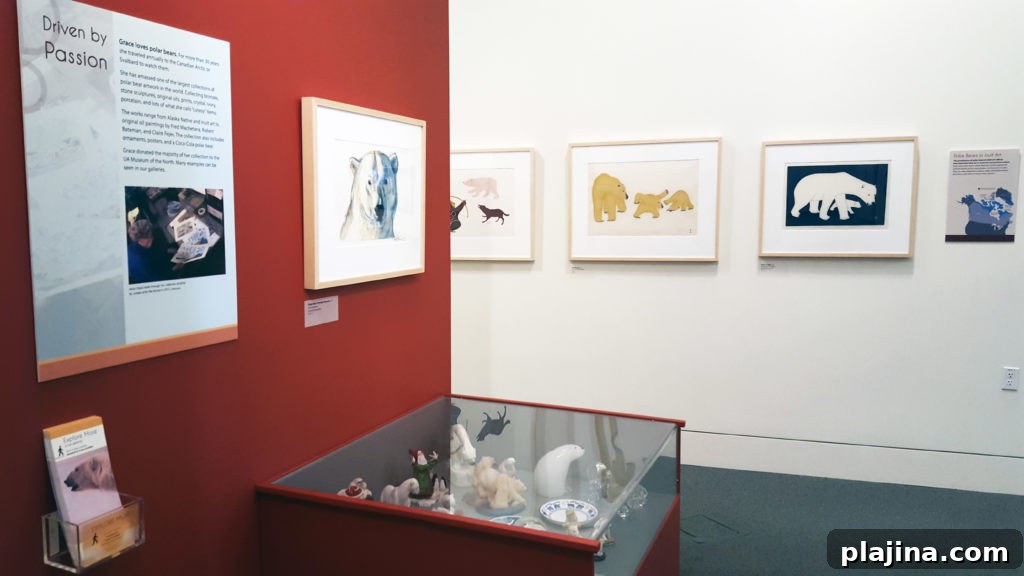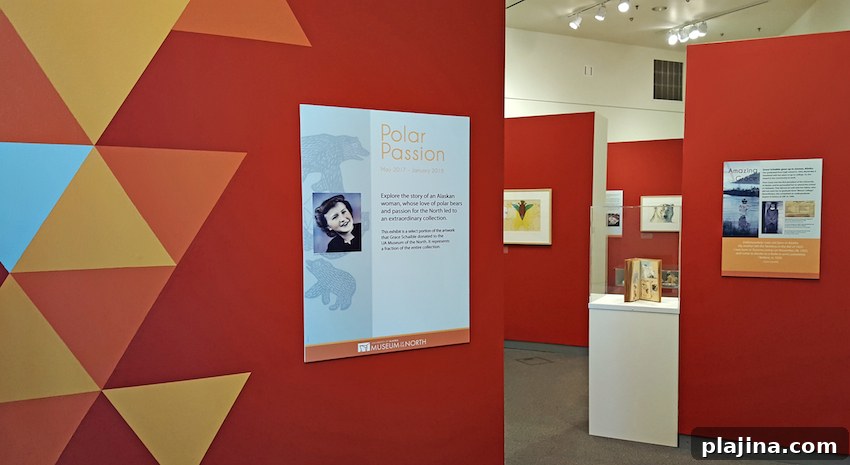
Over several decades, Alaskan attorney, art collector and native Grace Schaible built an extraordinary collection focused on polar bears. Her long-standing interest in these Arctic animals led her to make annual trips to the Canadian Arctic and Svalbard to observe them in their natural habitat. In 2015, Schaible donated more than 800 items from her private collection to the University of Alaska Museum of the North. A selection from that gift forms the new exhibition, Polar Passion.
The exhibition showcases a diverse range of media—prints, paintings, photographs, sculptures, drawings, carvings and collectibles—many created by Alaska Native and Inuit artists. Among the highlights is the Ice Walker Raven’s Tail robe, commissioned by Schaible and woven by Sitka artist Teri Rofkar. Film documentation of Rofkar’s yearlong creative process accompanies the robe, giving visitors insight into the technique and cultural context behind the work.
Also featured are significant objects such as Arctic Shadow, a bronze polar bear sculpture by Jacques and Mary Regat that is on permanent display on the museum’s upper level. The exhibition includes paintings by notable artists including Eustace Ziegler, Todd Sherman, Mialia Jaw and Claire Fejes, along with photographs and carvings that capture a range of artistic responses to polar landscapes and wildlife.
Together, the pieces in Polar Passion trace both the cultural importance of polar bears across northern communities and the personal passion that inspired Schaible’s collecting. The selection highlights artistic traditions, contemporary interpretations and the craftsmanship of individual makers, providing visitors with a broad and engaging view of how polar bears have been represented in visual art.
The display aims to honor Indigenous artistic practices while inviting reflection on the Arctic environment that shapes these works. Through careful curation, the museum connects historical perspectives with modern techniques, spotlighting the materials and stories behind each piece. Visitors can expect intimate portraits, dramatic landscapes and sculptural works that convey movement, presence and the fragile beauty of polar regions.
The exhibition also serves an educational role, offering context about the artists and the ecological backdrop for the subjects they portray. Interpretive materials and film elements help explain traditional weaving methods, carving techniques and the inspirations that drive contemporary northern artists. In doing so, Polar Passion becomes both an art exhibition and a cultural narrative about northern life and the relationship between humans and the polar bear.