
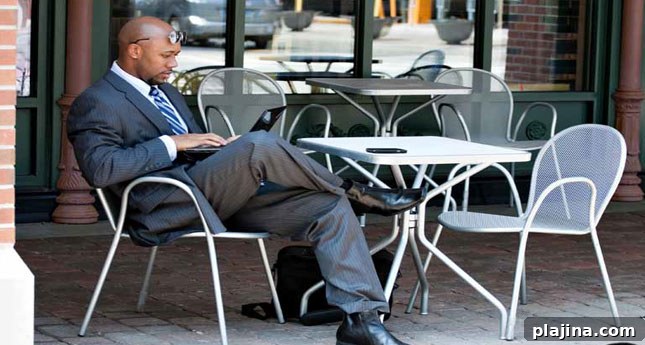
For Rhonda Buehler, a senior manager at a leading software company in Boise, Idaho, balancing travel and staying connected to the office is a daily exercise in prioritizing communication. “The biggest challenge is making sure you communicate what you are doing without overburdening your manager. You want your manager to understand the value you deliver, but you don’t want to come across as a ‘high maintenance’ employee.”
Buehler emphasizes the importance of proactive contact and suggests using the phone frequently. “You shouldn’t wait for a specific reason to call. If you haven’t checked in recently, give your manager a call and find out what’s happening — you never know what you might be missing.”
© Wavebreakmedia Ltd | Dreamstime.com
Remember your manager. Business travel creates distance that can complicate perceptions of your work, so help your boss succeed by aligning your priorities with theirs. Learn your manager’s preferred communication style and adapt. If they prefer morning texts and emails, use that window for updates. Be proactive, account for time zone differences, and promote your team’s accomplishments when appropriate.
Buehler notes, “It depends on the company. My manager is on the East Coast, so I always check in first thing in the morning, Mountain Time. If your manager has a long commute, that time can be perfect for a detailed conversation when they aren’t distracted.”
Office politics matter. “Office politics add another layer to being effective while on the road,” Buehler says. “It can be hard to understand what happened in the office that day, and without face-to-face cues you may miss people’s moods or engagement.”
Office politics are a reality. Ignoring or denying them can hinder your career. Balancing cooperation and healthy competition, while getting work done, helps you use influence constructively and neutralize those who misuse power. Recognize who holds authority, who influences decisions, and how choices are made; this reveals the corporate culture and guides how you should operate. As the philosopher Plato observed, refusing to participate in organizational politics risks being governed by less competent people. Building relationships and engaging colleagues increases your ability to influence key outcomes; staying distant risks marginalization during challenging times.
You can cultivate positive relationships across the organization even when traveling, but you must also manage your own behavior. Actions speak loudly even when you’re not in the office. Stay professional, avoid letting personal agendas override the organization’s interests, and model integrity by discouraging pettiness. Assume that confidentiality is not guaranteed — private comments can surface publicly — so avoid relying on secrecy.
Technology has transformed communication. Modern tools have made staying connected easier and have contributed to the rise of virtual workplaces.
Max Ramey, a mining consultant based in Albuquerque, New Mexico, travels frequently to locations like Turkey, Argentina and Canada. His client often serves as his boss, so he needs a well-organized, digitized workflow that allows access to records worldwide. “All of my business files are on my PC with backups and important files synced to Dropbox. I conduct much of my business by email; correspondence is synchronized across web, PC and phone. With a PC or phone and an Internet connection, I have access to all my business files. These tools make my business fully portable.”
© Ldprod | Dreamstime.com
For those comfortable with current platforms, instant chat on mobile devices offers a quick one-on-one channel. Texting and messaging apps are fast and convenient, especially for quick updates. Skype and similar VoIP services provide text, instant messaging, and voice calls over the internet — a cost-effective option for international calls that requires only broadband. When using computer audio, headphones reduce echo and improve call quality.
Kirsty Ebes, a corporate charter pilot for Kirkhope Aviation, describes technology as indispensable in aviation. Mobile phones help her coordinate with refuelers, airport managers, air traffic control, ground crews for weather updates, and her office for administrative matters. Technology streamlines many of the tasks that support safe and efficient operations.
Remember that digital communications leave a permanent record. Always remain professional and courteous in emails, messages, and social posts directed at your boss, clients, and colleagues. Equally important is recognizing when to disconnect; constant connectivity can be counterproductive.
Buehler’s practical advice is to monitor and respond to email and calls while traveling: “Don’t assume business will wait because you’re on the road.” Stay engaged even during travel days. Ebes warns against airing negative comments about your employer or industry on social networks — such remarks can come back to hurt your career.
Technology makes staying connected easier, but it can also create distance. “When you haven’t been in contact with your workplace, you can feel disconnected and isolated,” Ebes observes. Communication is vital, but face-to-face interaction remains the most effective way to catch up when possible.
Keep in Touch
- Be positive in dealings with your boss, the office, and clients.
- Respect time zone differences and time your communications appropriately.
- Maintain integrity: be honest, dependable, and direct.
- Take the initiative in communicating with your manager and team.
- Avoid whining or complaining.
- Don’t gossip, spread rumors, or make disparaging remarks about your company or colleagues.
- Avoid discriminatory or disrespectful behavior.
- Do not sabotage others or damage their reputations.
- Keep professional objectivity; don’t take workplace issues personally.