
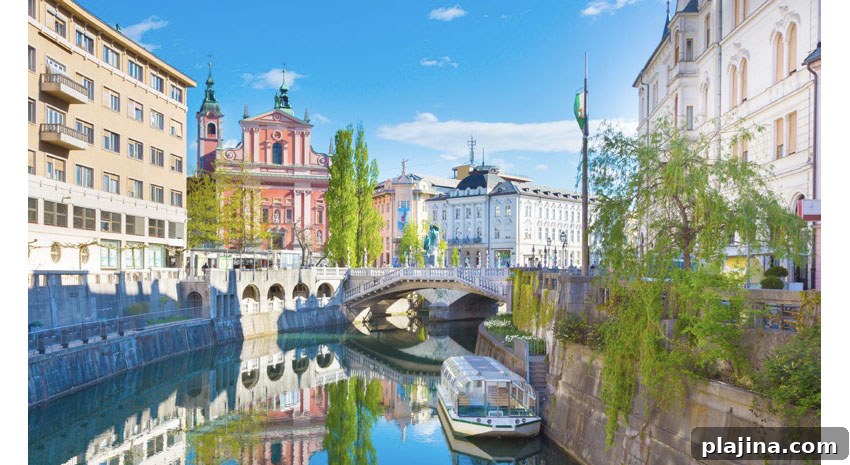
LOCATED AT THE HALFWAY POINT between Vienna and Venice in a country that literally has “love” in the middle of its name, the Slovenian capital of Ljubljana is uniquely positioned as a convenient and welcoming destination for business travelers. Once obscure to many, Ljubljana—pronounced lyoo-BLYAH-nah—has emerged as a globally recognized city celebrated for its charming atmosphere and progressive green initiatives.
Ljubljana was the first capital in Europe to implement a zero-waste program and has completed more than 1,800 environmental projects over the past decade. Named European Green Capital in 2016, the city offers an impressive amount of green space—more than 5,800 square feet per resident. With a population of around 275,000, including roughly 50,000 university students, Ljubljana combines a lively urban culture with abundant parks and public gardens.
Consistently praised for sustainability, Ljubljana ranked among the global top 100 sustainable destinations in 2017 for the third time. The city has long prioritized pedestrians: car restrictions in the center date back to 1960, and today cars are banned from the main streets. Instead, visitors and locals rely on electric kavalirs (golf buggies), pedicabs and a well-run bike-sharing system, making it easy to move between meetings and events without needing a car.
For short stays, the city provides free WiFi—WiFree Ljubljana offers up to 60 minutes per day. Travelers seeking uninterrupted connectivity can purchase a Ljubljana Tourist Card for about €24 (around $30), which extends WiFree access to 24 hours and includes free admission to more than 15 attractions, a guided city tour and complimentary travel on city buses.
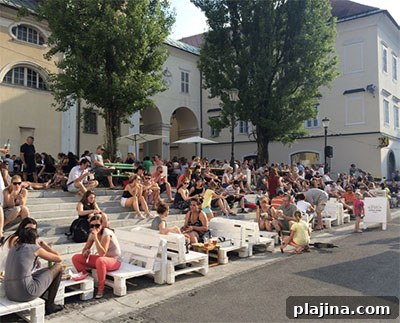
Outdoor dining at the open-air food market © KRISTY ALPERT
Slovenian is the primary language in Ljubljana, closely related to Croatian, Serbian, Slovak and Czech. English is widely spoken as a second language, and many residents also know German and Italian. Slovenia is a member of the Schengen Area, the European Union (since 2004) and the Eurozone (since 2007), so euros are the local currency. Credit and debit cards—MasterCard, Maestro, Visa, Visa Electron, Amex and Diners—are commonly accepted in shops and restaurants throughout the city.
The typical workweek runs Monday through Friday, with business hours commonly from 9 a.m. to 5 p.m. Banks tend to open earlier, often 8 a.m. to 5 p.m., and typically observe a one-hour lunch break around noon. Standard workweeks are 36 to 40 hours, with a 30-minute lunch break included in many workplaces. Business culture is formal and punctual: professional attire, on-time arrivals and a firm handshake are customary. Meetings often begin with the exchange of business cards, followed by brief introductions before discussion of the agenda.
For business lunches, many cafés and restaurants offer set menus or quick options that help meetings stay on schedule. Restavracija Ošterija Pr’Noni, for example, is popular among professionals for its fresh, locally sourced ingredients and clean, inviting atmosphere. The restaurant is busy during lunch hours, so reservations are recommended for larger groups.
Meeting spots in Ljubljana can be refreshingly simple: the city features more than 30 public drinking fountains across the center and suburbs, providing free natural spring water. The Tap Water Ljubljana app helps residents and visitors find the nearest fountain, each of which is monitored regularly to ensure water quality.
During summer months, Pogačarjev trg Square hosts Odprta Kuhna (Open Kitchen) every Friday from 10 a.m. to 9 p.m. This open-air food market emphasizes sustainability and showcases the city’s culinary scene. More than 100 local restaurants and food producers—ranging from casual vendors to acclaimed establishments like Restavracija Strelec and Restavracija JB—offer sample portions of signature dishes. Odprta Kuhna highlights freshness and innovation while promoting eco-friendly packaging, rigorous recycling practices and the donation of surplus food to those in need, making it a popular after-work gathering for colleagues and friends alike.