
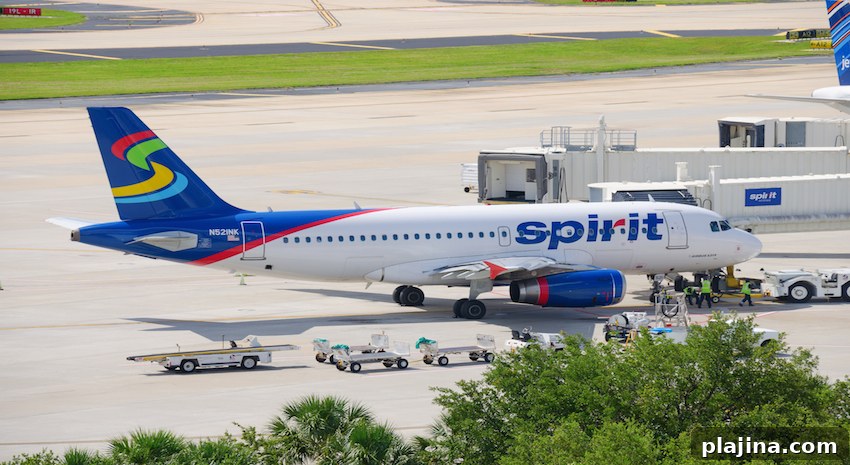
Spirit Airlines, a U.S. low-cost carrier, is changing the amount of space it allows for passengers’ carry-on items.
Known for a low base fare with add-on fees for extras, Spirit includes one personal item in its basic fare. Under new guidelines, however, that personal item must meet reduced size limits.
“We heard from many customers who told us their laptop bags or larger purses weren’t fitting quite as well under our seats length-wise,” a Spirit Airlines spokesperson said. “We take customer feedback very seriously, so we’ve adjusted the length to accommodate these popular personal items. We’re still proud to offer one of the largest personal item sizes in the industry.”
Effective April 4, Spirit will decrease the allowable volume for personal items on its lowest fares by 25 percent, from 2,688 cubic inches to 2,016 cubic inches. The airline says this change reflects customer feedback about item dimensions and better aligns personal-item space with seat design.
Travelers whose bags exceed the newly reduced allowance will have several options. At the gate, oversized personal items will incur a $100 gate fee to bring the bag onboard. Passengers can avoid the gate charge by paying in advance — fees for larger carry-on items start at $26 when purchased ahead of travel. Those who prefer not to carry the item onboard can check luggage for a fee beginning at $50 per bag.
To prevent unexpected charges, passengers are advised to measure and weigh their personal items before arriving at the airport. Choosing a smaller shoulder bag, backpack or laptop bag that conforms to the 2,016-cubic-inch limit will generally avoid additional fees.
Spirit’s move is part of a broader trend among carriers to revise carry-on and personal-item policies for the lowest fare classes. Major airlines such as American Airlines and United Airlines have also implemented restrictions that limit complimentary carry-on privileges for passengers who purchase the least expensive seats, prompting travelers to review policies carefully when booking.
The updated rules are intended to streamline boarding and improve under-seat storage consistency across the fleet, though they may require travelers to adjust packing habits or budget for additional fees when flying on ultra-low-cost fares.