
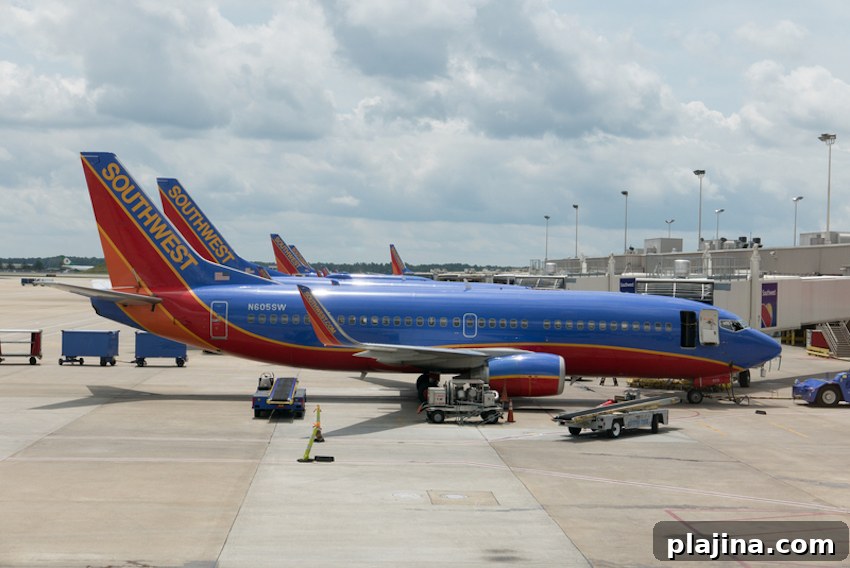
Despite the ongoing grounding of Boeing 737 Max aircraft following two recent fatal crashes, Southwest Airlines does not intend to cancel its order for hundreds of the jets.
“At this point, we have no plans to change our order,” said Gary Kelly, chairman and chief executive of Southwest Airlines. “Like any airline, we will continually evaluate what’s available in the marketplace. We’ve been a long-time Boeing customer, and it’s likely we will remain one.”
Kelly acknowledged the problems that led to the grounding but described the necessary fixes as manageable. “It’s a very good airplane, but Boeing has acknowledged there are software issues that need to be addressed. It appears to be a relatively straightforward modification, and we are obviously eager to get the aircraft back into service.”
Southwest, along with American Airlines, canceled hundreds of 737 Max flights through August as the jets stayed grounded. Southwest, which operates a large Max fleet, reported a roughly $150 million impact in the first quarter attributed in part to the grounding. Despite those losses, Kelly spoke positively about Boeing and did not suggest Southwest would seek compensation from the manufacturer.
“There are certainly significant damages,” he said. “It’s probably premature to decide exactly how we will proceed, but our relationship with Boeing has been a strong partnership. Boeing is one of America’s major companies with a long history, and I have every reason to believe they will remain a reliable partner for Southwest.”
Kelly’s remarks reflect an emphasis on maintaining established supplier relationships while awaiting regulatory and technical resolutions. Southwest’s position balances short-term operational and financial impacts against long-term fleet strategy, with the airline signaling confidence that Boeing will implement the necessary corrections and return the 737 Max to service safely.
Operationally, the grounding forced networks to be adjusted, crew schedules reshuffled and reserve aircraft used to limit disruptions. For an airline with a large single-type fleet like Southwest, these adjustments can be costly and complex, affecting not only revenues but also customer experience and scheduling reliability. Still, the carrier’s leadership reinforced a commitment to working with Boeing through the resolution process rather than abandoning its orders.
The situation remains dynamic as regulators, Boeing and carriers coordinate on software updates and inspections. Airlines will continue to monitor developments, prioritize passenger safety and adjust fleet plans as more information becomes available. For now, Southwest’s stance is to stick with Boeing, while watching closely for the technical fixes and regulatory clearances needed to return the 737 Max to commercial service.