
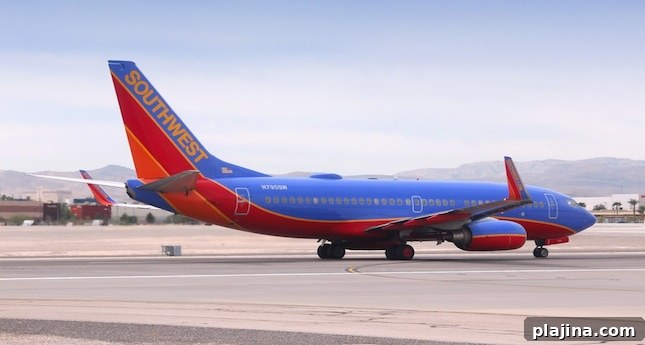
Southwest Airlines is seeking access to slots at Mexico City International Airport and has formally asked to be prioritized ahead of American Airlines and Volaris for the divestiture of slots tied to the Delta Air Lines–Aeromexico joint venture. That joint venture, valued at $1.5 billion, was recently approved by Mexico’s federal competition commission on the condition that eight pairs of slots at Mexico City be relinquished.
Southwest’s request has prompted objections from competitors. In a letter sent last month to the U.S. Department of Transportation, Howard Kass, American Airlines’ vice president of regulatory affairs, criticized Southwest’s position, arguing that Southwest aims to limit the pool of eligible carriers and thereby increase its chances of securing a disproportionate share of the divested slots. Kass wrote that imposing restrictions on slot transfers at this stage could reduce the overall public benefit of the divestiture process.
Kass urged the DOT to allow open competition for the divested slots, saying, “If Southwest is so confident that its use of any divested slots will produce the greatest public benefits, then Southwest should be willing to compete against all carriers.” He recommended that the DOT ensure all interested carriers — including American, Southwest, and Volaris — have the opportunity to seek the slots made available by the Aeromexico–Delta agreement.
The dispute reflects broader concerns about how best to allocate limited airport capacity in one of Latin America’s busiest hubs. Mexico City International Airport has long faced slot constraints, and regulators often require carriers in major partnerships to surrender slots to preserve competition and service options. How the DOT responds to these competing requests could shape future service patterns between the United States and Mexico, affecting both fares and connectivity for travelers.
As regulators weigh the competing proposals, stakeholders will likely press for a transparent process that balances airline interests with consumer benefits. Advocates for open competition say allowing all qualified carriers to bid for or apply for the divested slots promotes more routes, greater frequency, and potentially lower fares. Others argue that prioritizing carriers with demonstrated commitments to expand service or provide public benefits could ensure that the slots are used in ways that most benefit passengers and the market.
For now, the decision rests with the DOT and Mexican authorities overseeing the divestiture conditions. The outcome will determine which carriers gain access to valuable Mexico City slots and how competition evolves on key U.S.–Mexico routes.