
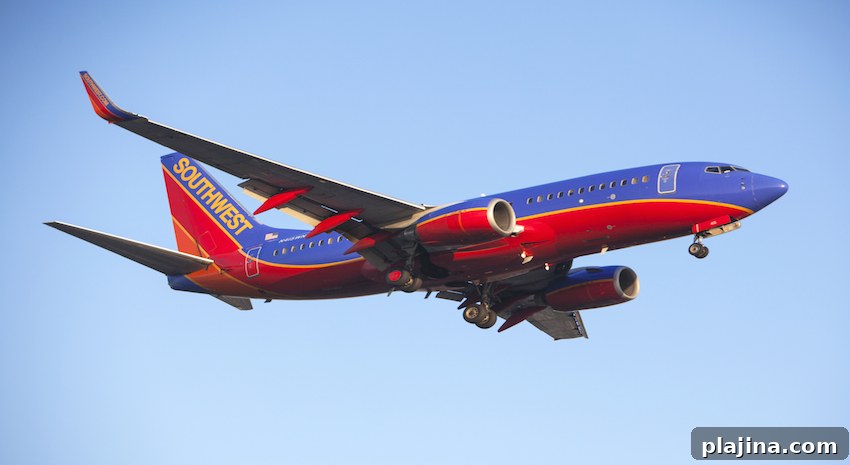
Southwest Airlines has announced a comprehensive program to modernize its technology and operational processes, a move designed to streamline passenger service, improve reliability and reduce turnaround times. The carrier is investing roughly $800 million to upgrade its reservations platform and update a variety of day-to-day systems used by employees and customers.
That investment targets a number of practical improvements. One focus is eliminating paper tickets and transitioning fully to digital documentation, which simplifies check-in and boarding for travelers while reducing manual handling for agents. Another priority is shortening aircraft turnaround, the interval between an aircraft’s arrival and its departure. Turnaround time has lengthened in recent years—from about 20 minutes to roughly 40 minutes—and Southwest is aiming to shave minutes off multiple touchpoints to restore faster, more predictable operations.
“We’re looking for minutes,” said Mike Van de Ven, Southwest’s chief operating officer. “How do I save a minute here, a minute there? In 2017, we are more deliberate in our continuous improvement efforts.” Those incremental savings add up across thousands of flights and contribute directly to on-time performance and customer satisfaction.
The upgrades extend beyond boarding and ticketing. The new systems will support accepting foreign currencies and will provide better tools for handling fare adjustments, schedule changes and rebooking after delays or cancellations. That means customers can expect more flexible, responsive options when disruptions occur.
Frontline employees will also benefit. Ramp workers, gate agents and other operational staff will receive tablets and mobile tools that deliver real-time information about flights, baggage status, and ground operations. These devices will help staff coordinate tasks more efficiently—refueling, cleaning, unloading and boarding—so planes can be turned around faster and with fewer errors.
Southwest is replacing several legacy communication methods as part of the overhaul. One notable change is retiring a pneumatic-tube system used to send paper messages between crew and ground teams—an old-fashioned method reminiscent of bank drive-through tubes—and moving to modern digital communications. That shift eliminates an antiquated bottleneck and speeds information flow among teams responsible for aircraft servicing and departures.
Overall, the modernization program combines technology, process improvement and better tools for employees to create a more resilient operation. By digitizing tickets and communications, enabling dynamic handling of fares and schedules, and equipping workers with real-time mobile information, Southwest aims to improve reliability and the passenger experience while supporting future growth.