
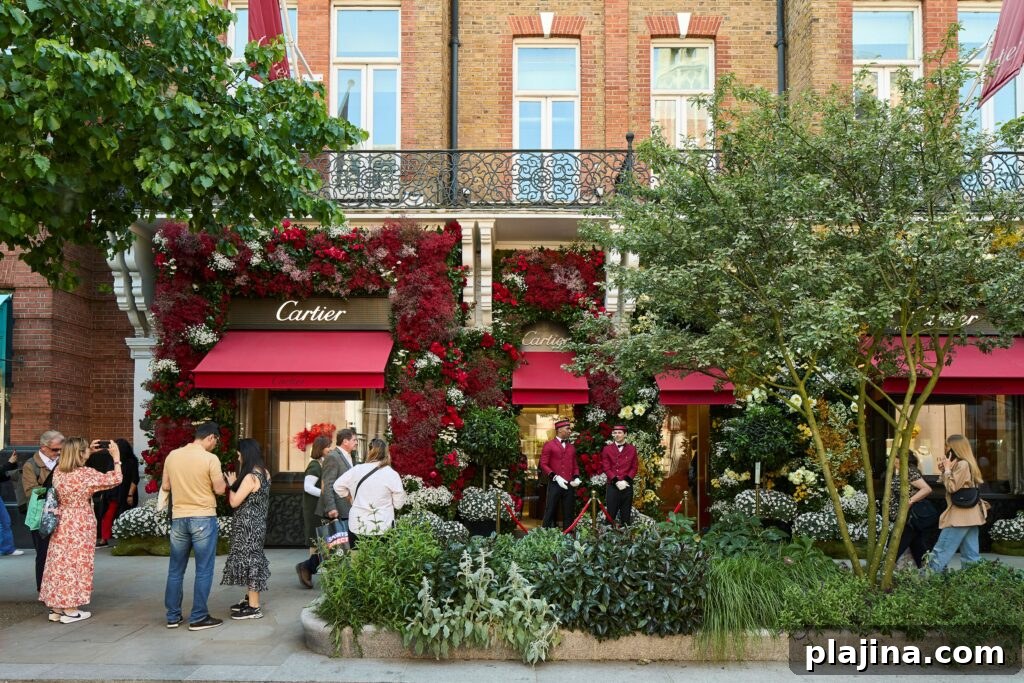
Most visitors to London know its many historic streets, but Sloane Street has just undergone one of the most significant streetscape transformations in nearly 250 years. Originally commissioned by the 1st Earl Cadogan in the 18th century, Sloane Street’s revitalization was completed in February and delivers a refreshed, greener thoroughfare that stretches more than half a mile from Knightsbridge to Sloane Square.
Funded by Cadogan and delivered in partnership with Kensington and Chelsea Council, the project reimagines the street as a welcoming, pedestrian-first boulevard. The £59 million (approx. $59 million) investment widened pavements by 23 percent and introduced a generous planting scheme, refined street furniture and improved lighting to create a more comfortable and attractive public realm.
© Hufton + Crow
“This project marks a new era for Sloane Street, enhancing its elegance and timeless appeal as the epitome of a luxury destination that is both ‘global yet local’ and will entice new visitors, while enriching the experience for the local community,” said Hugh Seaborn, CEO of Cadogan. The redesign aims to balance the street’s heritage with contemporary public-space standards, connecting the world-class retail experience along Sloane Street to a high-quality civic realm.
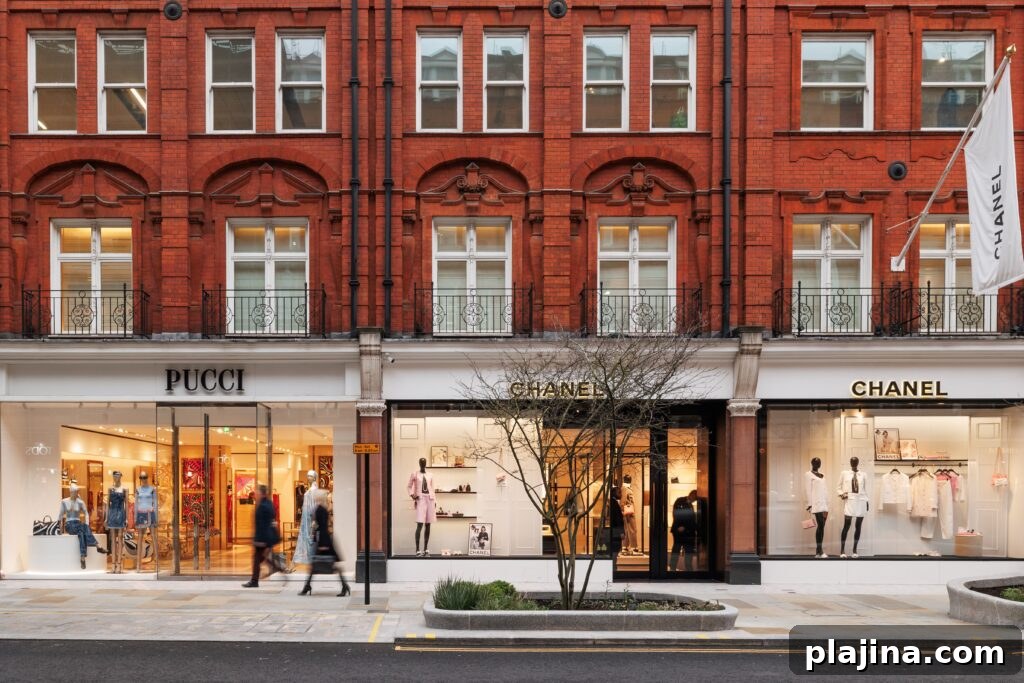
Attention to materiality and detail is central to the scheme. Traditional honey-hued Yorkstone was cut from a new seam to ensure consistent colour along the entire route, bringing warmth to the widened pavements. Luxurious silver-grey granite and bespoke brass studs define reconfigured parking and loading bays, while crafted granite planters offer informal seating, a buffer between vehicles and pedestrians, and discreet protection.
© Hufton + Crow
Artisan ironworkers produced dual-height lighting columns with cast-iron detailing inspired by Holy Trinity Church on Sloane Street, while a lighting scheme by Spiers Major highlights the architectural variety along the route—from Georgian townhouses to Pont Street Dutch and Mid-Century Modern buildings. The result is functional, characterful lighting that enhances safety and the street’s evening ambience.
© Hufton + Crow
“Transforming this iconic street has been an exhilarating urban design endeavour,” said John McAslan, chair of John McAslan + Partners, the architecture practice that led the masterplan. The team describes the finished boulevard as a dramatically elevated public realm that now rivals some of Europe’s grand shopping avenues while preserving the distinct character of Chelsea.
Sustainability informed many of the design choices. Most hardscape materials are sourced in the U.K., and the planting palette focuses on drought-tolerant species to create a resilient green corridor. Energy-efficient LED lighting reduces consumption while improving night-time safety. The widened pavements, along with raised side-street tables, prioritise active travel and make walking between north and south parts of the neighbourhood easier.
Practical improvements include traffic-calming measures, more crossing points, and beautifully engraved wayfinding stones to guide pedestrians. Detailed traffic modelling helped ensure that vehicle movement was maintained while enhancing safety for people on foot. The project also introduced upgraded infrastructure to support improved digital connectivity for businesses and residents, future-proofing the area for technology needs.
Councillor Elizabeth Campbell, leader of Kensington and Chelsea Council, welcomed the outcome: “This corner of Chelsea has always been special, with a shopping experience to rival Paris and New York. Now it is even better, with spacious pavements and beautiful greenery creating a street that makes you want to stick around and enjoy the area.” The refreshed Sloane Street aims to offer both visitors and locals a refined, livable public space that celebrates craft, heritage and contemporary urban design.