
The appeal of environmental stewardship—and the growing expectation that businesses be accountable—has not escaped the hotel and airline industries. Sustainable travel is now mainstream, and many hotels, resorts and airlines promote green practices to attract travelers who care about the planet and their carbon footprint.
In the rush to reach this expanding market, terms like “eco-friendly” and “green” are often used broadly. Too many properties promote simple measures—like reduced towel and linen servicing—as proof of deep environmental commitment. But if hotels and airlines were scrutinized more closely, how many of these green claims would stand up to inspection?
Green Acres
Depending on the property, meaningful environmental initiatives can include reducing water consumption, adopting renewable energy, using recycled or low-impact building materials, choosing eco-friendly cleaning products, sourcing food and supplies locally to cut carbon emissions, and operating with alternative-energy vehicles. Once such initiatives are in place, a hotel or resort can pursue green certification.
That process, however, can be uneven. In some countries, established standards and programs such as LEED and Energy Star require evidence before certification is awarded. But in many places—including the United States—there is no single mandatory accreditation that hotels must obtain before advertising environmental credentials. Instead, a growing number of independent programs offer certifications with varying levels of verification, and some require little or no on-site inspection. Without enforcement or penalties for false claims, incentives for compliance can be weak.
There are hundreds of thousands of “green hotel” mentions online, and while many properties and airlines genuinely follow sustainable practices, the label “green” is sometimes used more as a marketing tool than a rigorous standard.
What’s in a Name?
Brian T. Mullis, CEO of Sustainable Travel International, describes three levels of certification. First-party certification is the weakest: a hotel fills out an application and receives an eco-label, often for a fee, without independent verification.
Second-party certification adds some verification steps, typically through desk assessments that compare submitted data—such as energy usage—to expected benchmarks for similar properties. Third-party certification is the most robust, involving independent auditors who verify both records and on-the-ground practices.
Regardless of labels, certain actions deliver measurable environmental benefits: switching to local renewable energy sources like solar, wind or geothermal; conserving fuel; establishing aggressive recycling programs; installing LED lighting; and buying locally to reduce transportation emissions.
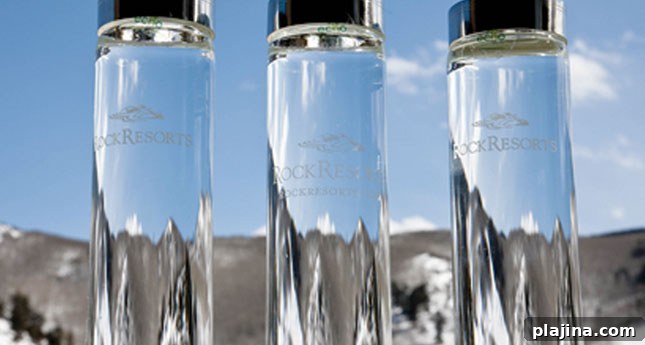
A practical example comes from RockResorts and Vail Resorts Hospitality’s Water on the Rocks program, which eliminates single-use plastic water bottles in guest operations by providing reusable bottles and refill stations. Company-wide, this initiative is estimated to remove about 640,000 plastic bottles from the waste stream annually and save around 4,000 barrels of oil otherwise needed to produce and transport those bottles.
Luxury properties can also lead by example. Hôtel Fouquet’s Barrière in Paris earned Sustainable Travel International’s Luxury Eco Certification after meeting rigorous criteria, demonstrating that high-end service and sustainability can coexist. The hotel’s greener practices include hybrid limousines and a fleet of electric bicycles for guests.
Retrofitting older buildings presents challenges: upgrading to low-flow fixtures and energy-efficient systems is beneficial only if replaced materials are handled responsibly. When done thoughtfully, renovations can achieve impressive results. Stone House in Little Compton, R.I., for example, combined a solar chimney and geothermal heating with salvaged roofing, recycled glass and a rainwater collection system during its restoration.
Many voluntary programs have emerged across the industry, from Fairmont’s Green Partnership Program to Kimpton’s EarthCare. Some hotels reward simple guest behaviors that lower environmental impact—Westin Riverfront Resort & Spa in Vail Valley offers spa discounts when guests arrive in their room robes to reduce laundering, and also provides recycling stations, priority hybrid parking, an organic garden, open-space protection policies and roof tiles made from recycled tires.
New resorts built from the ground up can integrate sustainability at every stage. Aquas de Ibiza, for instance, was designed around energy optimization with features such as free-cooling systems, high-performance lighting, solar shading, water separation networks, environmental light detectors and energy-generating glass panels.
Fly the (Eco) Friendly Skies
Measuring airline carbon emissions is complex because emissions vary by aircraft type, altitude, speed, route, engines and weight, including passengers and cargo. These variables make precise calculations challenging.
The International Air Transport Association has set a long-term goal of developing zero-emission aircraft, and regulators such as the European Union have moved to cap airline emissions. Meanwhile, manufacturers and carriers are testing biofuels and efficiency improvements. Several airlines—including Virgin Atlantic, Lufthansa, Japan Airlines, Air New Zealand and JetBlue—have taken part in biofuel trials. Virgin completed a notable flight using a 20 percent biofuel blend derived from coconut and babassu oils.
Many carriers run carbon offset and fuel-conservation programs. Qantas, for example, pursues weight reduction, improved scheduling, better flight planning and reduced use of auxiliary power units to save fuel. Common offsets include tree-planting projects and enhanced recycling, but some initiatives are more creative: TAP Portugal neutralizes emissions from its in-flight magazine by funding agricultural and forestry projects that generate carbon credits, a move recognized by awards for innovation in sustainable products.
Question Claims
Travel brochures and websites aim to persuade you to book. At present, the burden falls on travelers to evaluate environmental claims. A legitimate eco label indicates some level of commitment, but travelers should still ask questions.
Mullis recommends checking for a public sustainability policy and asking about specific practices: recycling, renewable energy use, heritage conservation and support for local economies. Staff at every level should be able to describe their property’s efforts. When quality and convenience are comparable, many consumers will choose the more sustainable option—but confirming those claims helps ensure your choice genuinely supports environmental stewardship.