
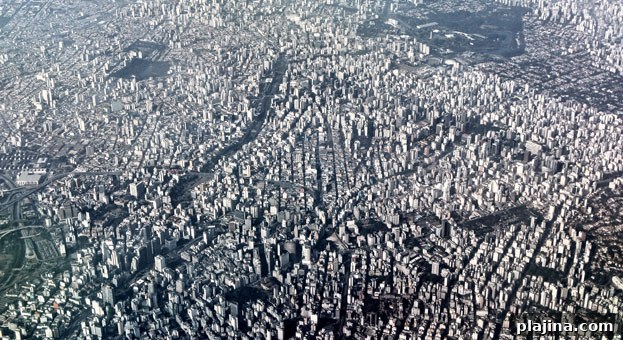
Even for seasoned travelers, the first sight of São Paulo from the air is both thrilling and overwhelming. For children, the reaction is amplified: thousands of skyscrapers stretch across a vast carpet of concrete and glass toward a hazy horizon.
The statistics heighten that sense of awe. São Paulo is the largest city in the Americas, the biggest in the Southern Hemisphere and, by some measures, one of the largest cities in the world. Faced with this sprawling metropolis, many families ask, “Where should we begin?”
The practical answer is simple: by car. You will spend a significant portion of any day in São Paulo traveling between neighborhoods, often inching through heavy traffic. Pack devices or activities to keep children entertained during long drives.
A sensible first stop is Praça da Sé, the palm-lined square in front of the twin-spired Metropolitan Cathedral. In the square stands a squat pillar marking Point Zero, from which distances across the city and state are measured. Letting children stand on the pillar is a playful way to mark the start of your visit.
The cathedral itself is impressive. With seating for some 8,000 worshippers, its stained glass windows fill the interior with color when sunlight breaks through the frequent gray skies. Although the city has a long history, the cathedral’s main structure was completed in 1954, with finishing touches added as recently as 2002.
A short walk north lies Pátio do Colégio (the School Yard), the exact site where São Paulo was founded on January 25, 1554. It takes imagination to envision the area as a small hill amid rainforest, but this is where a Jesuit school grew into a church, a religious community and eventually Brazil’s largest city.
From the geographic and historical heart of São Paulo, continue a little farther north to the Municipal Market, the city’s lively culinary center. Housed in an ornate 1930s building, the market showcases produce from across Brazil. Familiar items sit alongside regional specialties—river fish and rainforest fruit—that may be entirely new to visitors.
São Paulo often surprises newcomers. South of the Metropolitan Cathedral is Liberdade, a district that evoked Asia for many visitors long before they set foot in Japan. Walk down Rua Galvão Bueno beneath a red ceremonial arch and you’ll find lantern-style streetlights, Asian architectural touches and shop signs in Japanese.
Japanese influence in the Liberdade neighborhood © Aguina | Dreamstime.com
Liberdade is home to the largest Japanese community outside Japan, with more than 660,000 people of Japanese descent living in São Paulo. Many are fluent in Portuguese yet retain strong cultural ties to their heritage. Families with children who enjoy manga, anime or Hello Kitty will find Liberdade especially appealing.
Throughout the city you will cross or travel along Avenida Paulista, São Paulo’s most famous avenue—its equivalent of Fifth Avenue or the Champs-Élysées. Once lined with the mansions of coffee barons, the avenue is now flanked by corporate towers and cultural institutions, reflecting the city’s economic prominence.
Halfway down Avenida Paulista, concrete yields to a pocket of green: Parque Trianon. This small urban park preserves a fragment of Atlantic rainforest. Keep an eye on the canopy—you might glimpse marmosets, tiny monkeys that sometimes dart among the branches.
Across from the park stands the São Paulo Museum of Art (MASP), a striking 1960s building suspended on red supports. Its collection features major works by artists such as Velázquez, El Greco, Van Gogh and Picasso, offering an impressive cultural stop on the avenue.
For a different creative experience, visit Beco do Batman (Batman Alley) on Rua Gonçalo Afonso in Vila Madalena. This open-air gallery spans roughly half a mile and showcases constantly changing street art by local and international artists. Kids who enjoy creating art will appreciate the ever-evolving murals.
Nearby, Parque Zilda Natel—an urban skate park off Avenida Doctor Arnaldo—has bowls, tracks and pipes for skaters of all levels, making it a lively spot for families and a place where visiting children often make new friends. Across the street, the Araçá Cemetery contains large, ornate tombs of notable Paulistanos, a somber but architecturally interesting site for adults to explore.
In the city’s southern quarter, São Paulo Zoo offers another family-friendly attraction. Home to more than 3,000 animals, the zoo introduces visitors to Brazil’s native wildlife as well as species from around the world. Weekends at the zoo are popular with local families.
No visit to Brazil or São Paulo is complete without engaging with futebol (soccer). Alongside Catholicism, soccer is ingrained in Brazilian culture. São Paulo hosts several major clubs, including São Paulo FC, Palmeiras, Portuguesa and Corinthians. The Corinthians, with a vast fan base, are a dominating presence in the city’s sporting life.
In anticipation of major events, the city’s stadiums attract even more attention. One notable venue features a very large screen and seating for tens of thousands of spectators, and attending a match offers a powerful way to experience local passion and community. If possible, plan to see a game—you’ll understand a vital part of São Paulo’s culture.
At first glance São Paulo may seem unwelcoming—huge, bustling and relentless. Yet as you spend time here the city reveals layers of culture, history and neighborhood life. It offers something for every interest, and many visitors leave with a sense of connection to this energetic, ever-changing place.
Where to Stay in São Paulo
Hotel Novotel Center Norte — A family-friendly option next to a shopping mall north of downtown. Family rooms are available, and children under 16 stay free. Ave. Zaki Narchi 500, Vila Guilherme. $$
Hotel Unique — An architecturally distinctive hotel shaped like a boat with porthole windows, offering a memorable stay. Ave. Brigadeiro Luís Antônio 4700, Jardim Paulista. $$$
Renaissance Hotel São Paulo — Conveniently located near Avenida Paulista, welcoming to families with babysitting services available. Alameda Santos 2233. $$$$
Restaurants in São Paulo
Bar Mortadela Brasil — Situated in the Municipal Market food hall, known for oversized mortadella sandwiches and other market specialties. Municipal Market, Rua da Cantareira. $
Famiglia Mancini Cantina — A popular spot for pizza and classic Italian-Brazilian fare in a city with deep Italian roots. Rua Avanhandava 81, Centro. $$
Figueira Rubaiyat — Built around a large fig tree, this restaurant is celebrated for its Brazilian steaks and unique setting. Rua Haddock Lobo. $$$
São Paulo Info to Go
International flights arrive at São Paulo–Guarulhos International Airport (GRU), the busiest airport in South America, located about 16 miles northeast of downtown. Until rail connections are completed, the main options into the city are shuttle buses or taxis.